Dear reader, let me start this blog post off with this. While I did take numerous History classes in college, I am not a Historian. My blog posts are my observations, my experiences. However, with that said, I have provided a little bit of history for the subject of this post.
A brief history on Brushy Mountain State Penitentiary:
In 1896 Brushy Mountain Prison was built in Petros, a coal mining community in Morgan County, Tennessee. The prison was built, owned, and operated by the State of Tennessee in response to the Coal Creek War. Why did the State of Tennessee build a prison in such a remote location? Coal, that’s why. In the winters Coal Creek miners would strike, and considering winter was the time when coal was needed the most to keep businesses and people warm, the State would meet the coal miner’s demands. This ended when Tennessee built Brushy Mountain and began using its inmates as forced labor. The State of Tennessee used chain gangs to do an end run around the 13th Amendment, thus continuing the practice of slavery, and yes, the majority of the inmates were black. This practice was repeated throughout prisons and Lunatic Asylums throughout the South. This form of slavery was practiced from the day the prison opened until the coal mines closed in the 1960’s.
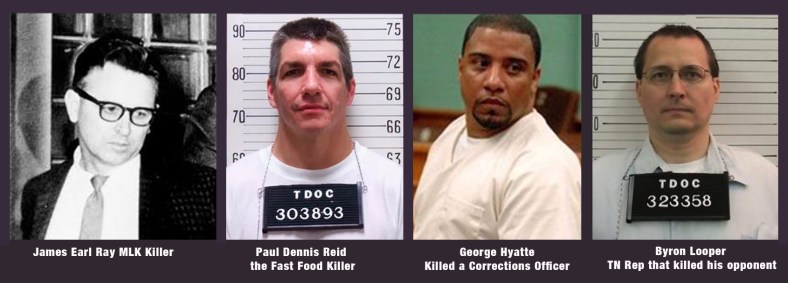
I can’t tell you how many thousands of inmates saw the inside of Brushy Mountain over its 113 years of operation. But there are 3 of note. Paul Dennis Reid, the Fast Food Killer. Republican State Representative Byron Looper was incarcerated there, as was the infamous assassin of Martin Luther King, James Earl Ray. I won’t go on about them, I do not want to glorify their crimes.
For a 113 years Brushy Mountain stood as a place of slavery, and punishment. That changed in 2009 when the prison was shut down. Brushy sat empty for 9 years, and would likely have remained abandoned, but in 2014 local leaders and the State of Tennessee began to work on reopening the facility as a tourist attraction that opened in 2019. Brushy Mountain has become a major revenue earner for both Morgan County and the State of Tennessee itself. Brushy offers educational tours, paranormal tours, musical events, and activities take place in the old prison yard, and there is the End of the Line Distillery that makes vodka, whisky and moonshine, while the restaurant serves some damned good barb-b-q ( I can personally vouch for the taste).If you’d like to book a tour of Brushy Mountain, here is the link:https://tourbrushy.com
Now, with the brief history of Brushy Mountain done, let us get on with the show.
I woke up Aug 23rd, a Sunday with the need to explore. I fed Hellion, and Pounce, my two little fur bearing terrors. Next I grabbed my camera, and randomly picked a location to explore, and hit the road. My destination for today was Brushy Mountain, a former prison located in Petros, Morgan County, Tennessee.
The drive found me on I-40 cruising at an easy 80mph. I couldn’t have had better weather, it was sunny out, with a temperature around 72 degrees. Surprisingly the traffic was very light, and there wasn’t a single failed extra from the Fast and the Furious franchise within sight. My trip would take almost 3 hrs, for a distance of 161 miles. And there was plenty of towns where I could pull off for road snacks, and bathroom breaks. Lebanon, Watertown, Gordonsville, Baxter, Cookville, Monterey, and Crab Orchard, and finally Crossville, Tennessee. Once in Crossville (exit 320), I turned onto Hwy 298/N.Genesis road, and from there I got onto HWY 62. Highway 62 is an enjoyable road, but not one you want to drive fast on. There a plethora of sharp, blind curves. The road also has an awful lot of sudden hills, accompanied with equally steep drops. The roadside signs are lovely, but can be distracting, and you do not want to let your eye wander too far from the road. Hidden drives, and deer are endemic features. Eventually I found myself in Petros, the home of the former prison.
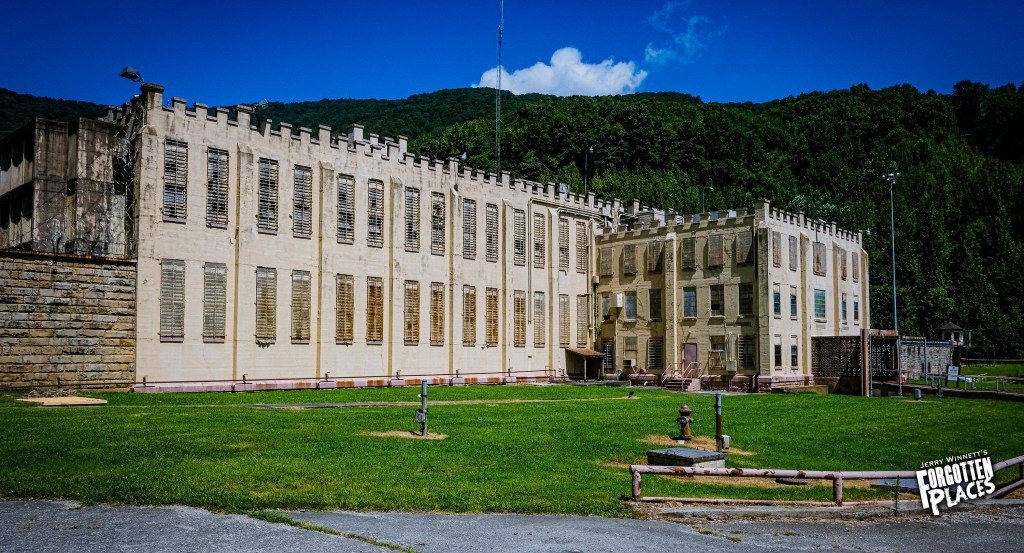
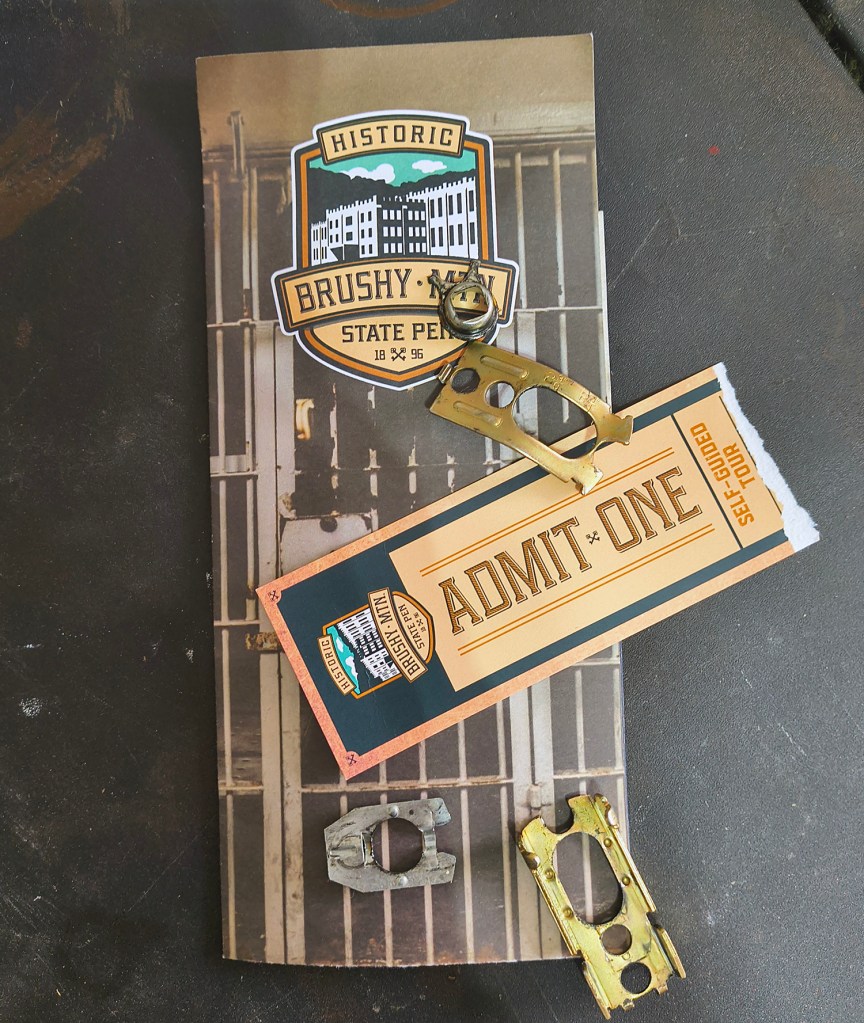
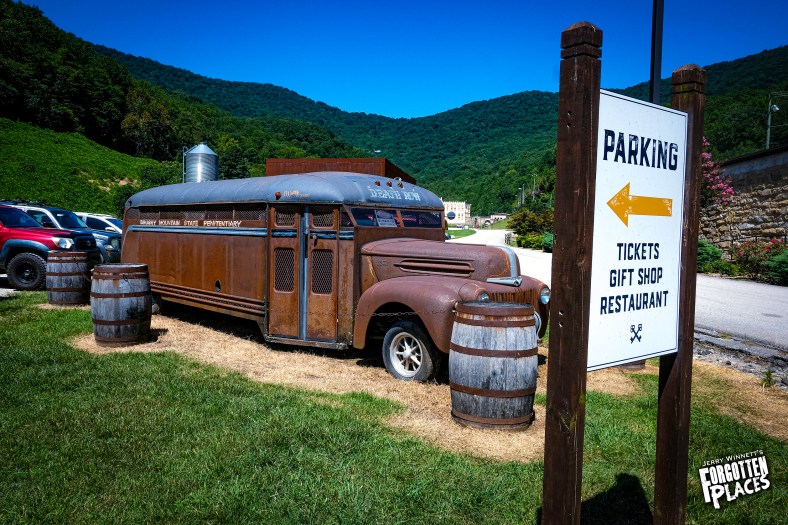
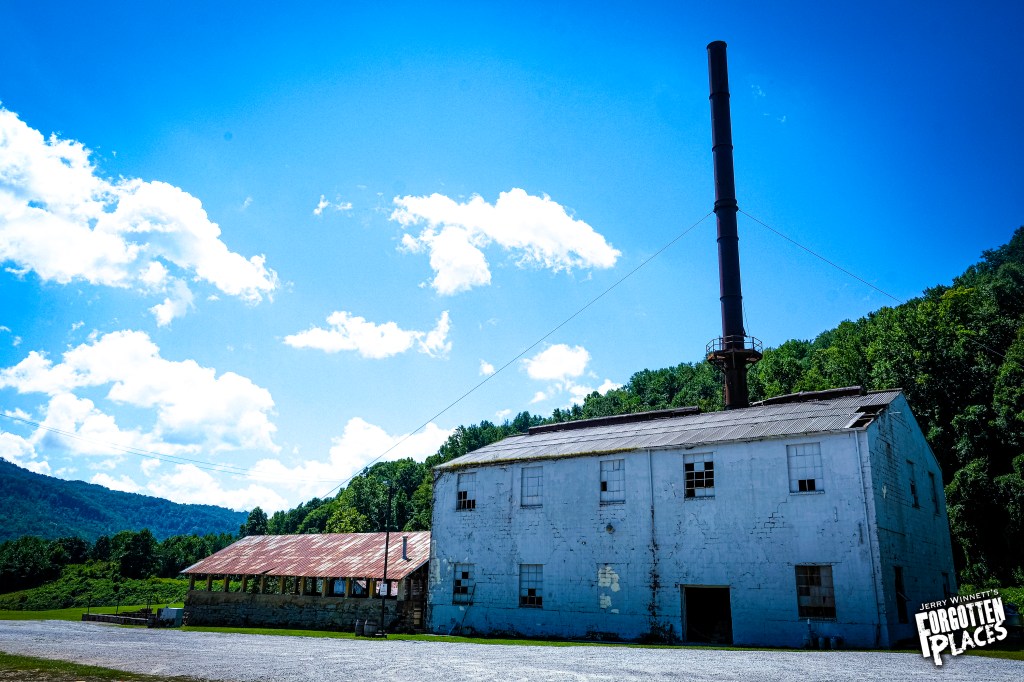
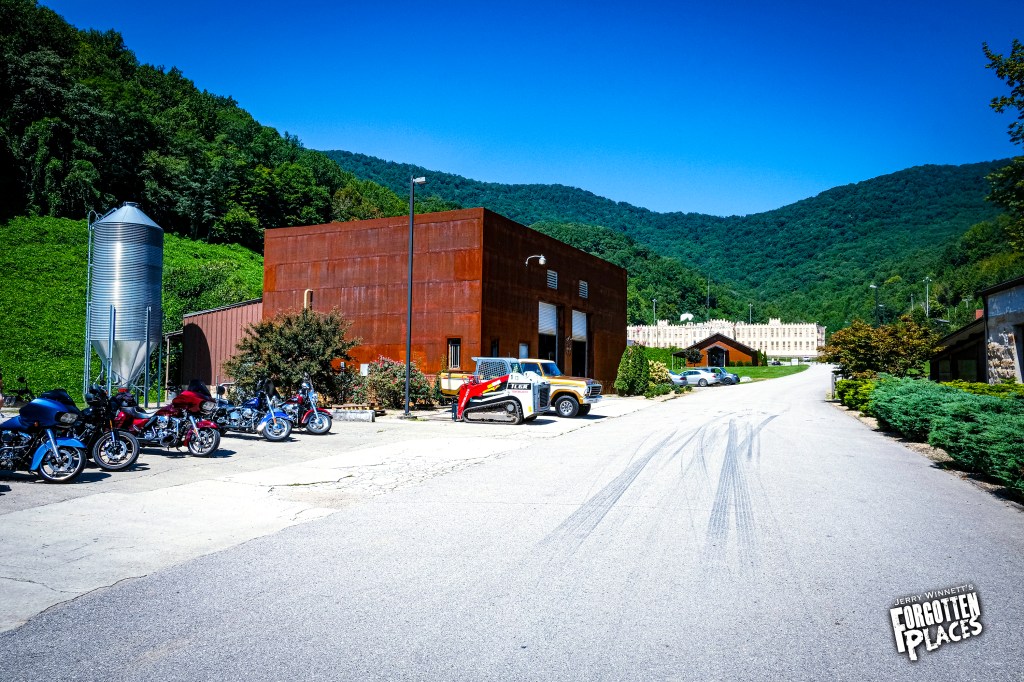
There’s a long winding road that leads up to the prison. You can see the prison sitting like a fortress nestled at the base of the mountains. The mountains are a vibrant, green riot of tress, assorted plants, with kudzu vines sprawling across it all. Once you hit the prison’s proper road there’s a large gravel parking lot that sits across from Brushy Mountain’s restaurant, the Warden’s Table, and the End of the Line Distillery. I sampled the food and can testify that it was quite tasty. I cannot tell you about the vodka or moonshine made by the distillery, I don’t drink. However I can say that the atmosphere was good as was the swag on sale. As soon as you walk into the Warden’s Table there is a kiosk where you can buy your Brushy Mountain Tour tickets for $31.00. Stepping back outside you can walk up to the prison, it’s not too bad a walk, However you can also drive to the prison’s main parking lot. I hate cardio, so I drove. Don’t judge me, there was plenty of cardio to be had.
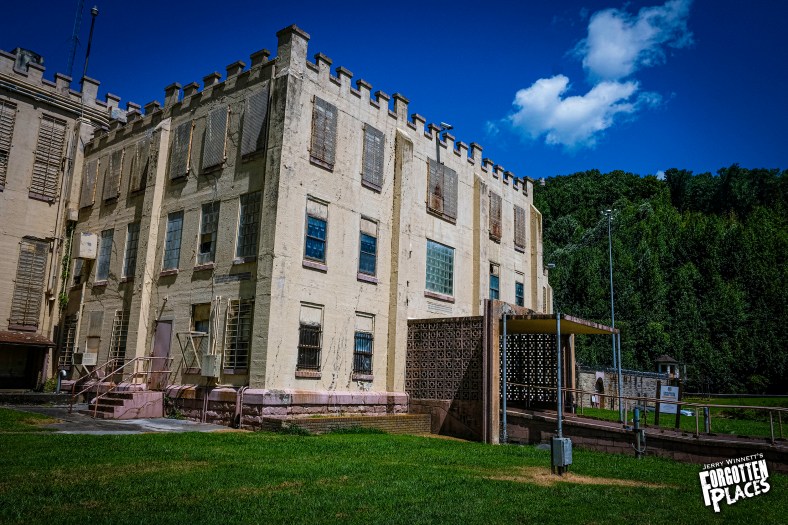
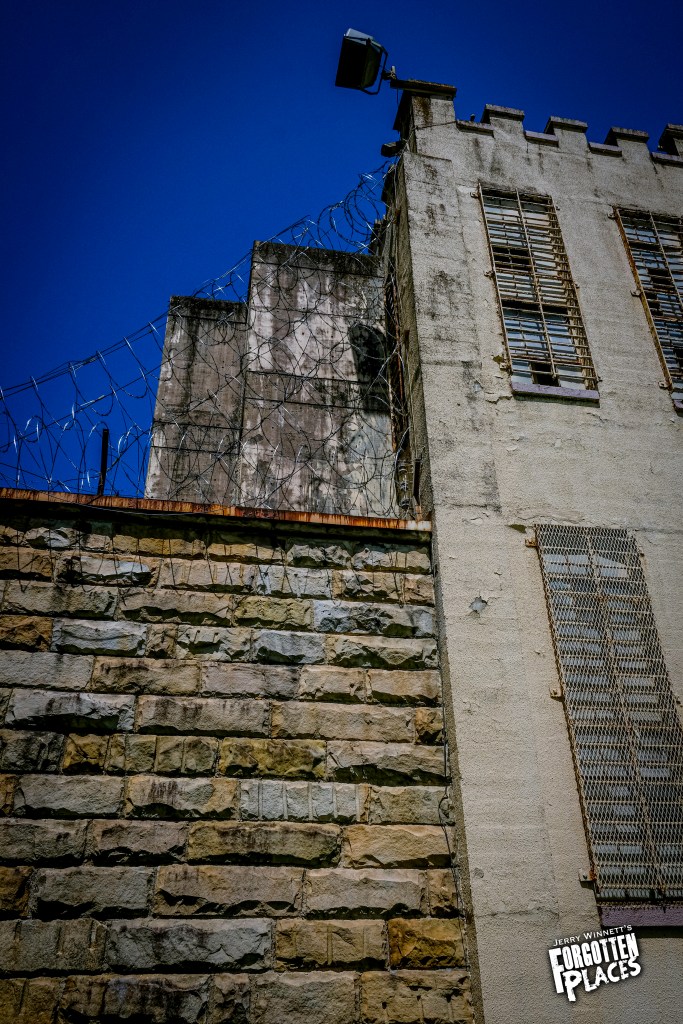
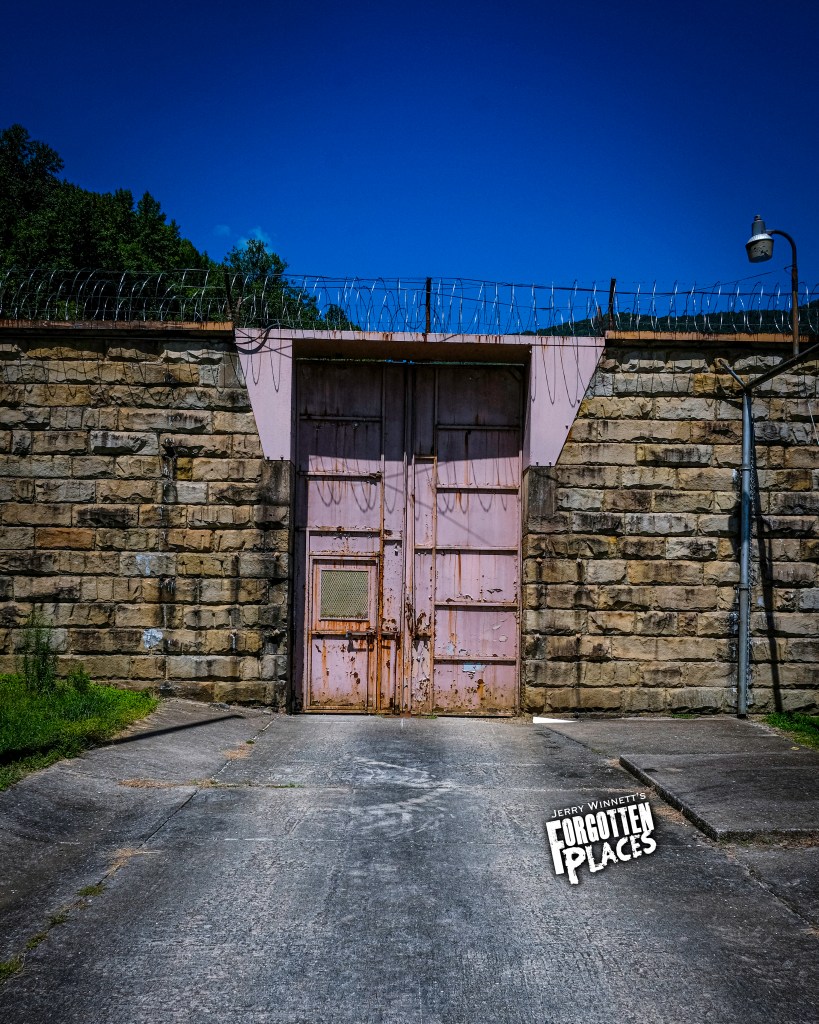
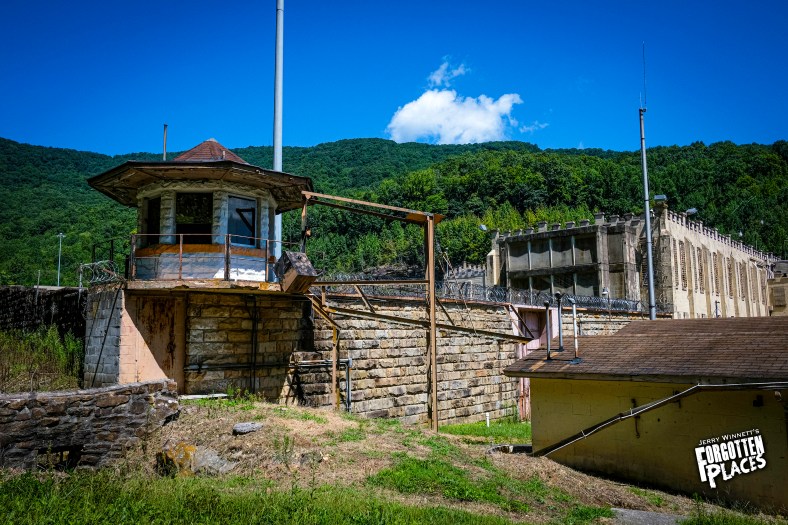
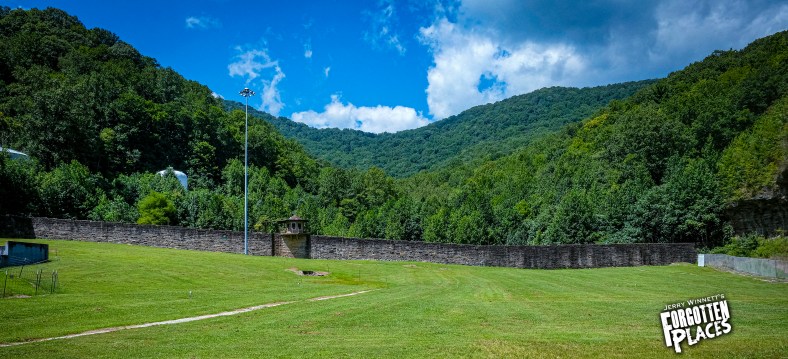
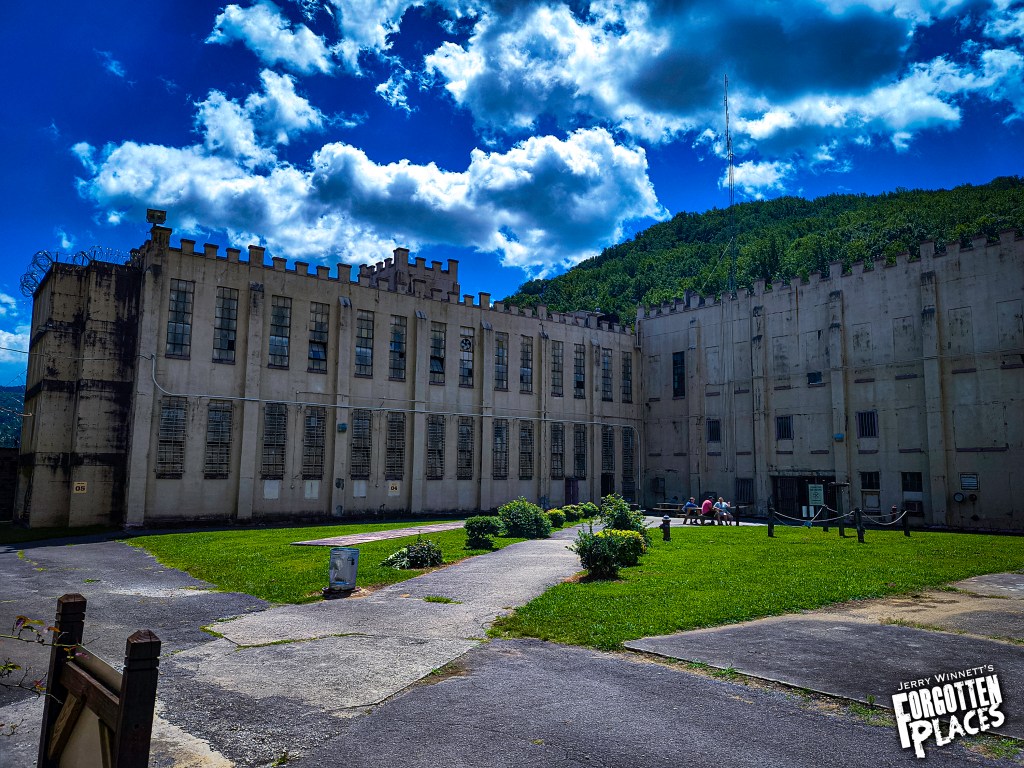
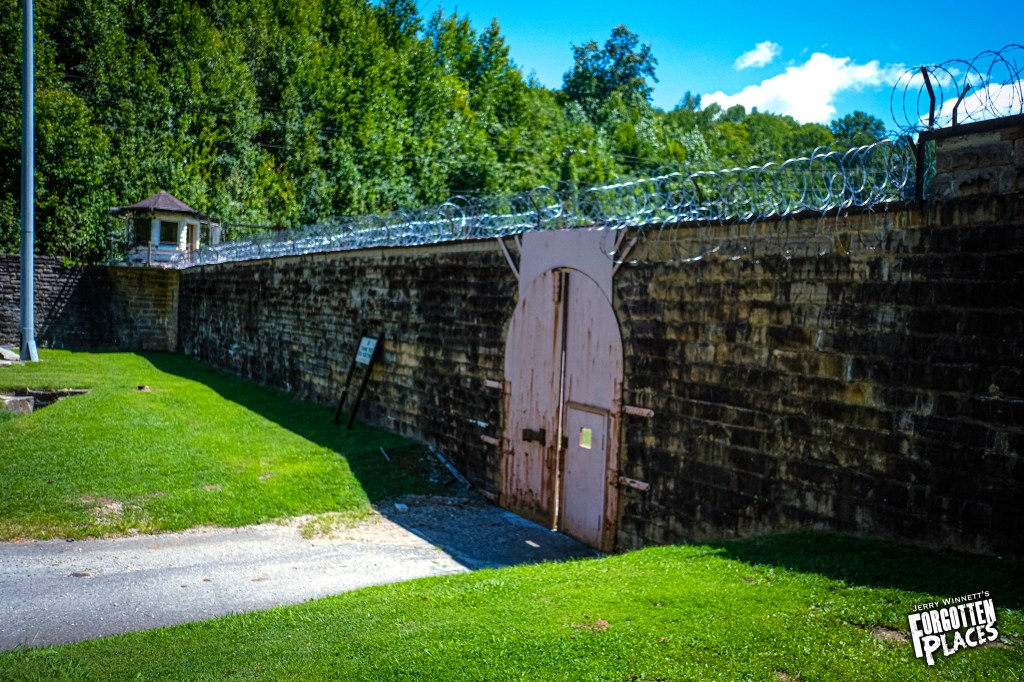
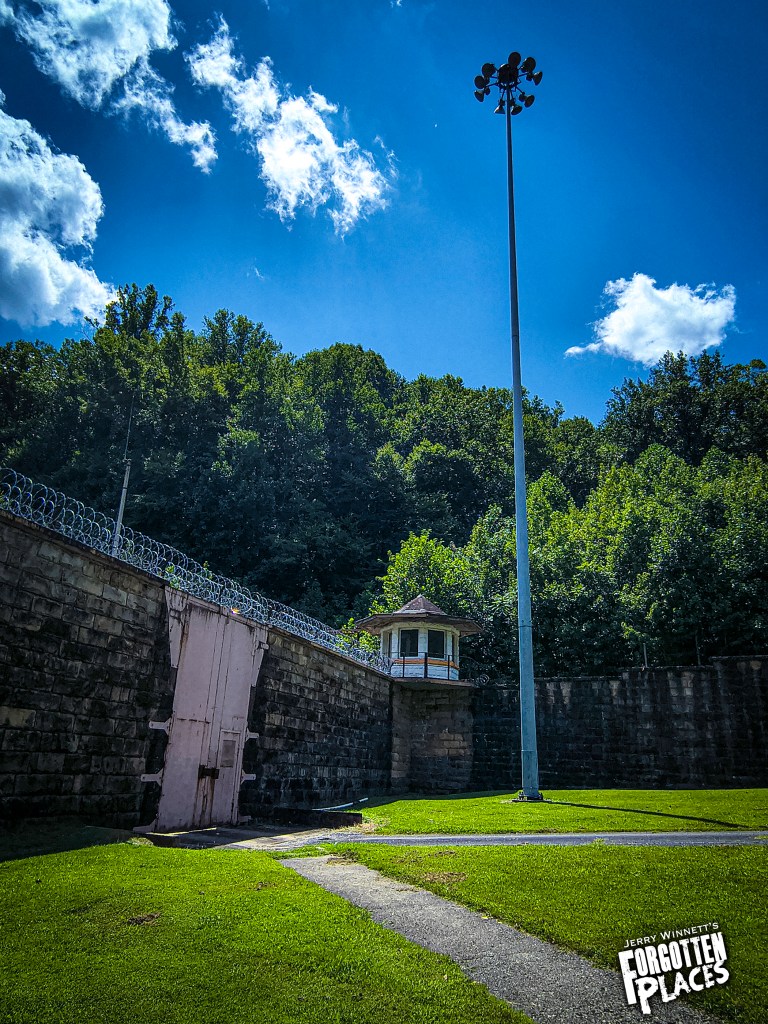
Planting my feet upon the ground I stopped and took a good long look at the foreboding building that sprawled to either side of the parking lot. Flanking the walls were thick stone walls that receded in the distance. That rear wall held back the green mountains behind them, just as it had once held prisoners inside. I didn’t immediately go into the prison. Putting my camera’s strap around my neck I walked the parking lot, and then to the base of left hand corner tower. Barbed wire wreathed the top of the walls, creating an intimidating sight, especially when paired with 40′ poles, topped with the alarm sirens, and flood lights. Those lights would have burned all night long. Sleeping with those lights brightening up the yard must have taken some time to get used to. Once I was done taking a few shots of the walls, the towers, and the prison’s brutally imposing exterior I went on in.
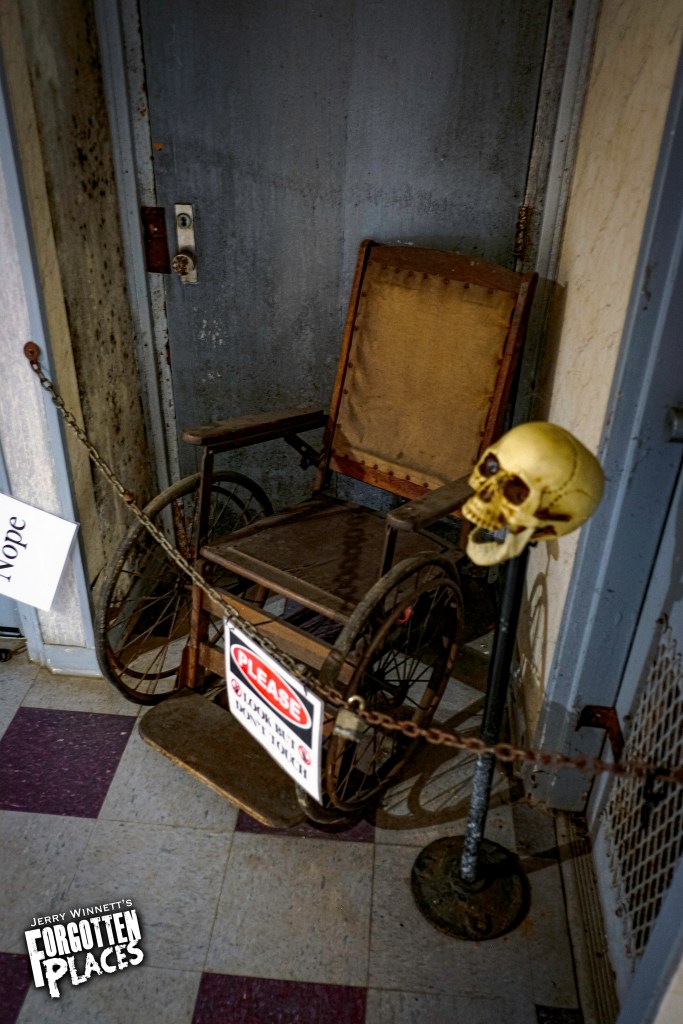
The entrance is intentionally bland. It’s meant to begin the process of dampening the moods of those who would be serving time. Hell, it dampened my mood and I paid to get in. Once inside you go to a small window and redeem your ticket. Here you’re given a device that looks like a cellphone, and comes with ear phones. On the device is a recorded track that walks tourists through the prison, and tells the listener the history of Brushy Mountain. The tour breaks down the prison blocks, and the routines inmates endured. The tour also highlights the more infamous prisoners such as Byron Looper, James Earl Ray, and Paul Dennis Reid, and George Hyatte. After redeeming my ticket I spied a skull placed upon pole, and standing by an ancient wheel chair. This skull is what greets visitors at the portico leading into the Control Area. Beyond is of course the hallway that leads to the prison’s rotunda, as well as cell blocks A and B. I’d like to tell you that I knew which Block I explored first. I wish I could tell you what was on the recording that goes along with the tour. But, I’d can’t. I was there to take photos. With that said I began to wander to the block to the right of me.
“Inmates and guards described the prison as ‘hell on earth’ and ‘the end of the line.'”
— Common consensus from historical documentation of the facility.
The Accommodations
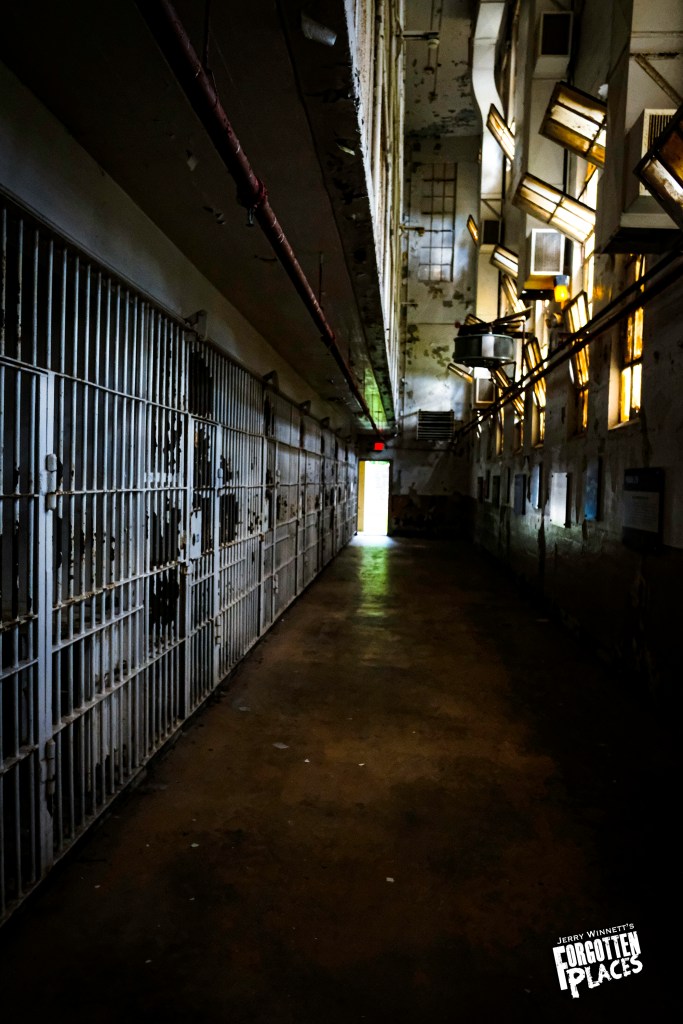
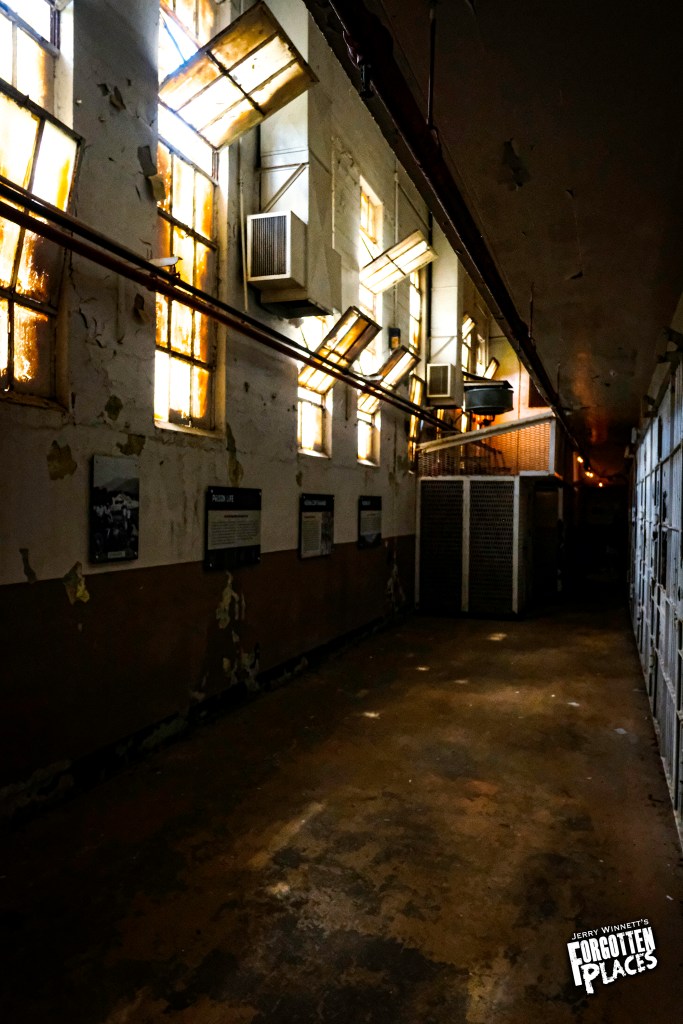
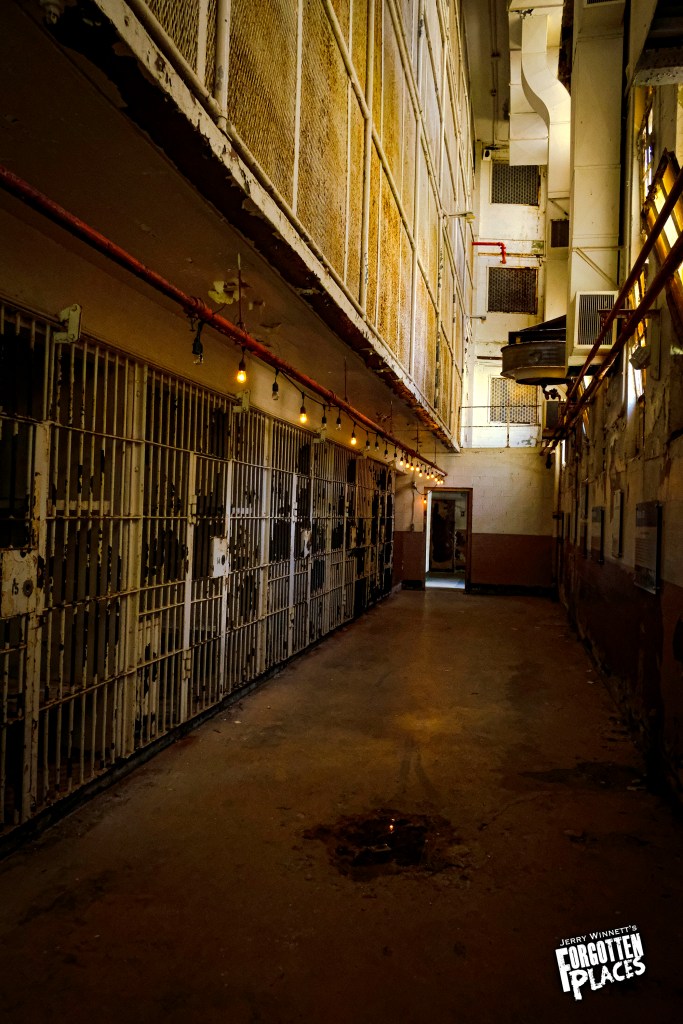
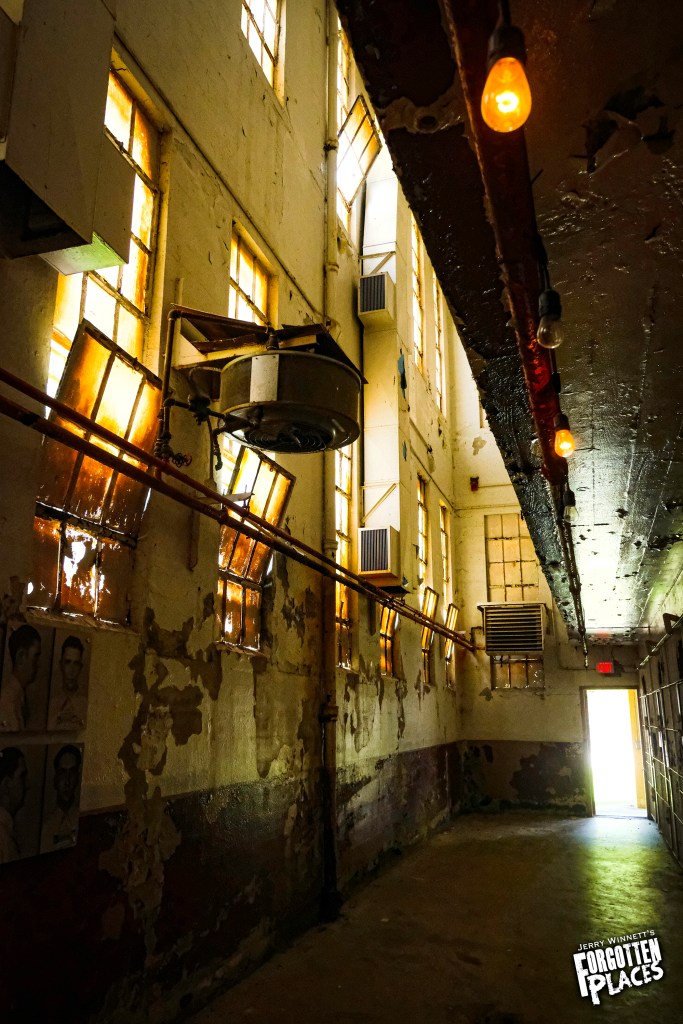
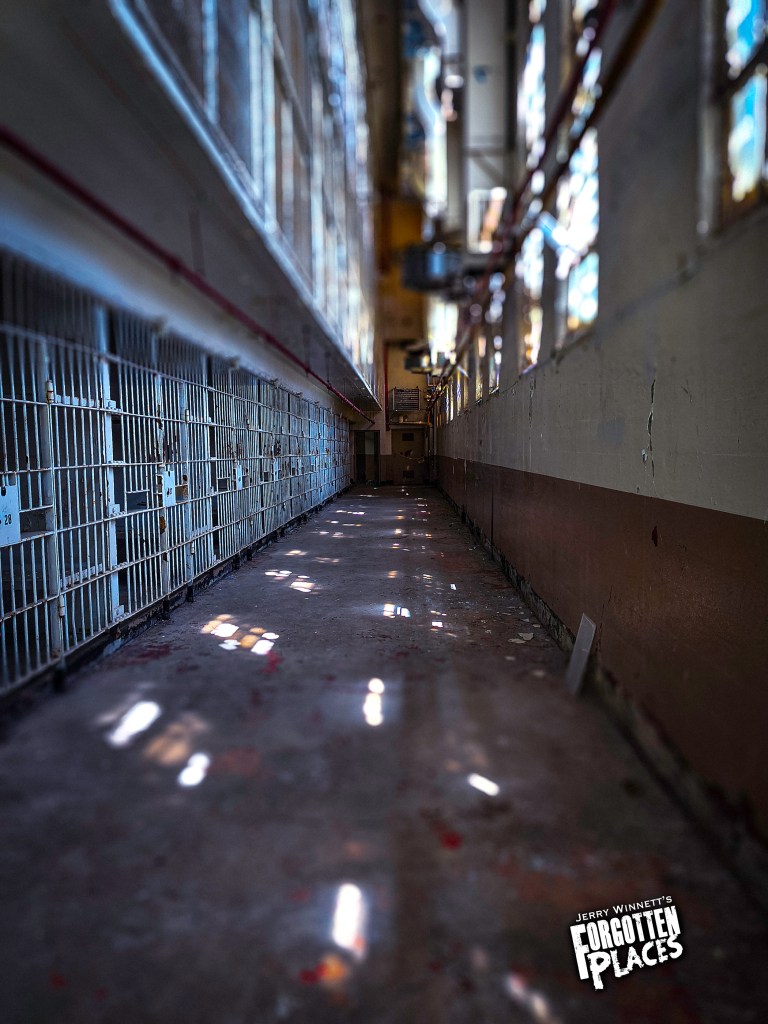
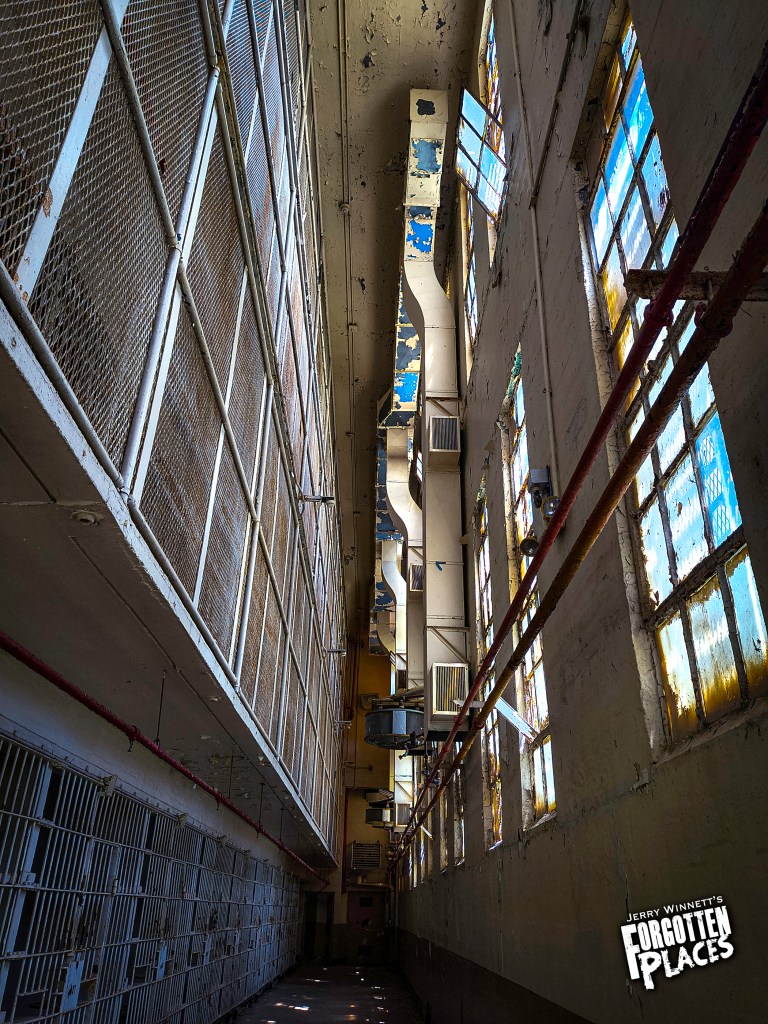
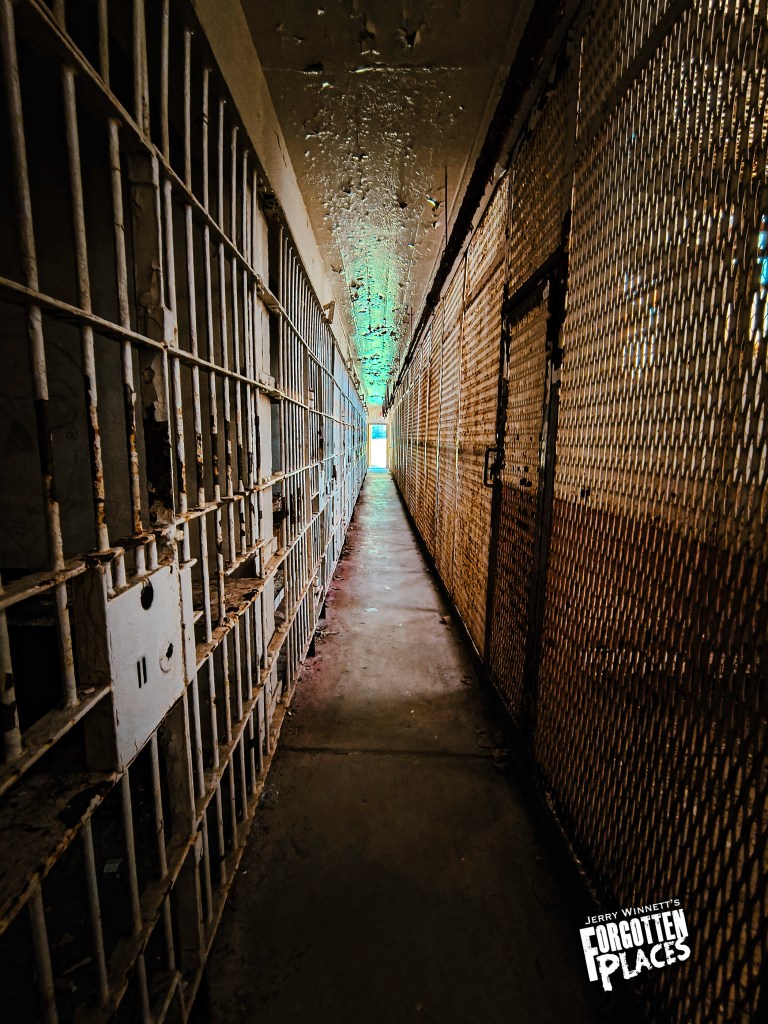
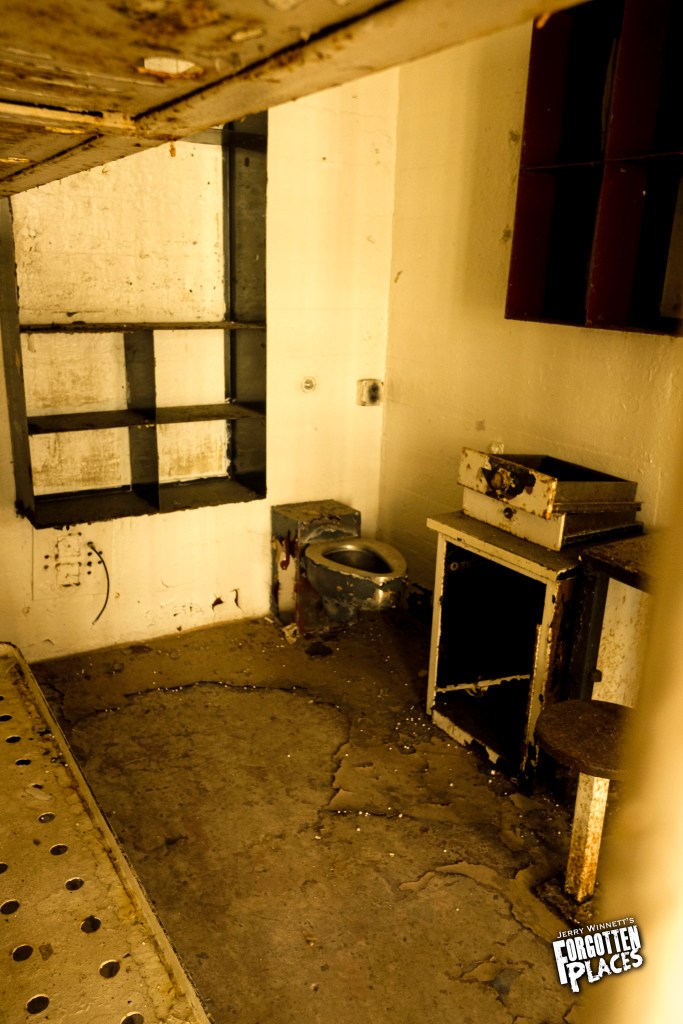
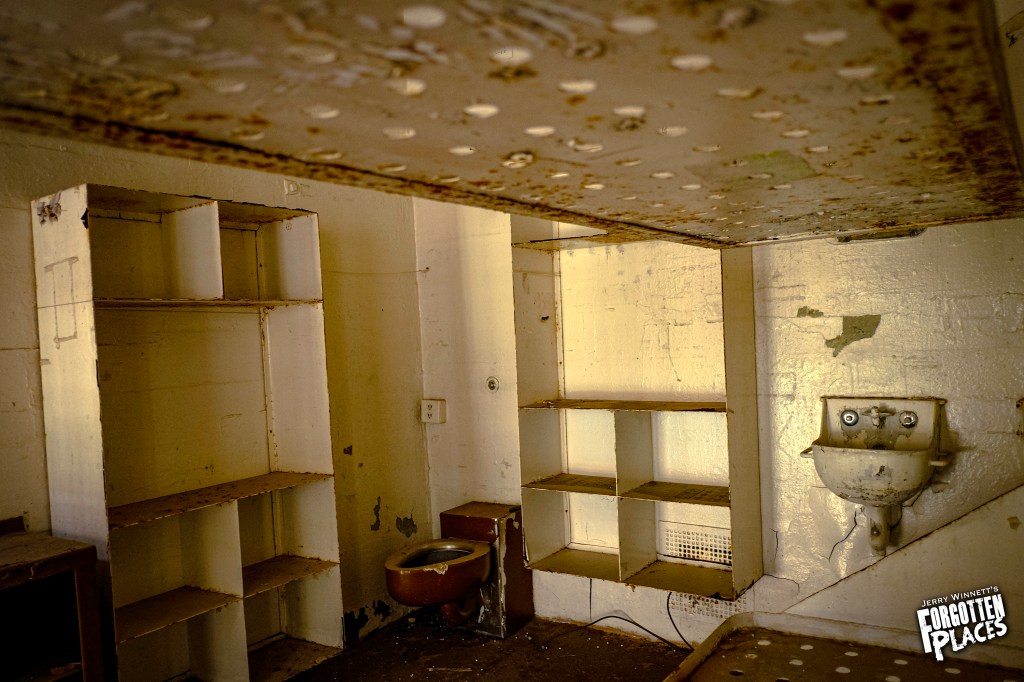
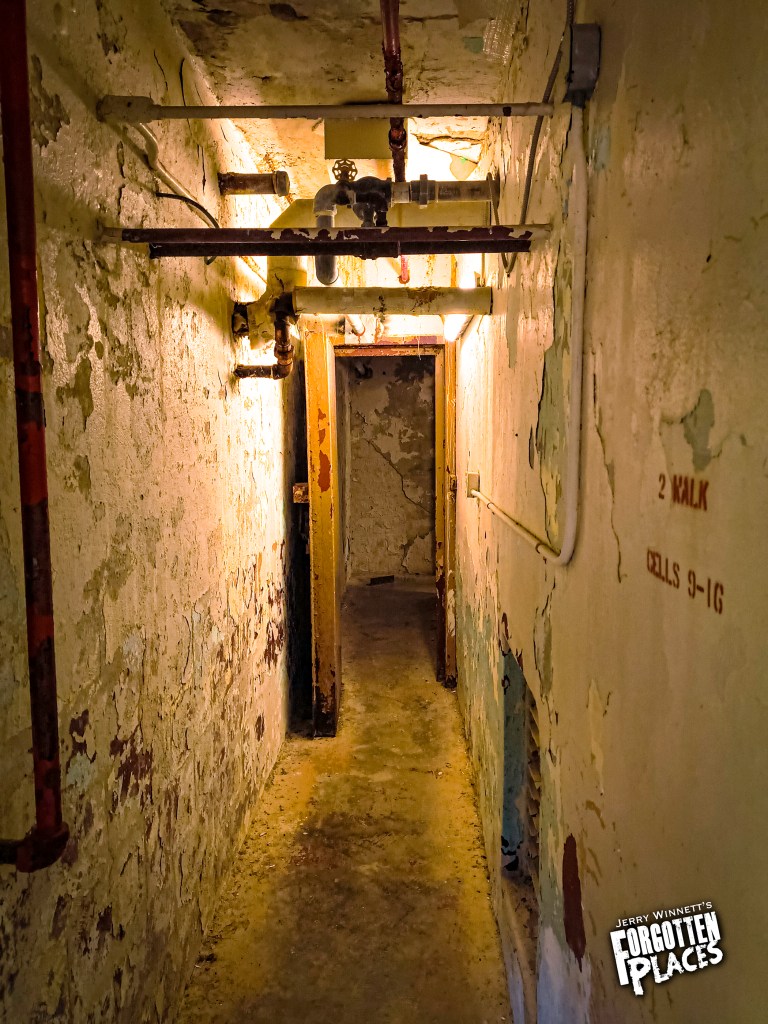
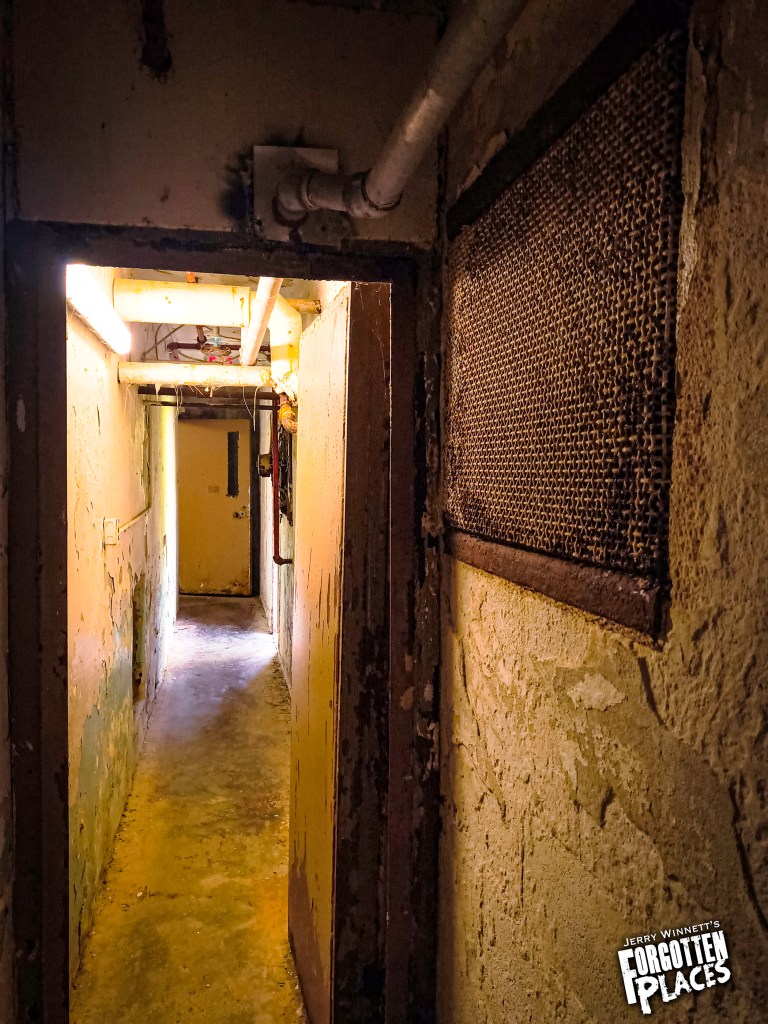
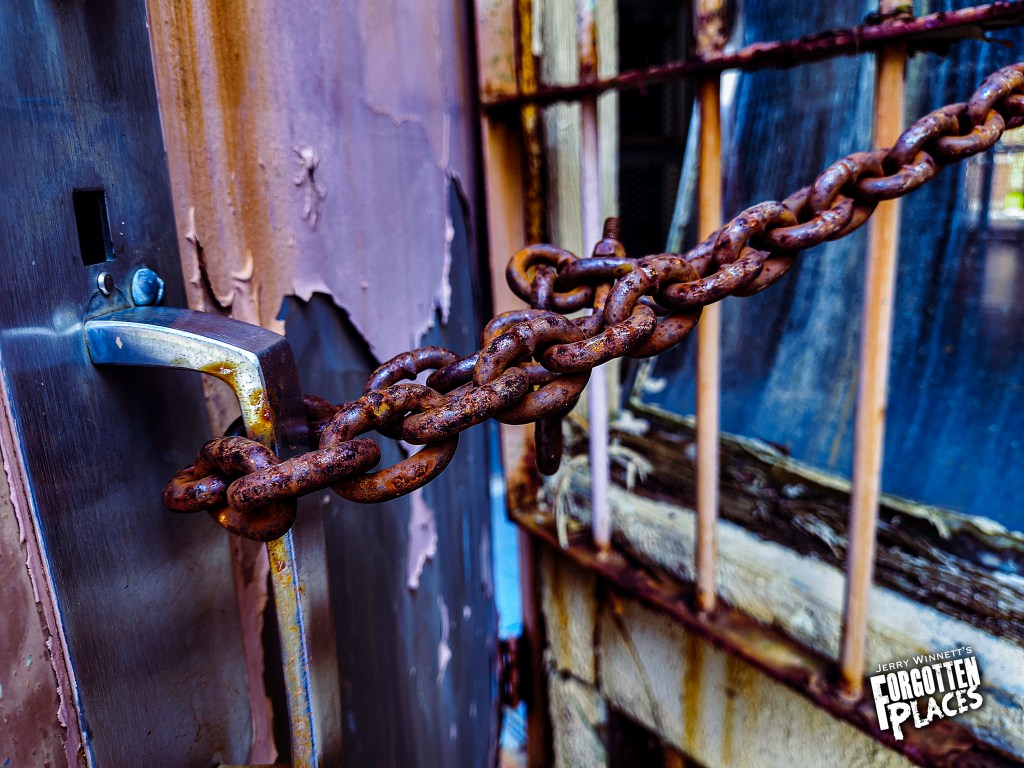
I took a left as I started my wanderings about the prison. If you are familiar with my work you know that the places I usually explore and document are truly abandoned, abandoned to the point where any false step could lead to injury and worse. Brushy Mountain was in contrast, in good shape, physically that is. It didn’t have the abandoned feel I’m used to.To be honest, I don’t feel the prison could ever be truly abandoned. In the century that the prison was in operation thousands entered these gloomily depressing walls. They dwelled within its cramped cells. They showered at the end of each wing in areas that afforded little to no privacy. Prisoners climbed up and down the tiers of each wing. In the mornings they rose early, and then toiled in the mines. Winter, Summer, Spring, Fall it was all the same. I could almost feel the restless presence of those who served in Brushy. Eventually after years of punishment and assuming their sentences were not life long, prisoners left Brushy, either on the legs or in a wooden coffin. All those souls in one form or another left their mark.
These are two cells from different wings. Grim is the only word for the accommodations.
Brushy Mountain’s Barber Shop. ” Just take a little off the top”.
The Mess Hall
Visitation
Glum. That was the feeling that permeated the air. I don’t want to know how the inmates felt when they were here.
Inside the yard
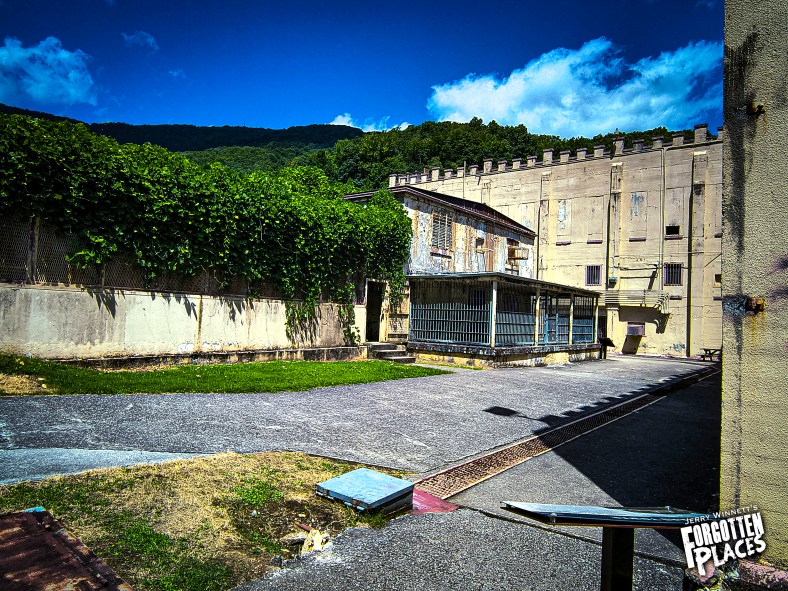
I decided to take a stroll into Brushy’s yard. The only thing that I imagine the inmates may have enjoyed about being at Brushy may have been the land surrounding them. Still, no matter how pretty the view was, the surrounding greenery was like seen as just another bar to freedom. Brushy was on a mountain, surrounded by forrest, and thick foliage from spring to Fall. I doubt fall or Winter would have mattered, escape from Brushy was futile. Those who escaped Brushy were captured within days, this included James Earl Ray, the man who shot and killed Martin Luther King, Jr.
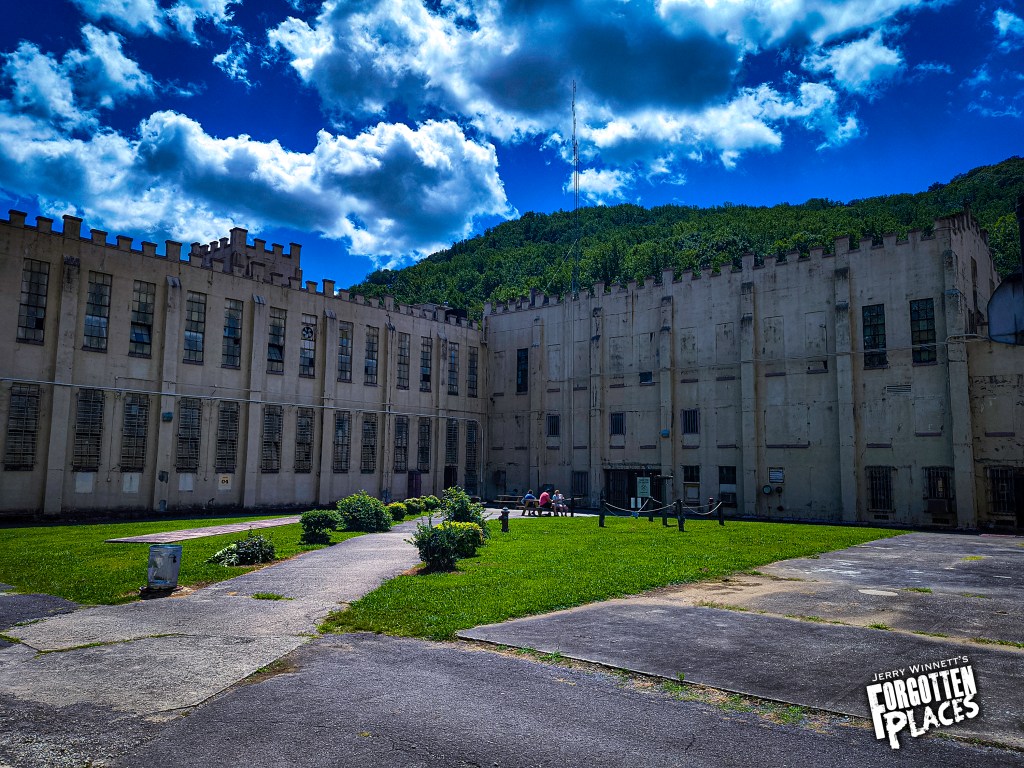
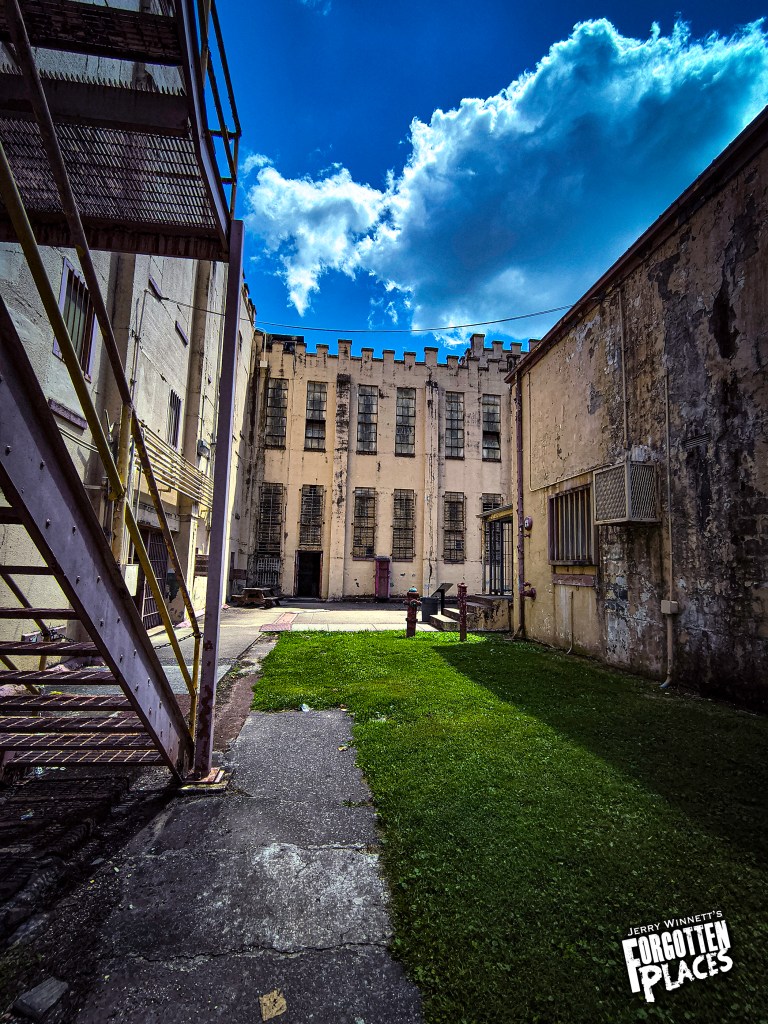
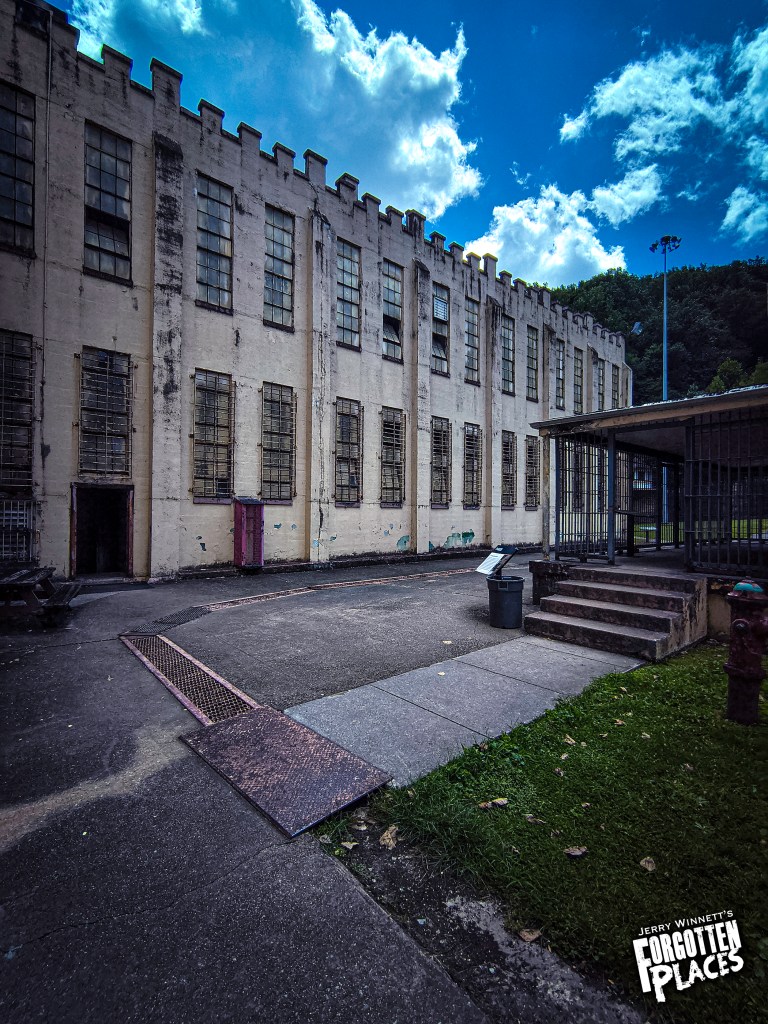
No matter where I turned I was surrounded by grim, daunting walls. Walls of steel, walls of stone, walls of green, all the same.
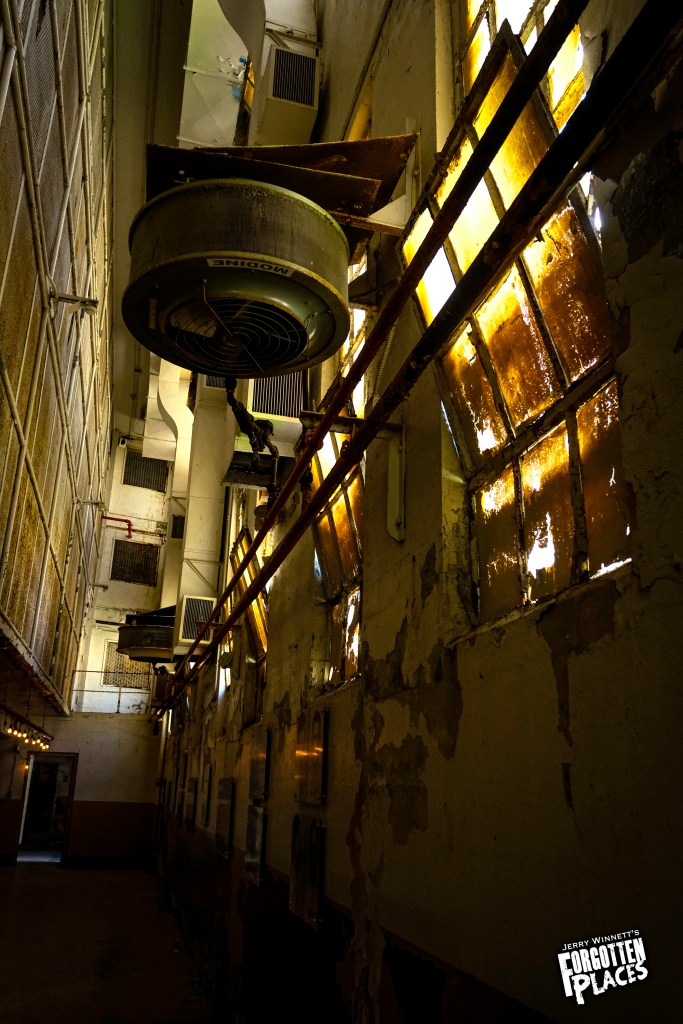
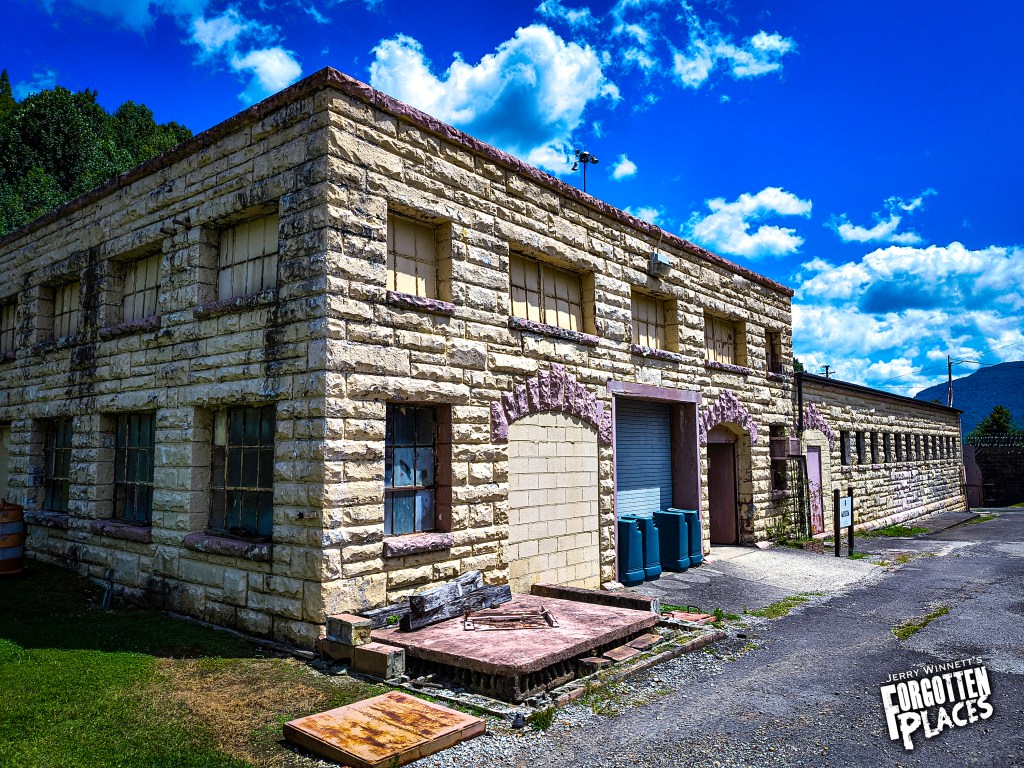
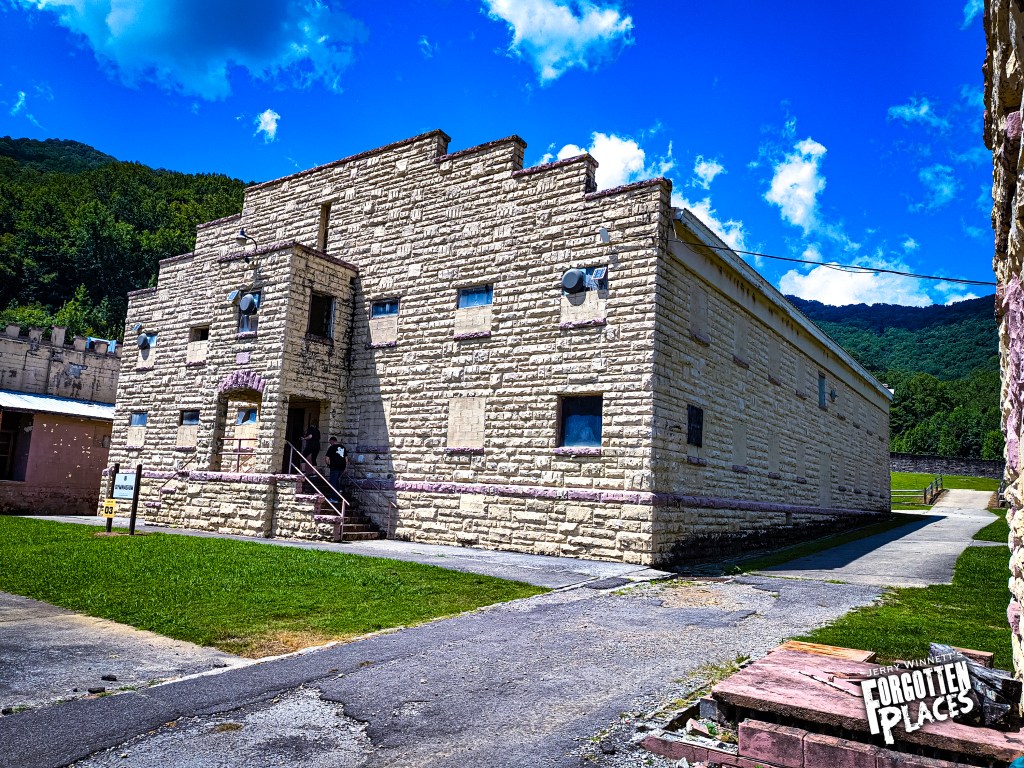
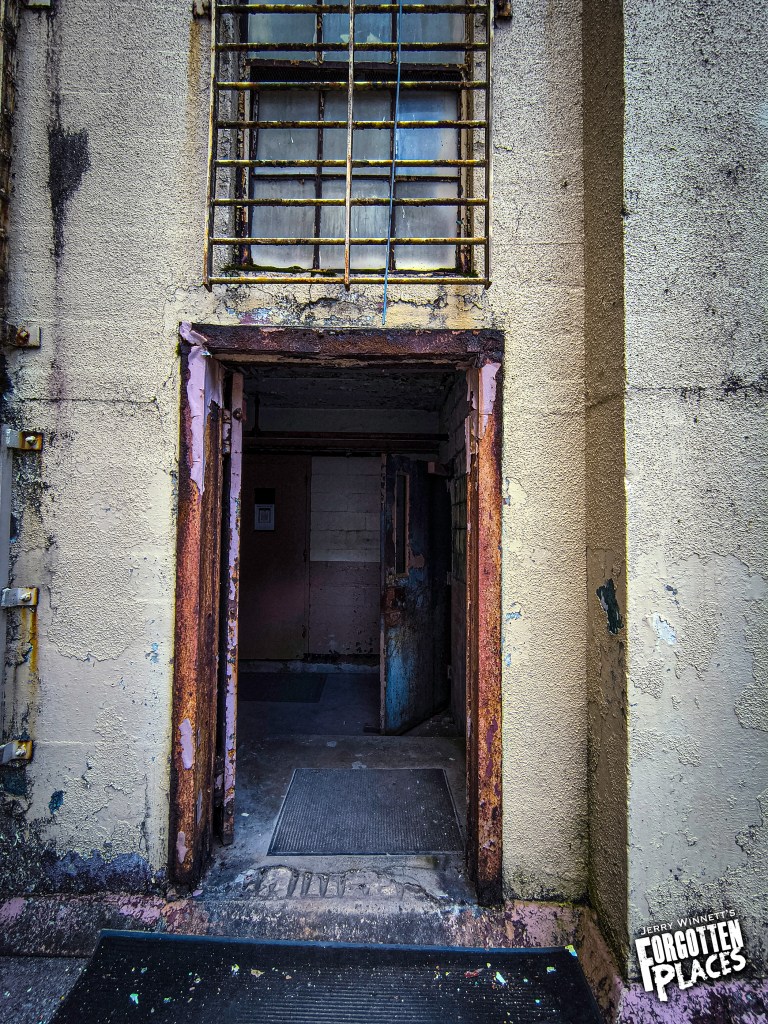
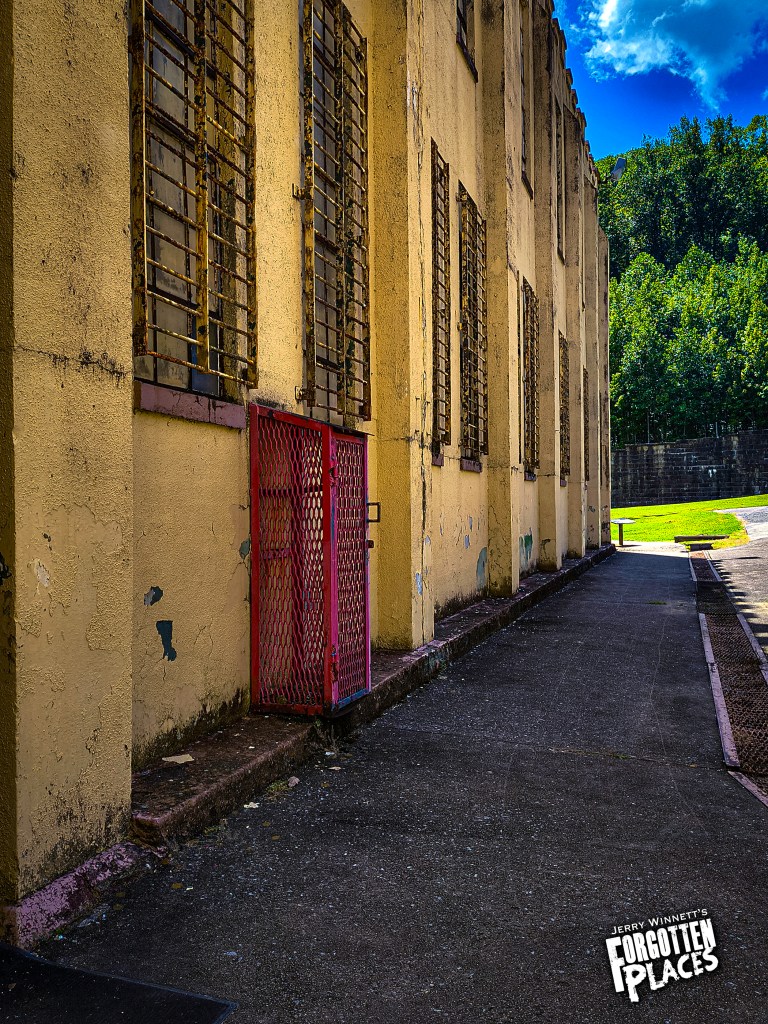
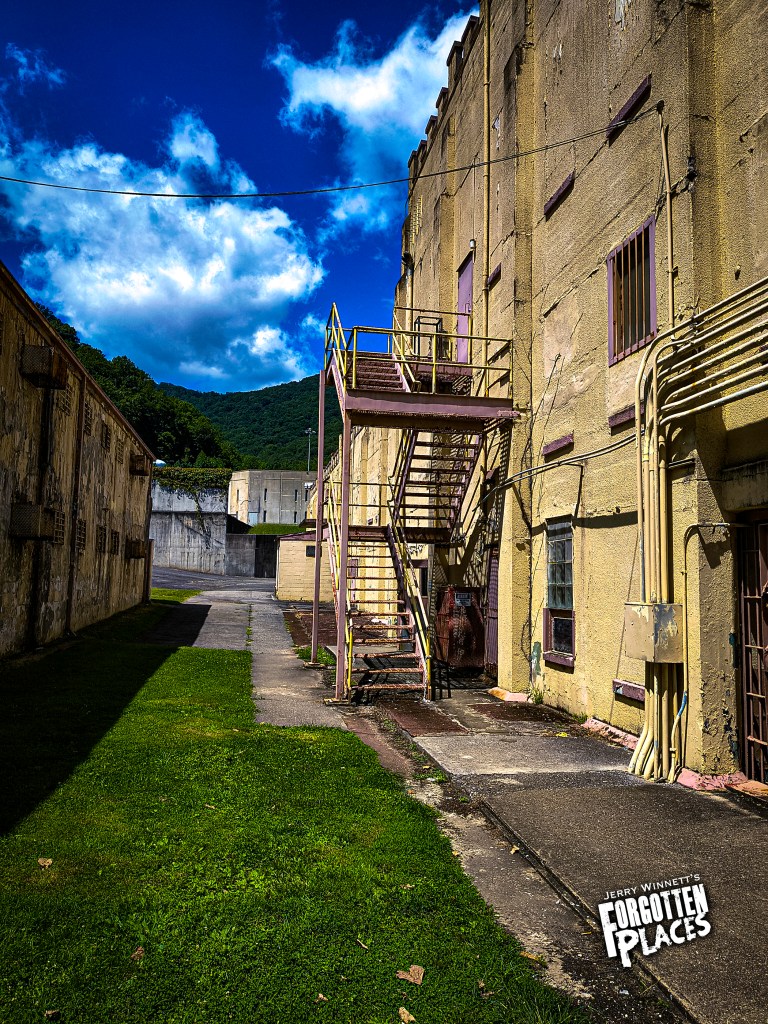
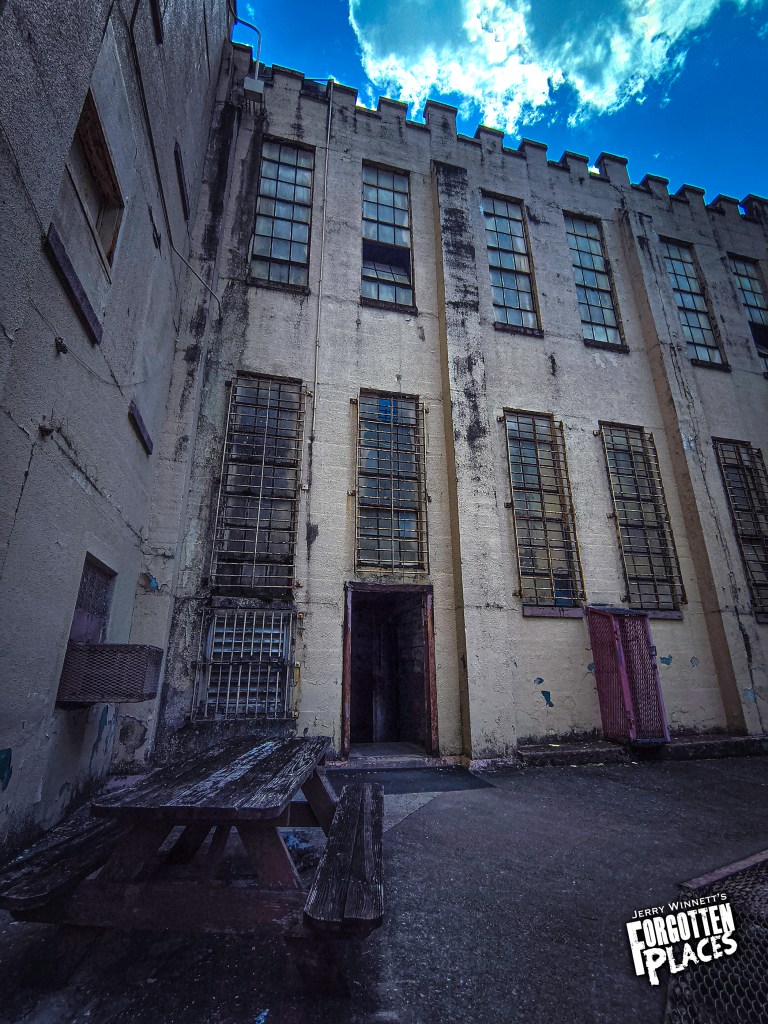
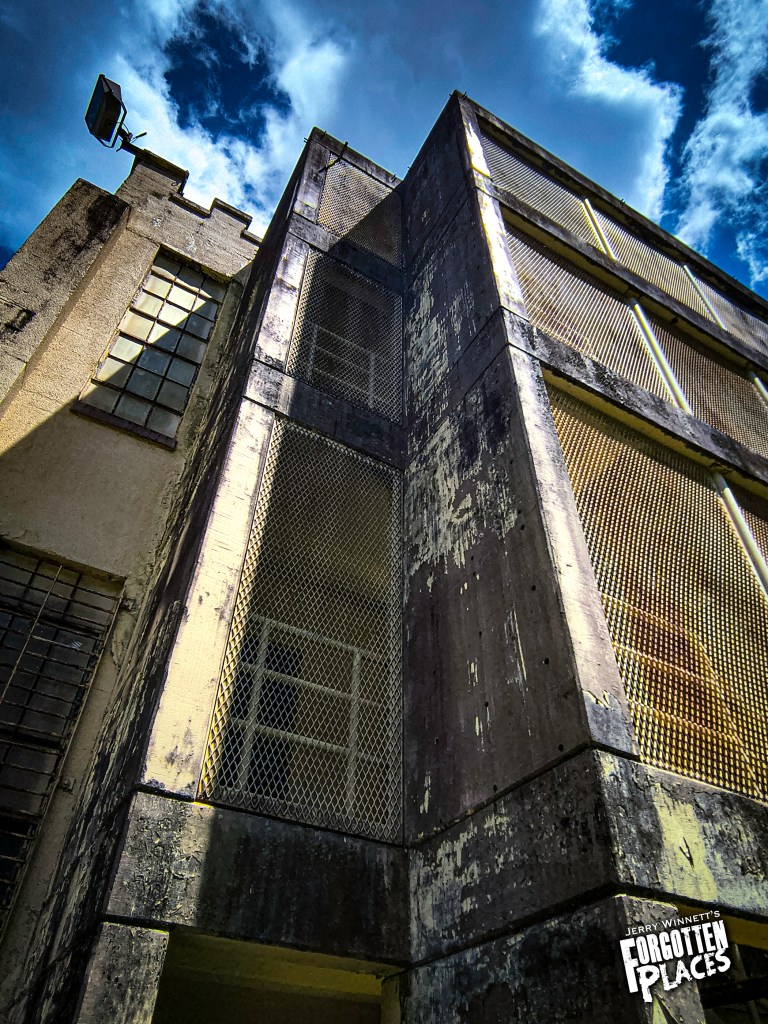
As imposing as the walls were, the buildings them selves were even more oppressive. I strode from the main building to the main yard, and then over to the yard to the side of the prison. These buildings even further enforced the idea of there being no escape.
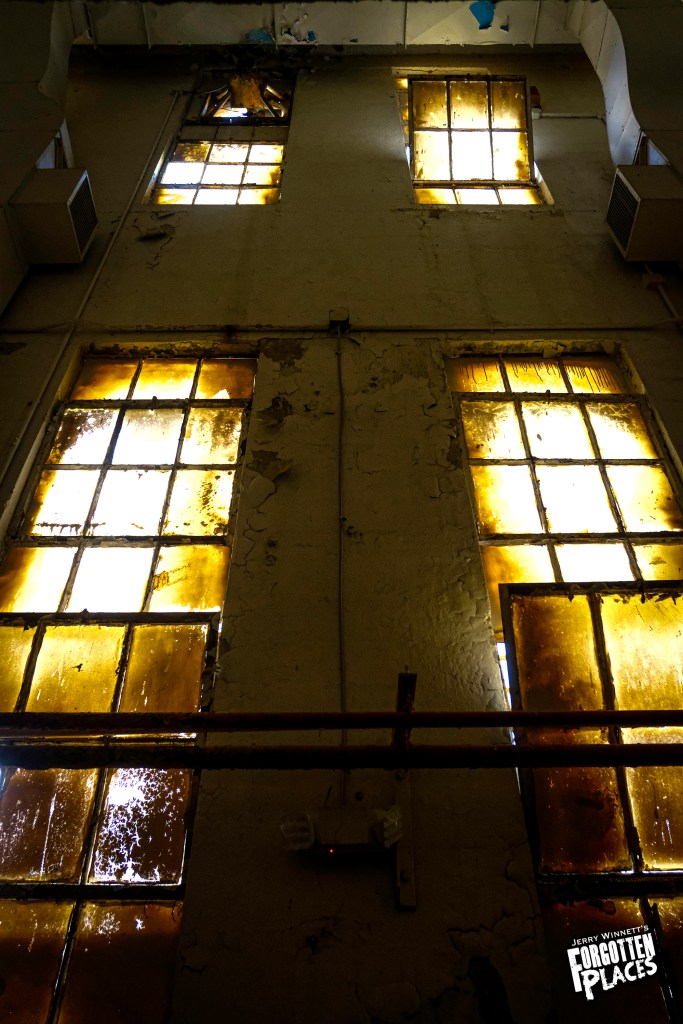
No, this building is not a thousand miles tall. Nor is it a thousand miles wide. But, it felt that way as I stood there looking up into an eternity.
“An estimated 10,000 people died at Brushy Mountain State Penitentiary over the course of its history”. – The Highland Echo
Causes of Death at Brushy Mountain
Harsh Labor: Inmates spent long hours working in dangerous coal mines under brutal conditions and physical abuse.
Disease: Outbreaks of syphilis, tuberculosis, typhoid fever, and pneumonia were common and widespread.
Violence: Overcrowding, poor living conditions, and frequent stabbings or prison attacks contributed heavily to the death toll.
Executions: At least 100 official executions were carried out at the facility during its operational years.
– Historic Brushy Mountain State Penitentiary
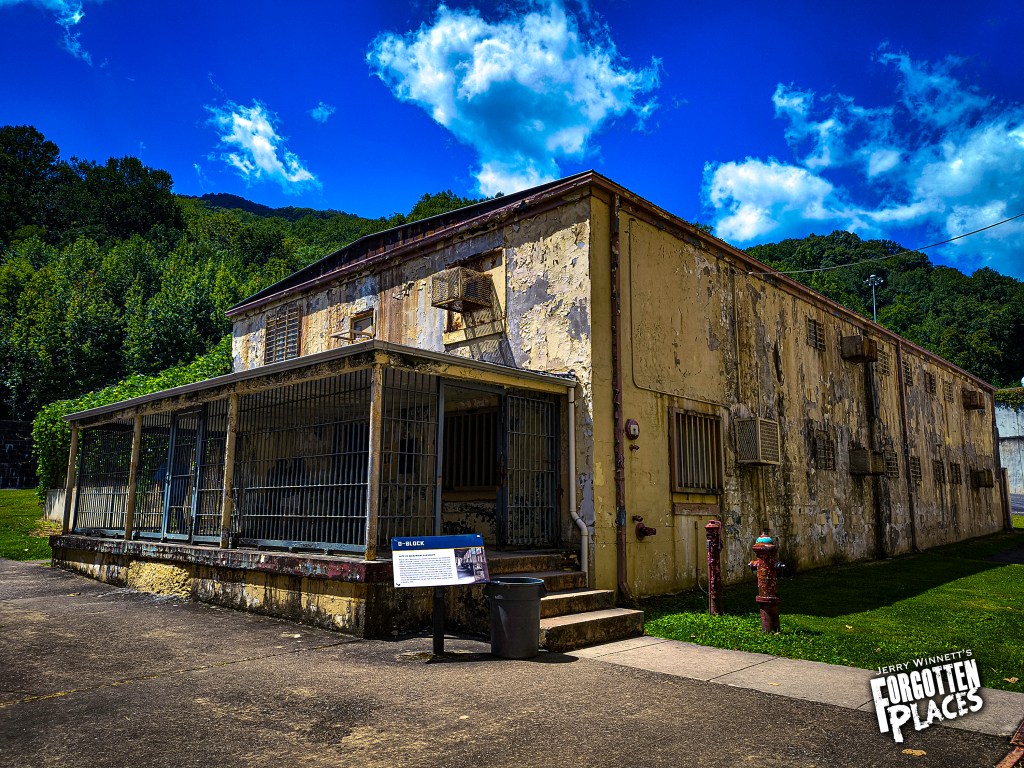
This small, dour, moldy, vine covered building housed inmates that were equally daunting. Of all the buildings inside the grounds of Brushy Mountain, only D-Block truly brought home the true gravity of the institution.The walls of D-Block felt as if they soaked up every ounce of life a man might have had left to him. The only thing “Old Sparky”, the gallows, or later the “injection”, really did was finish the job that D-Block started.
“Criminals do not die by the hands of the law. They die by the hands of other men.” ― George Bernard Shaw, Man and Superman
“Why, then you go on to Death Row at state prison and just enjoy all that good food until it’s time to ride the lightning. It won’t be long.” – Stephen King, the Green Mile
A disturbing secret garden
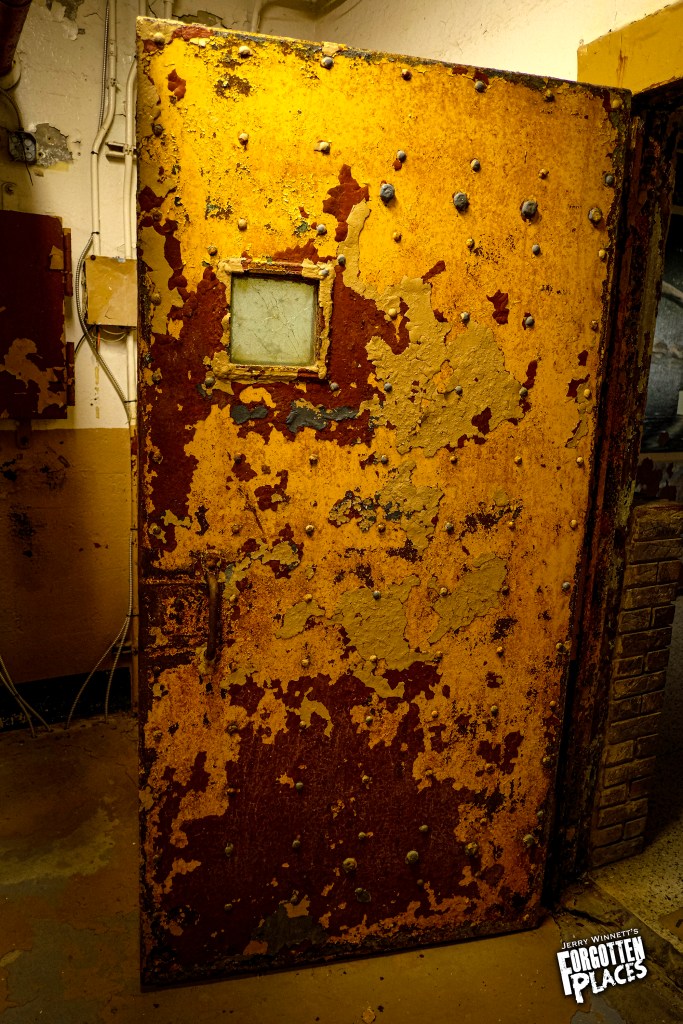
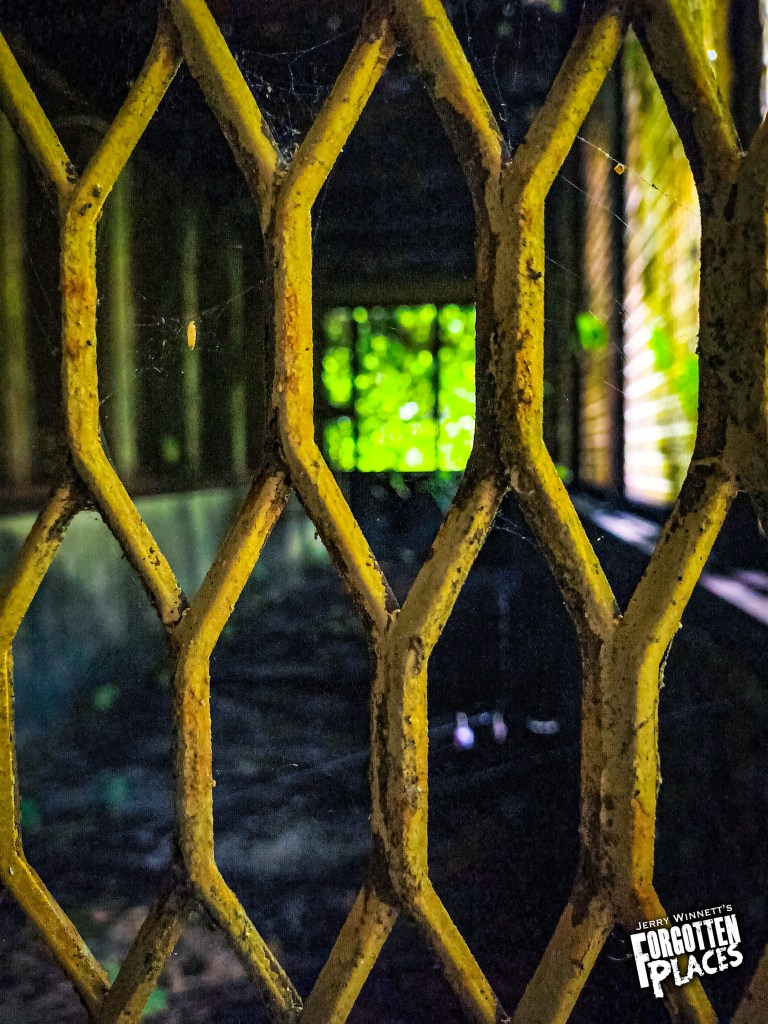
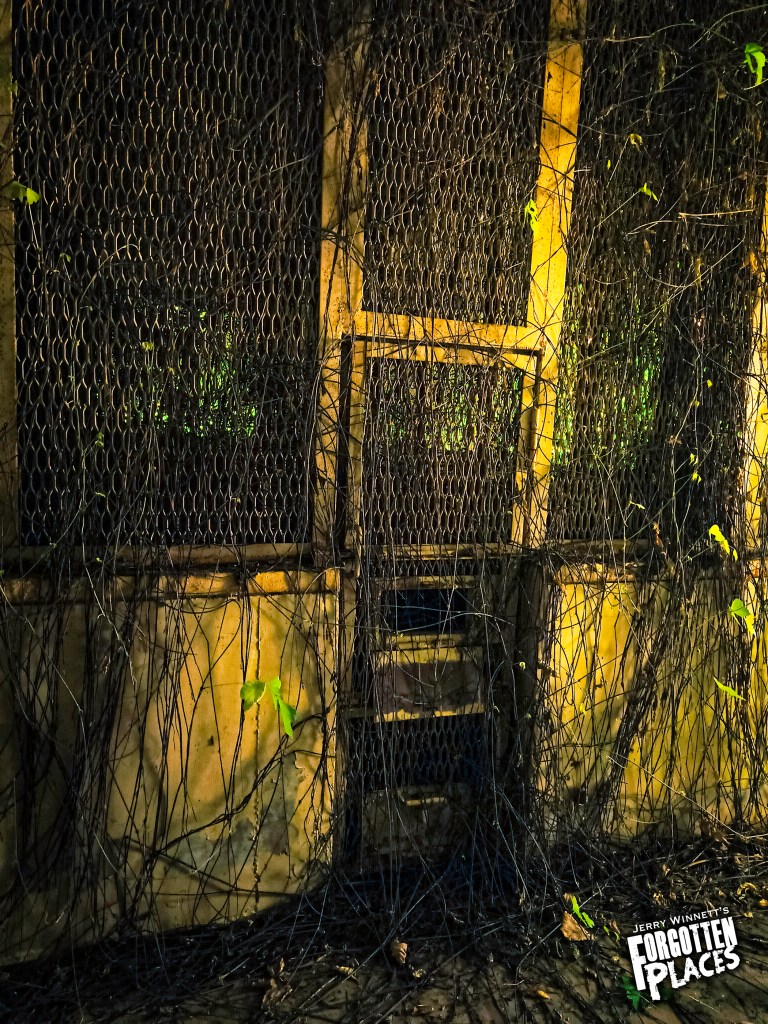
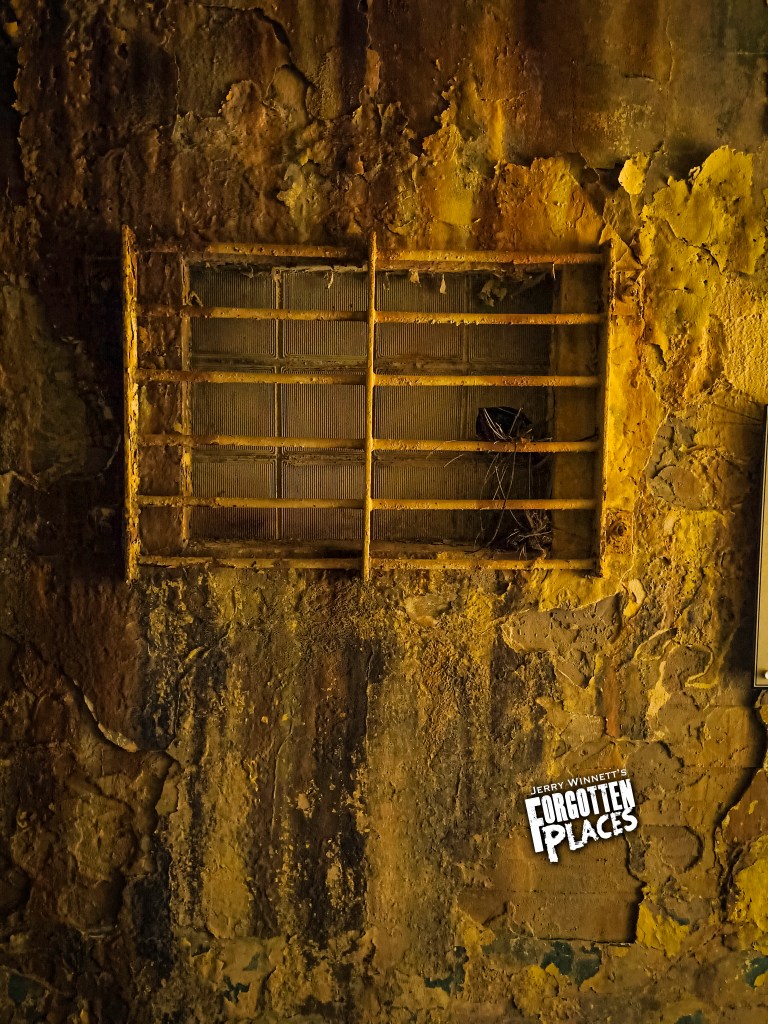
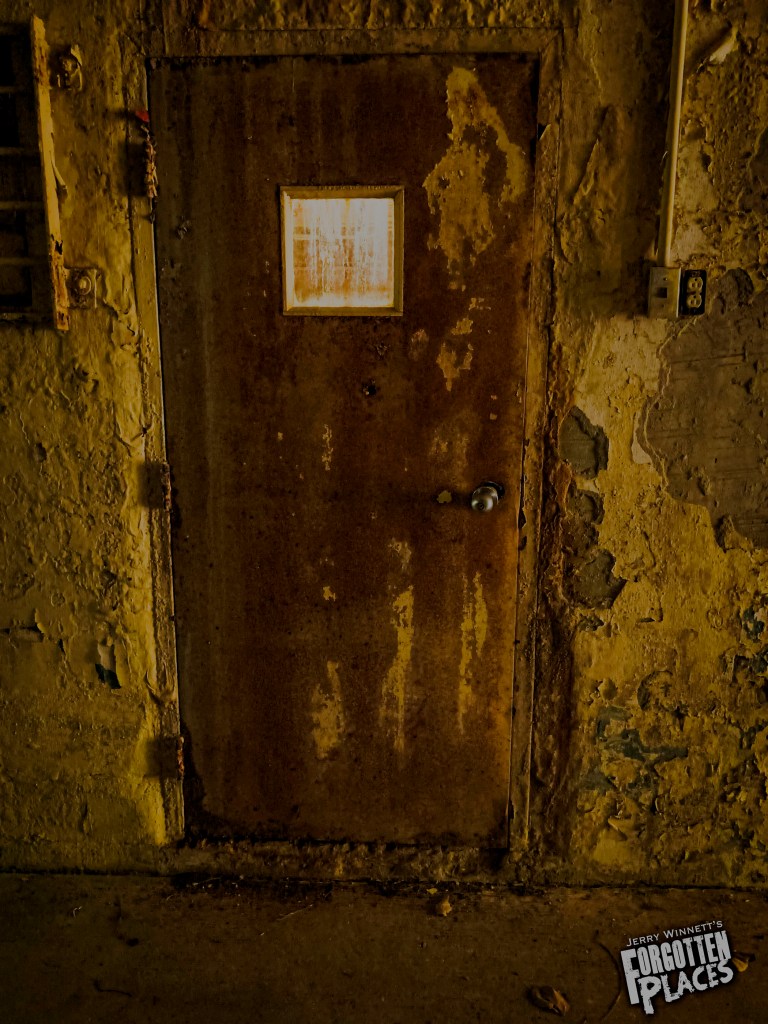
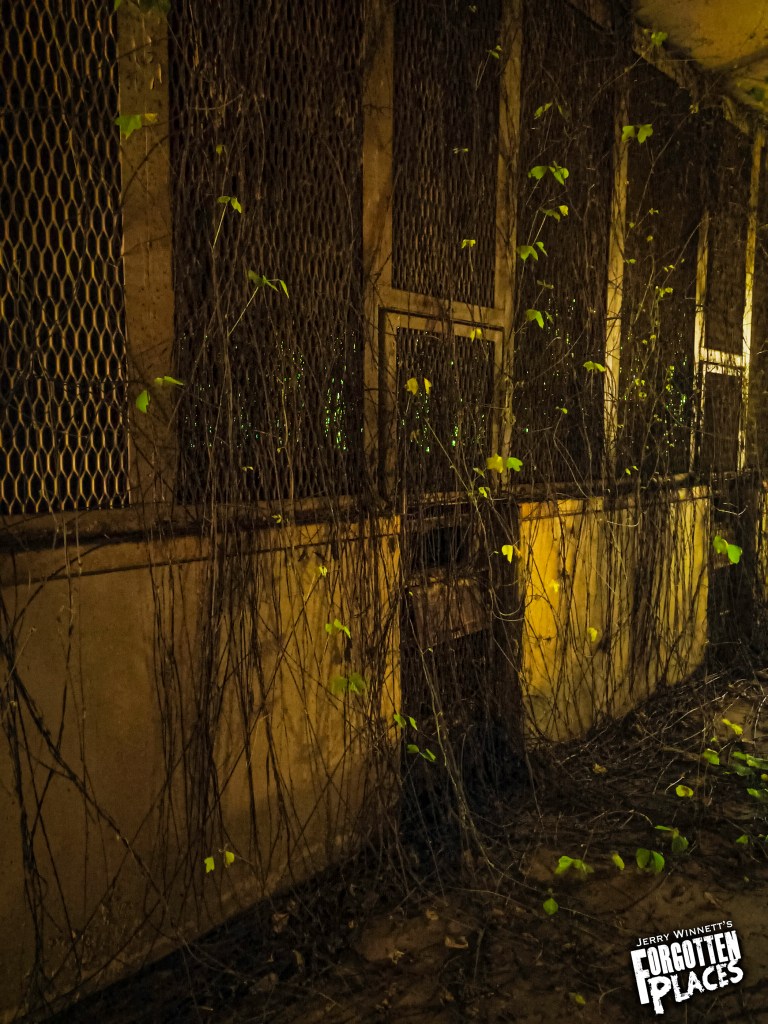
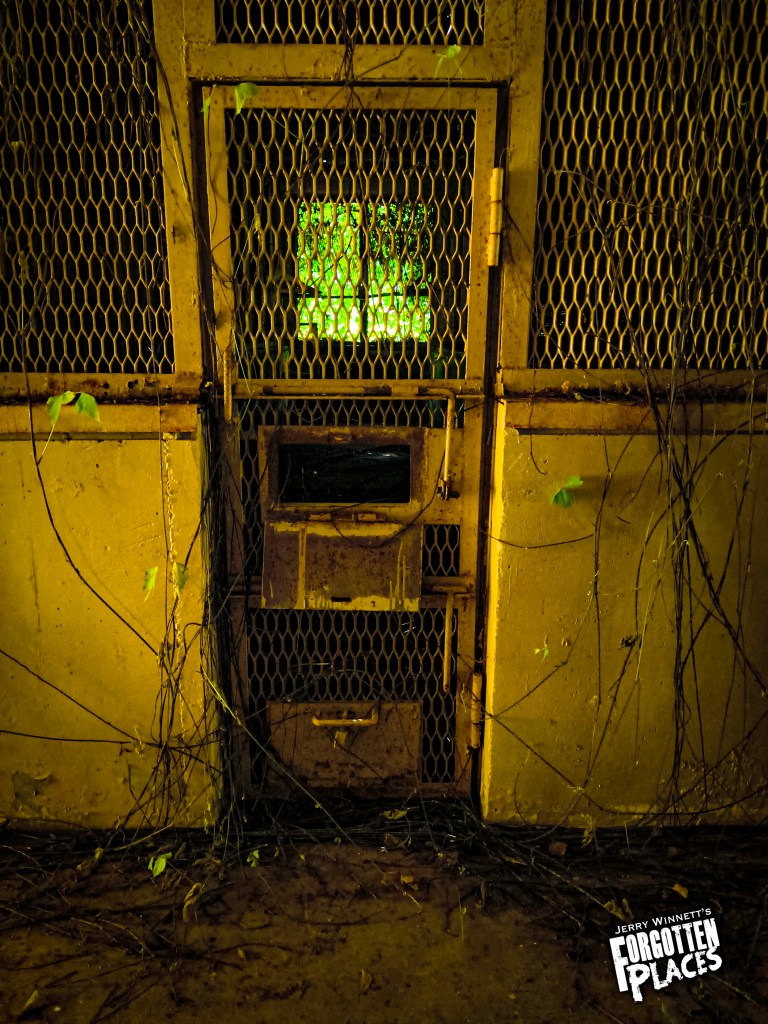
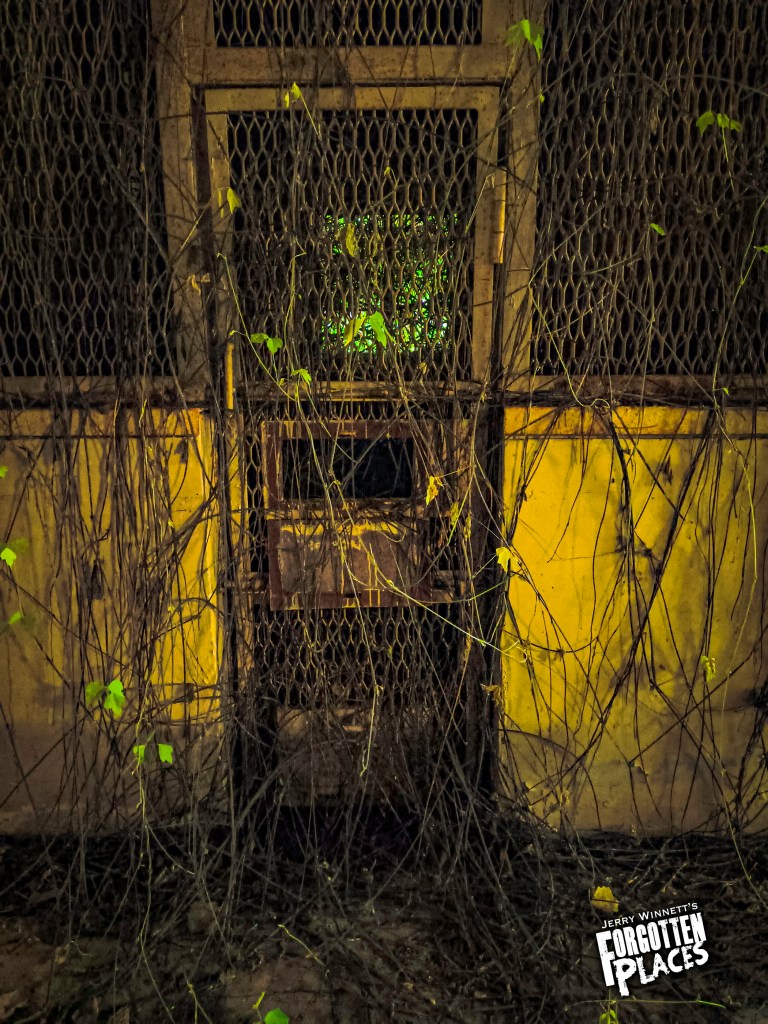
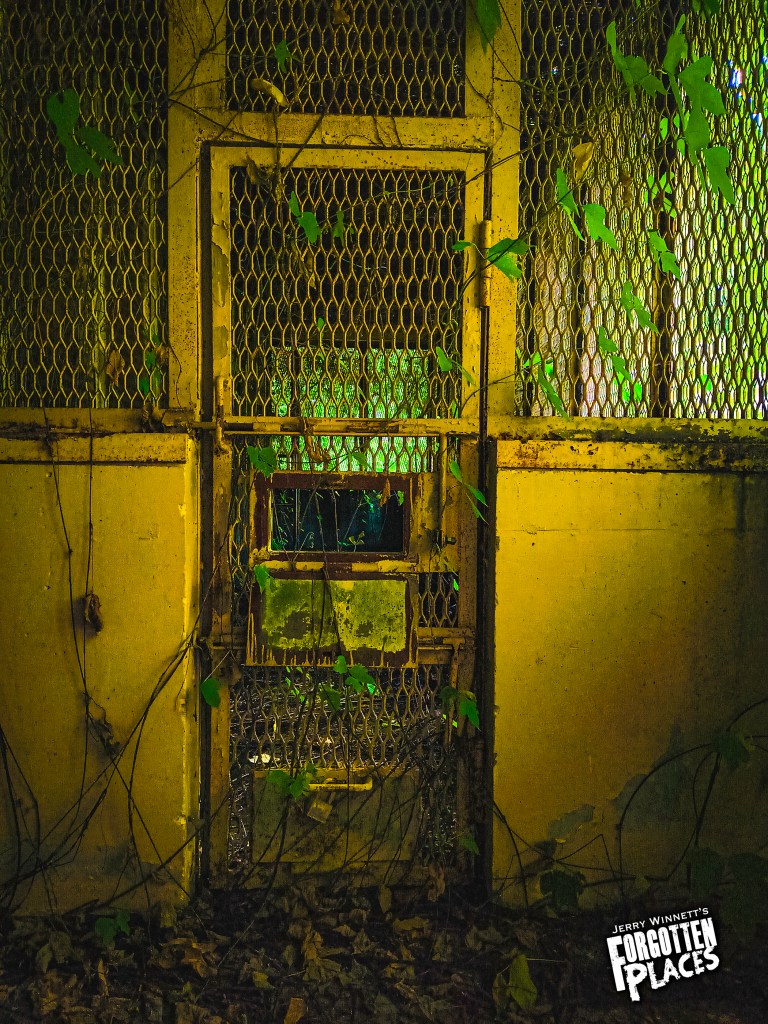
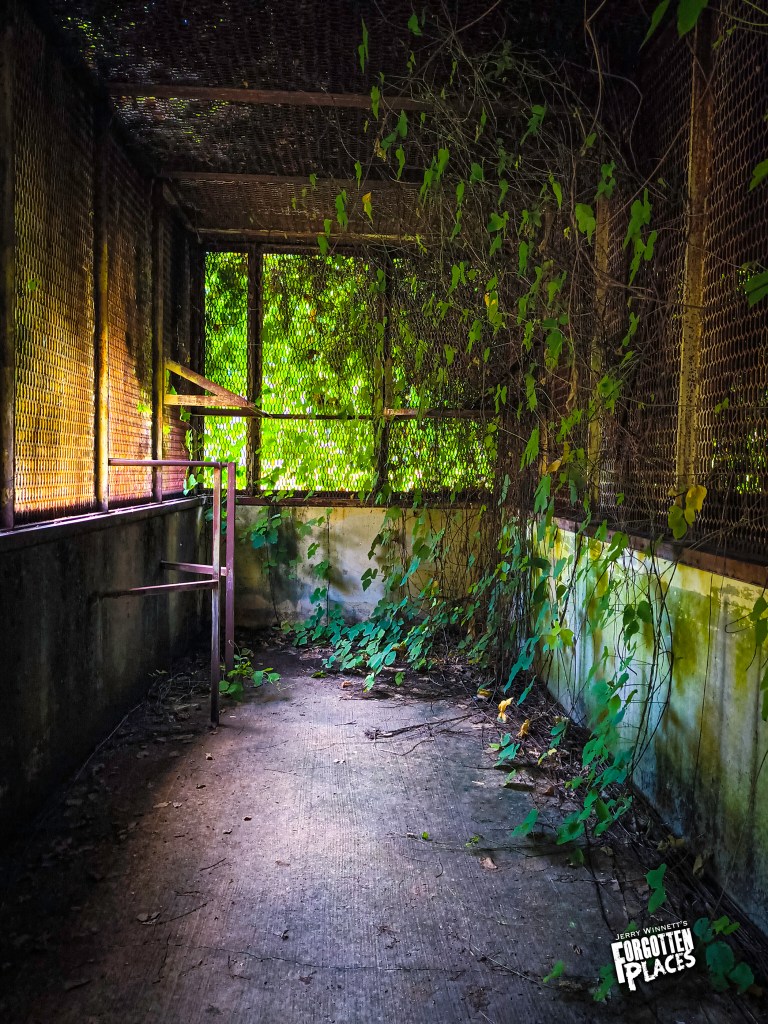
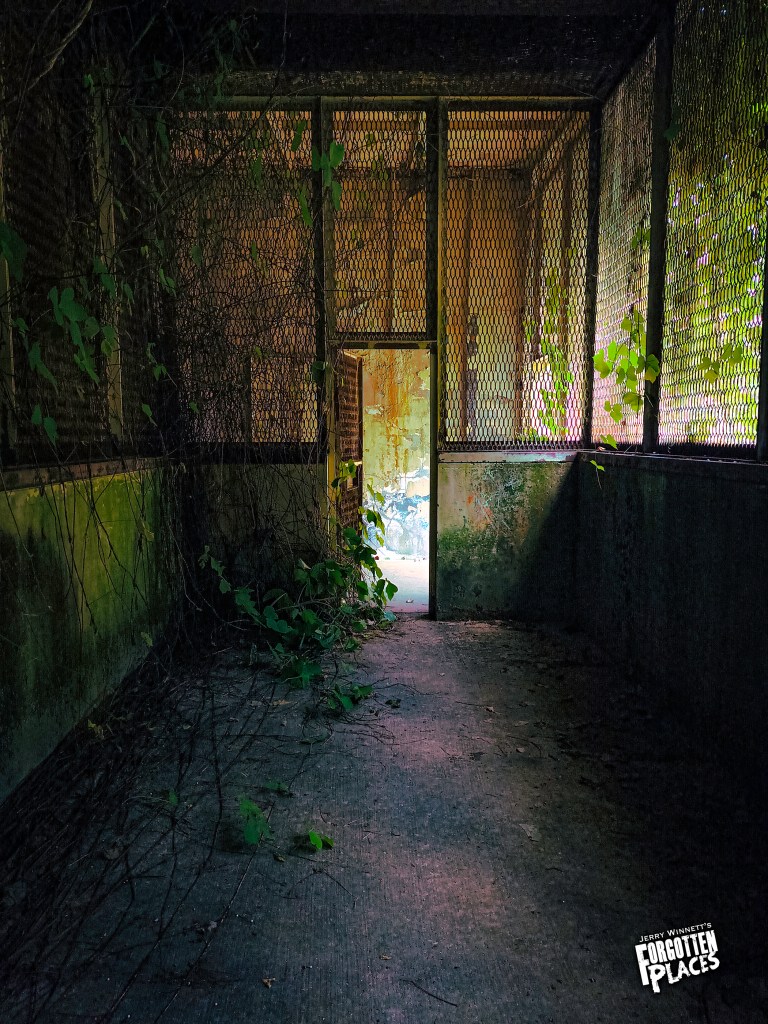
As I walked through D-Block I came across a window. Its bars were gone and through the unbarred window I could see a darkened hall, and directly in my line of sight I could vines. Hungry vines covered the doors to cells that had been vacant for over a decade but had caged countless souls for over a century. Now, when I entered D-Block I’d only witnessed one entrance. I began to look around and quickly found the way in the strange secret garden that was on the side of D-Block. If you look back at the photo of the exterior of D-Block you’ll see a patch of Spanish Moss that colonized the roof, and sides of the building. The moss had covered a secondary entrance to D-Block. In I went. My mind was filled with a mixture of awe and trepidation. Before me stretched a gloomy hall, the floor was cement covered in fine dirt. The wall to the right was dingy, and drab yellow. Cracked paint caked the surface of the wall. Here and there pipes lined the wall, as did doors that once led into the building. The end of the hallway was partially covered by the same vines that hid the entrance. To the left of me stood a wall of vines. The riotous growth of vines crawled, carpeted, and nearly obscured a wall of steel that had been painted safety yellow. Multiple doors lurked behind the invasive vines. For a moment I stood transfixed, then slowly turned about in a circle, my mind stilled by the dungeon-like atmosphere. I found myself quieted, and entranced, surrounded by the ghosts of those who once stood locked in these cells, all their hopes extinguished.
“Time takes it all, whether you want it to or not.” – Stephen King, the Green Mile
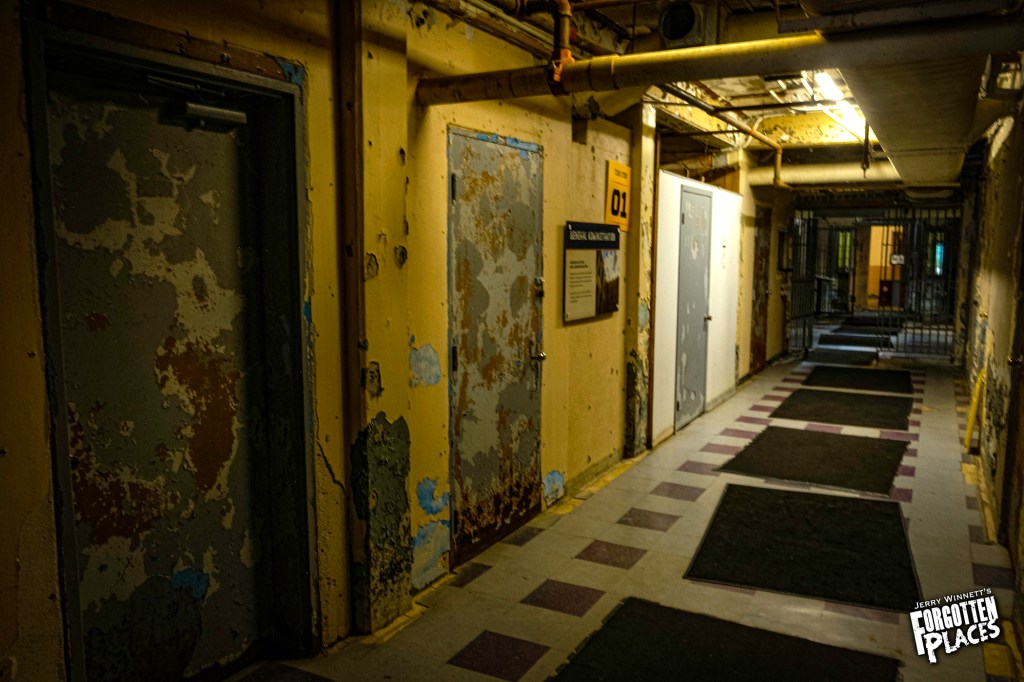
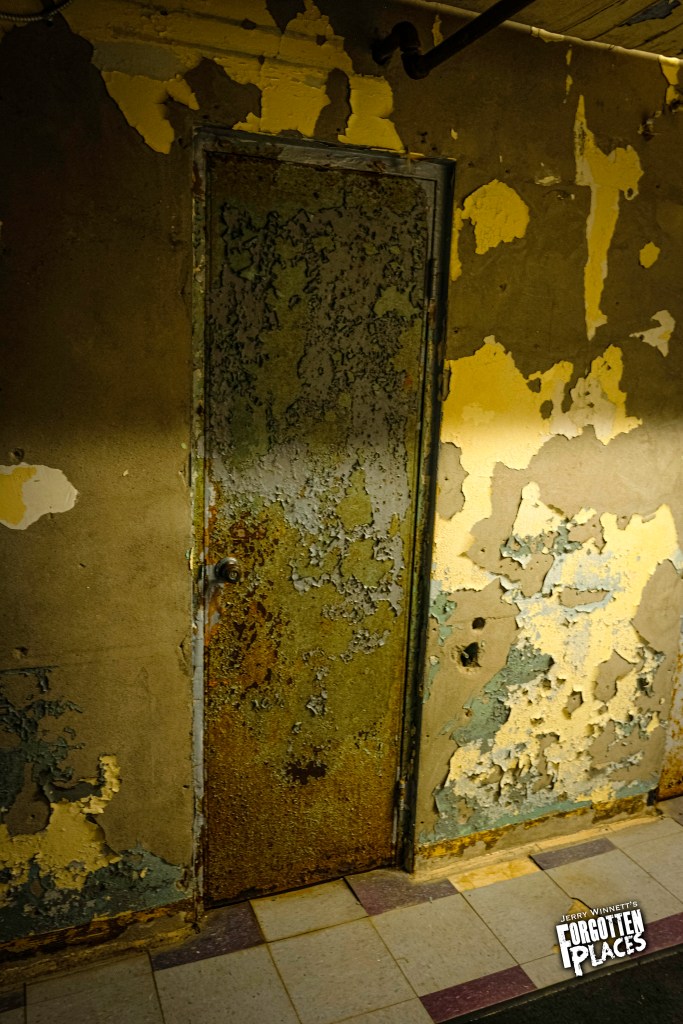
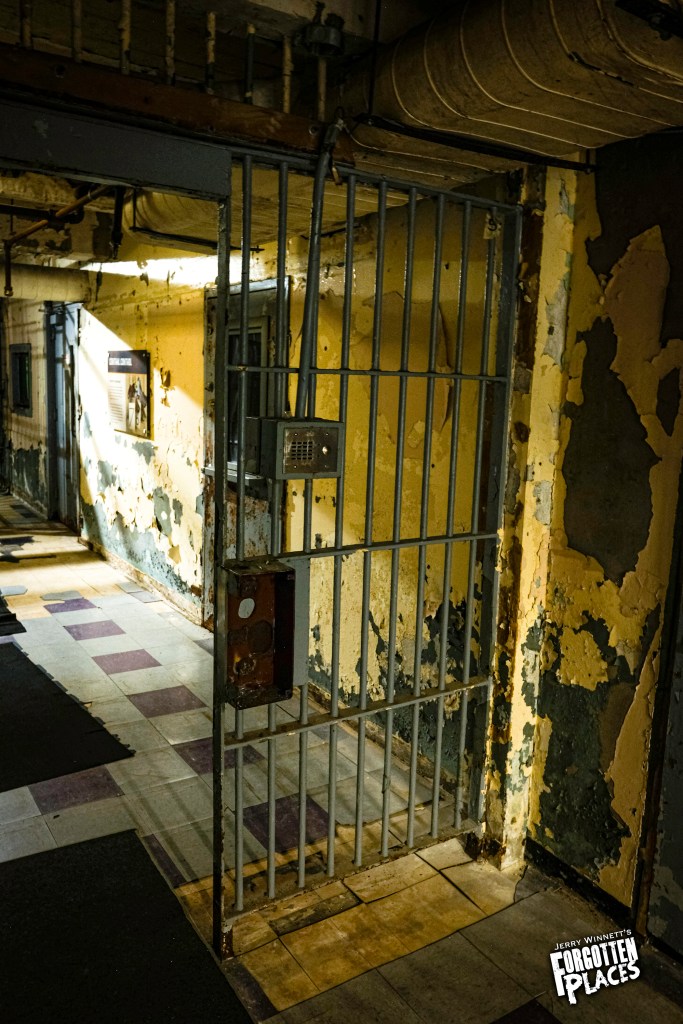
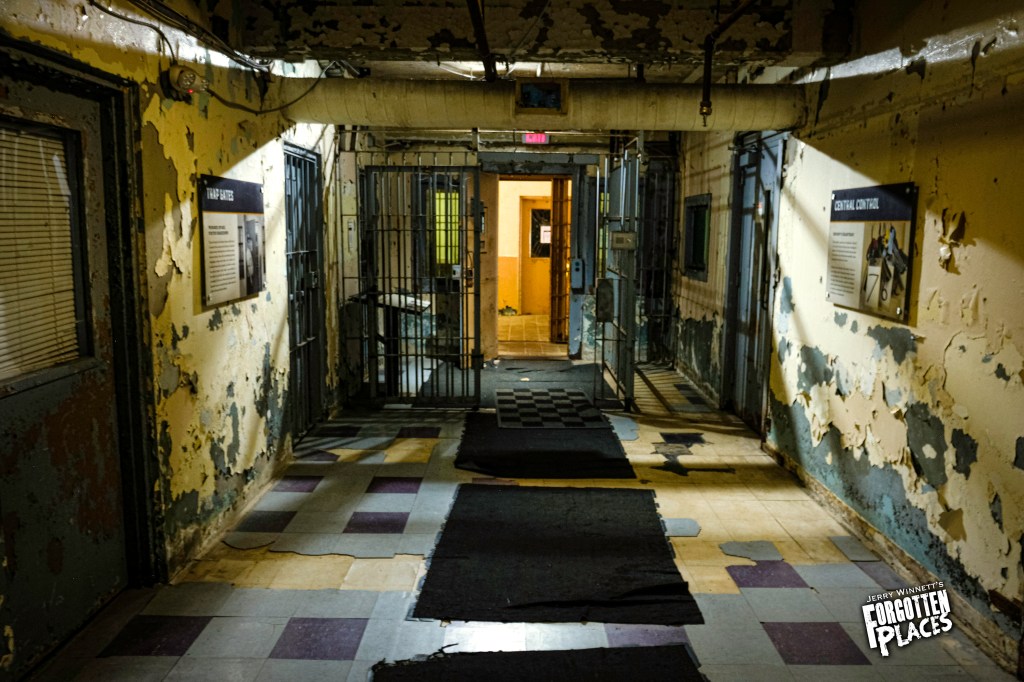
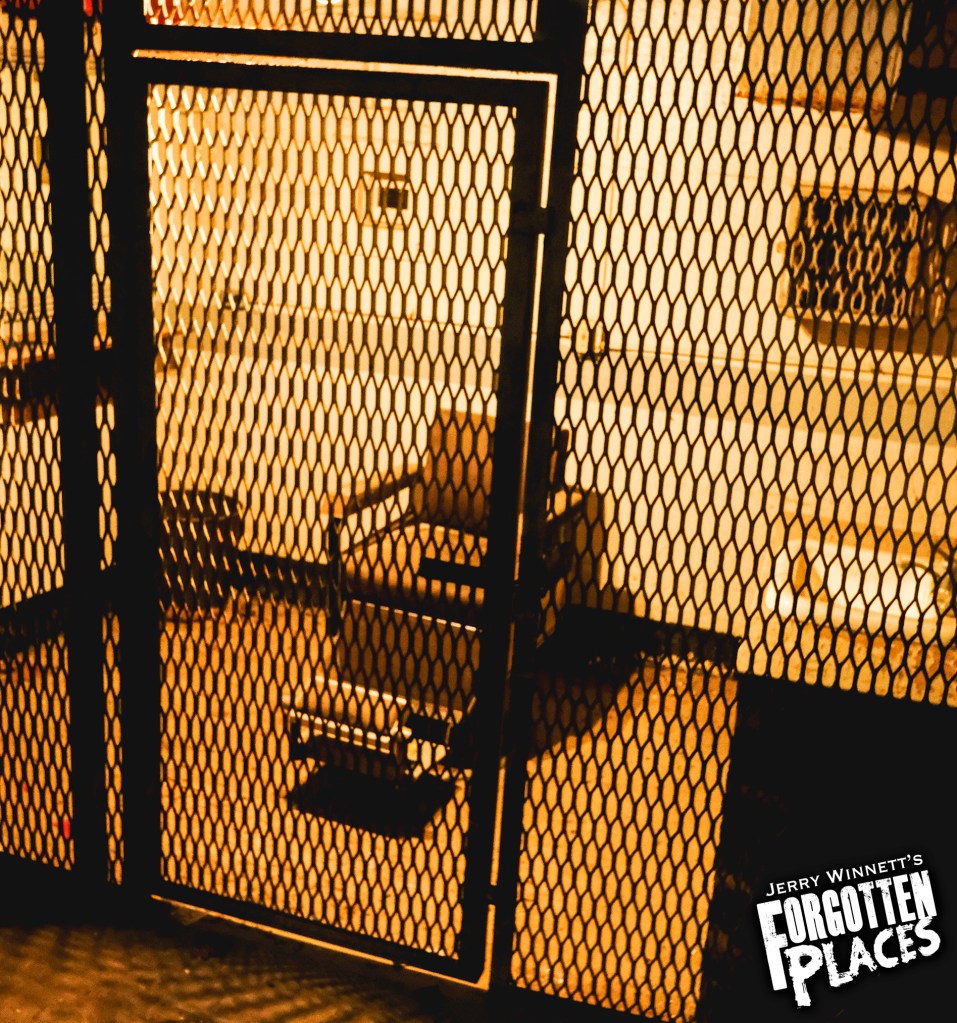
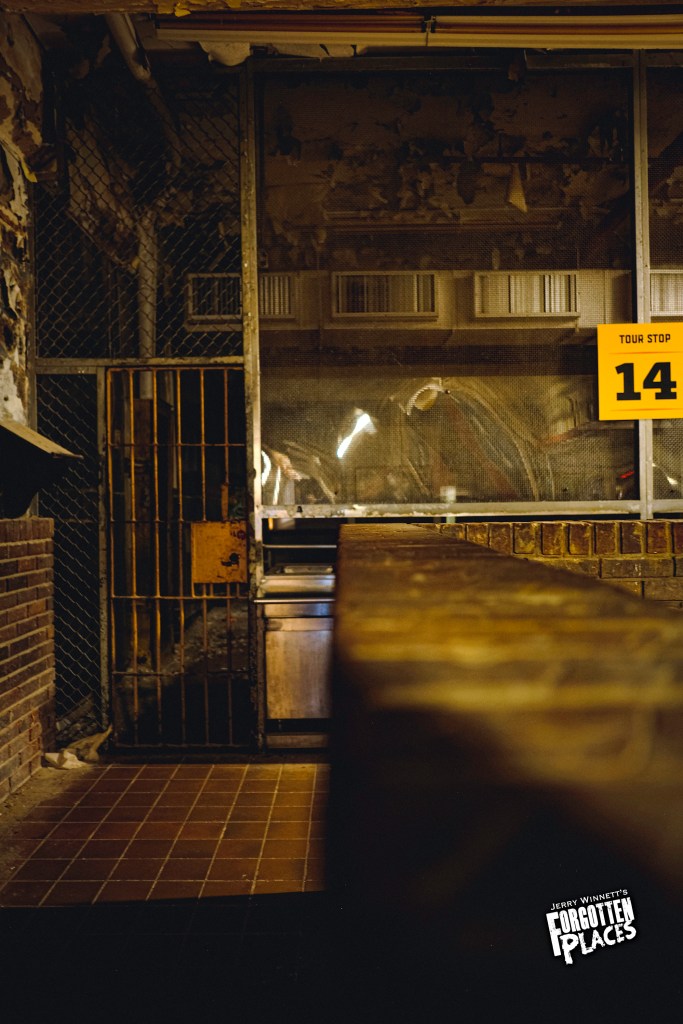
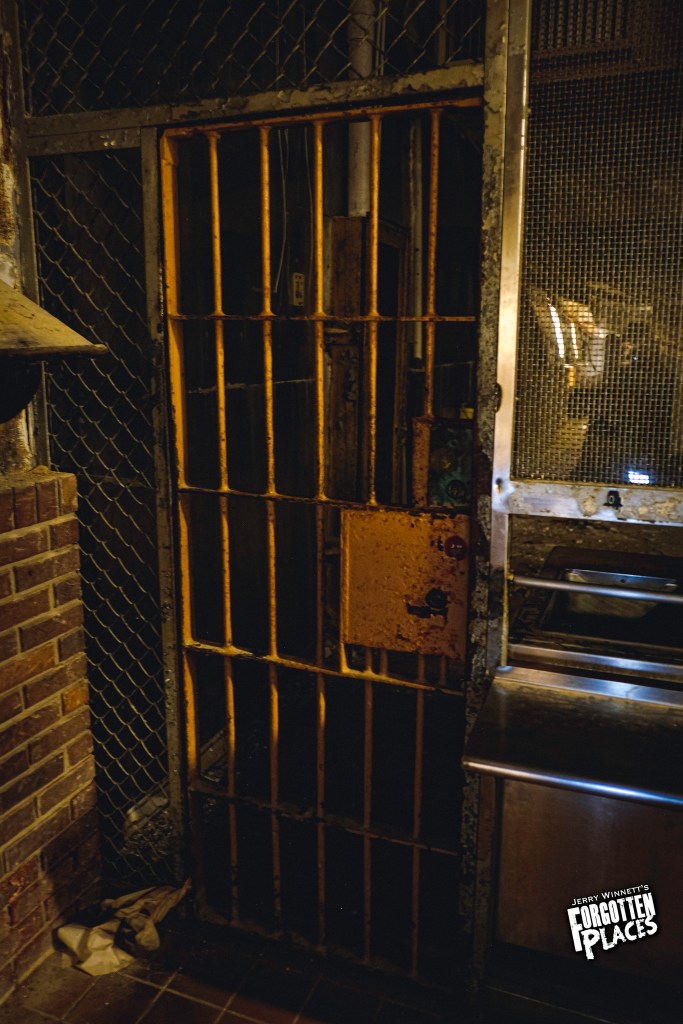
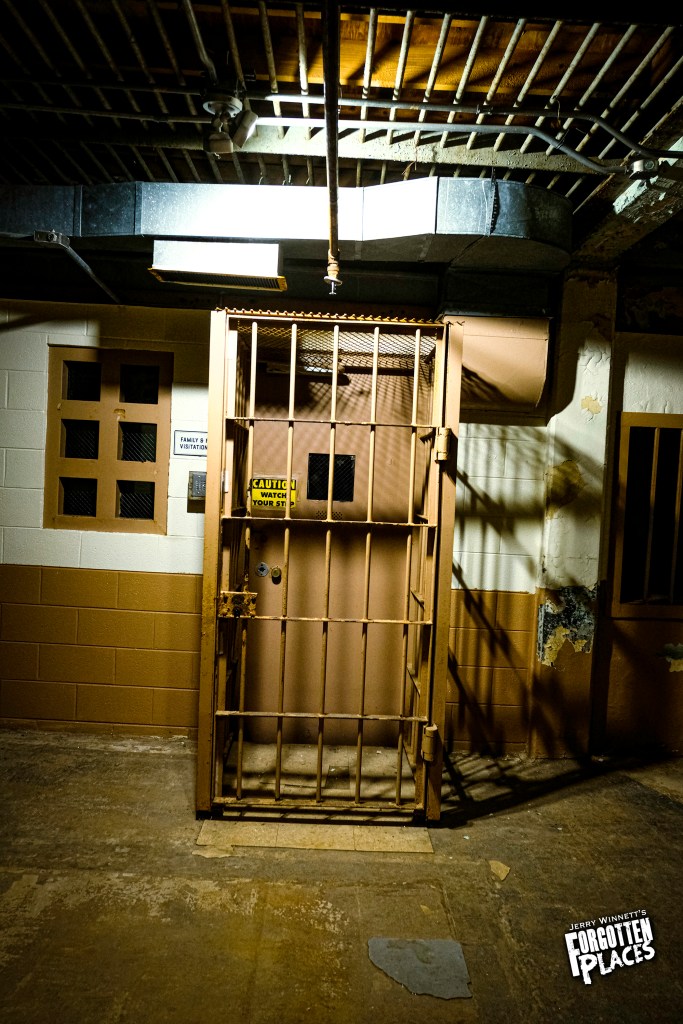
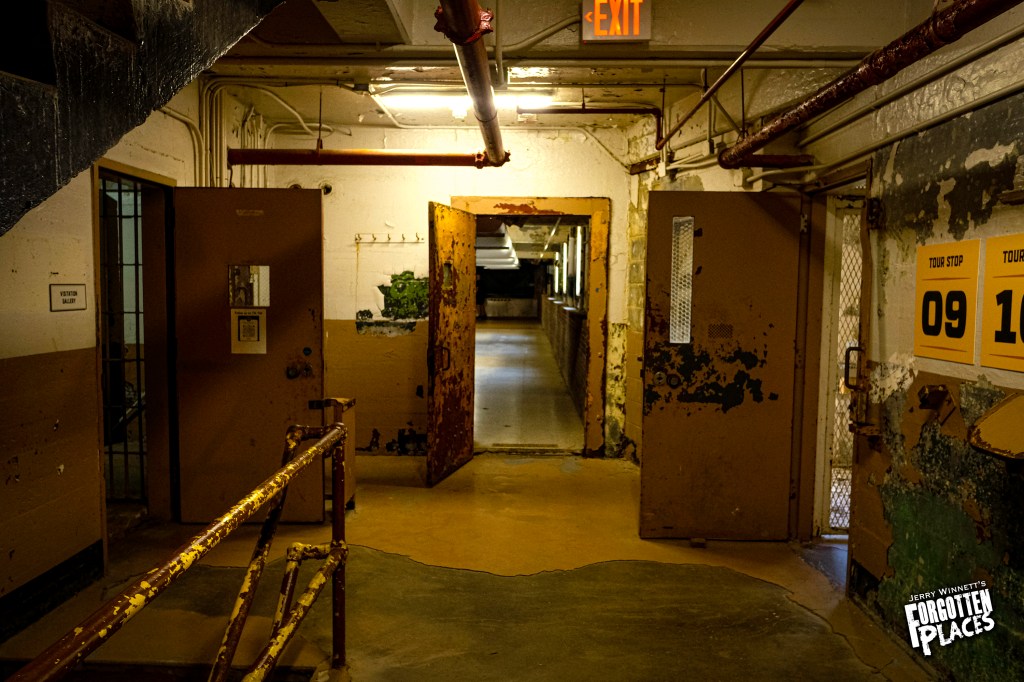
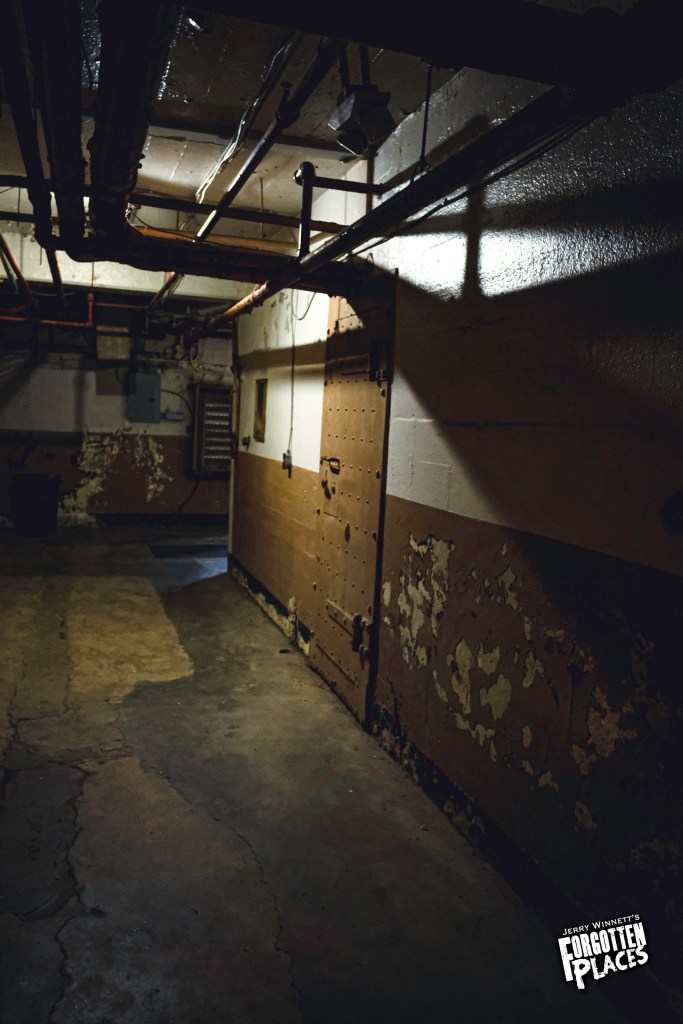
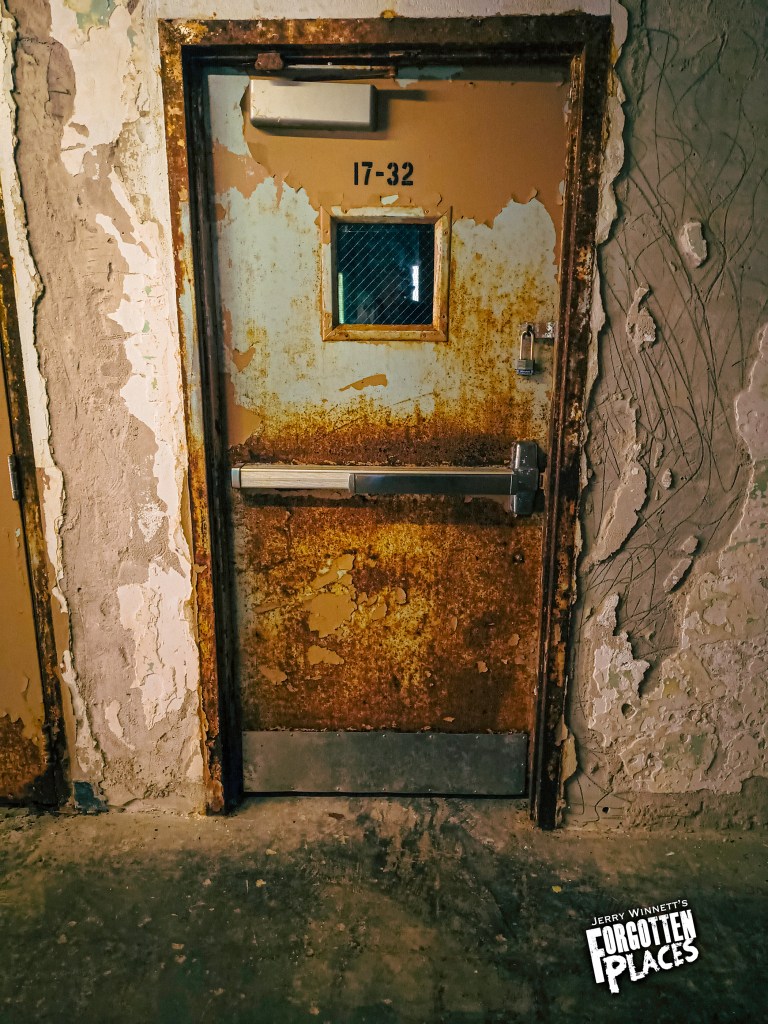
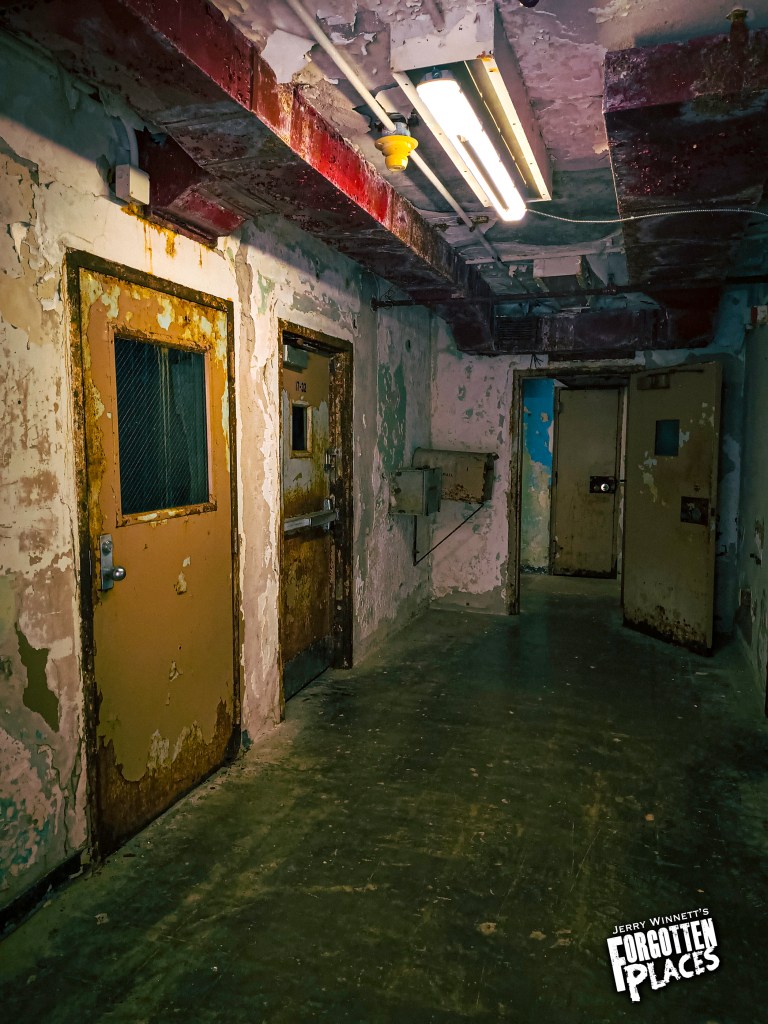
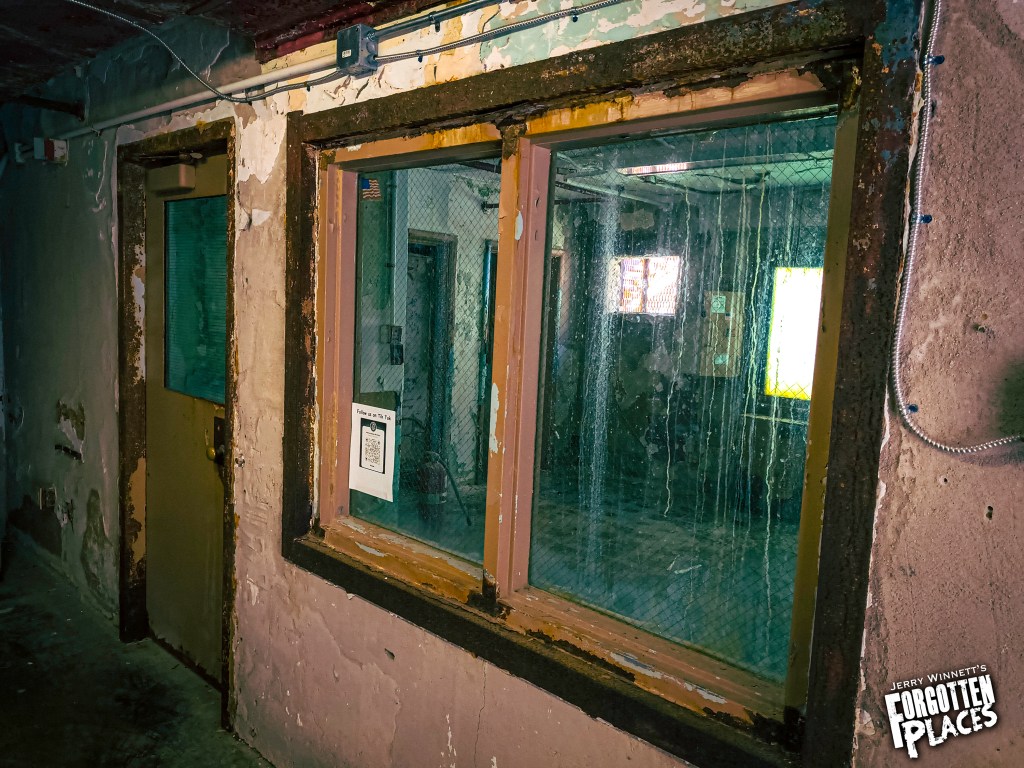
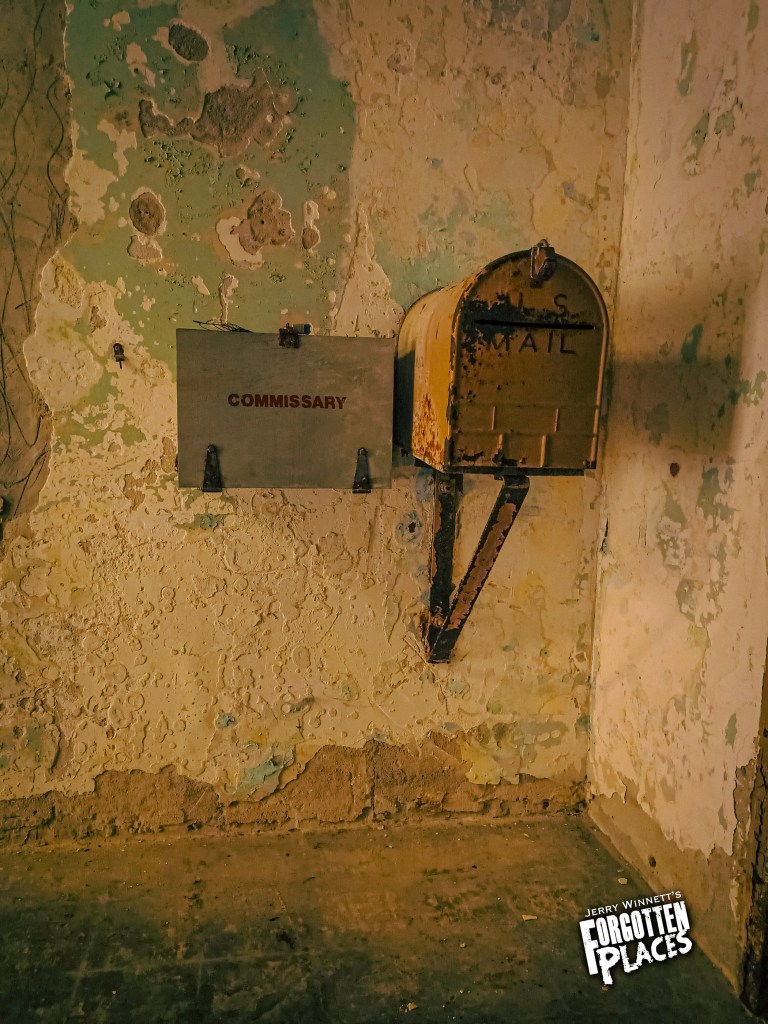
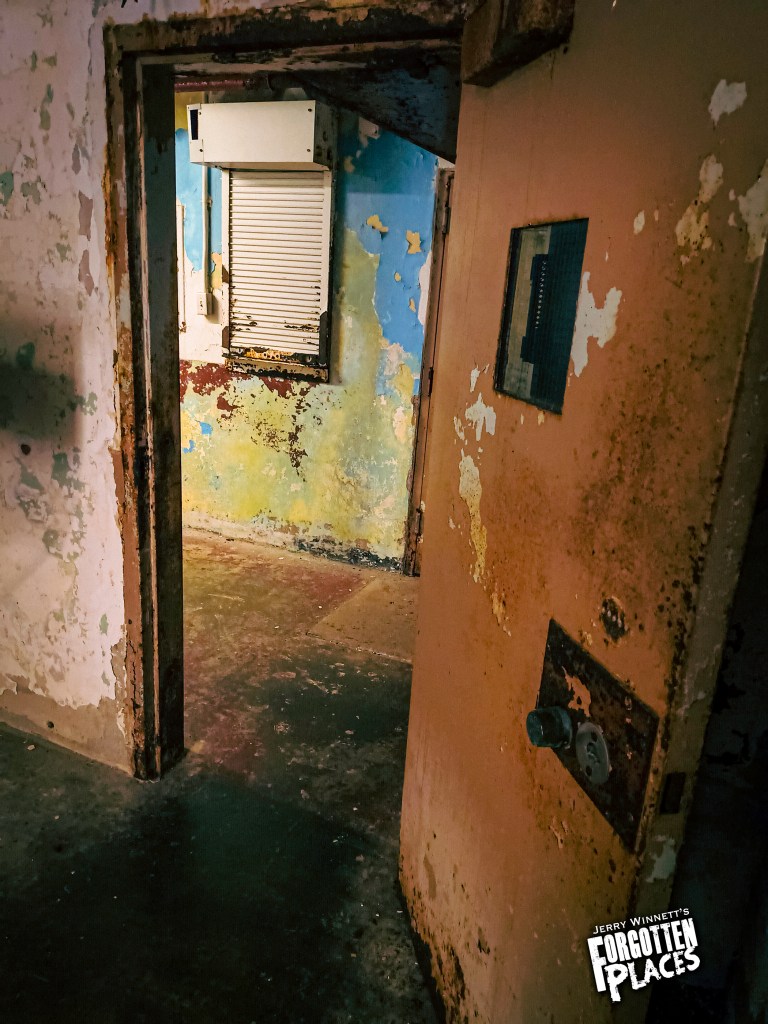
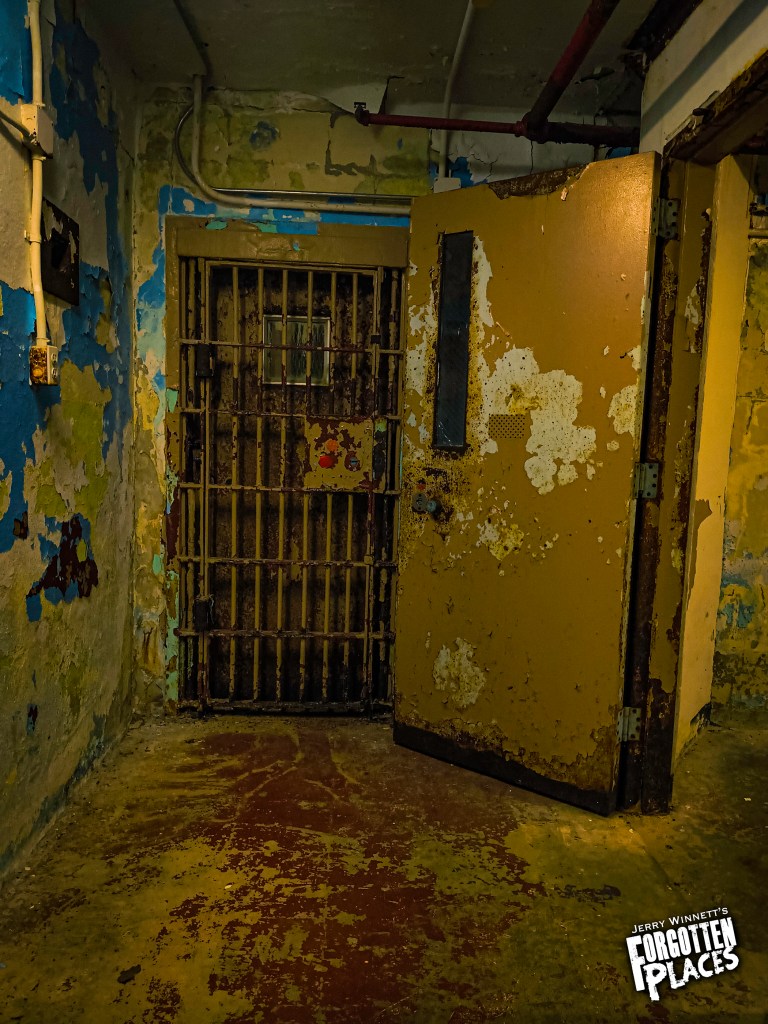
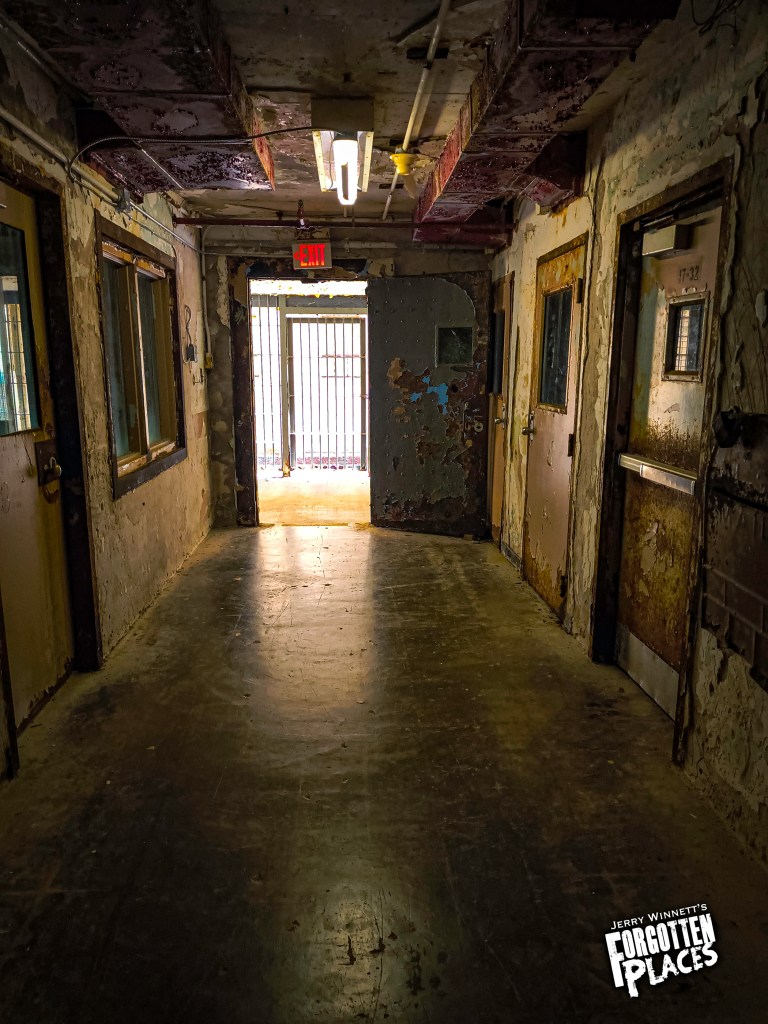
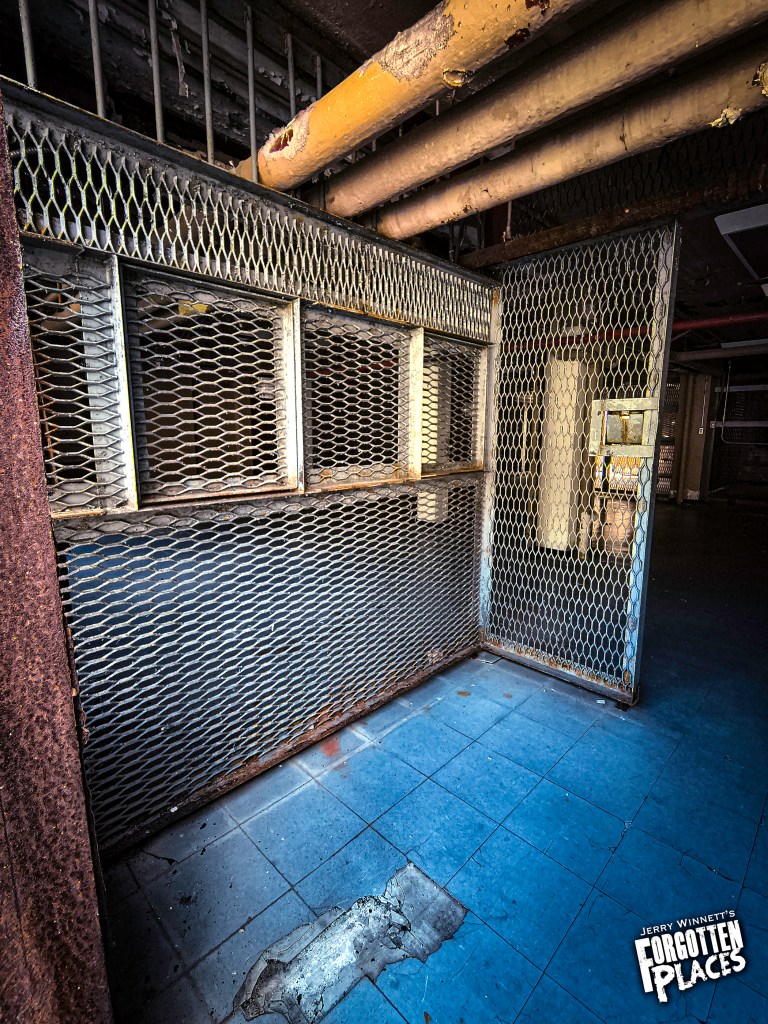
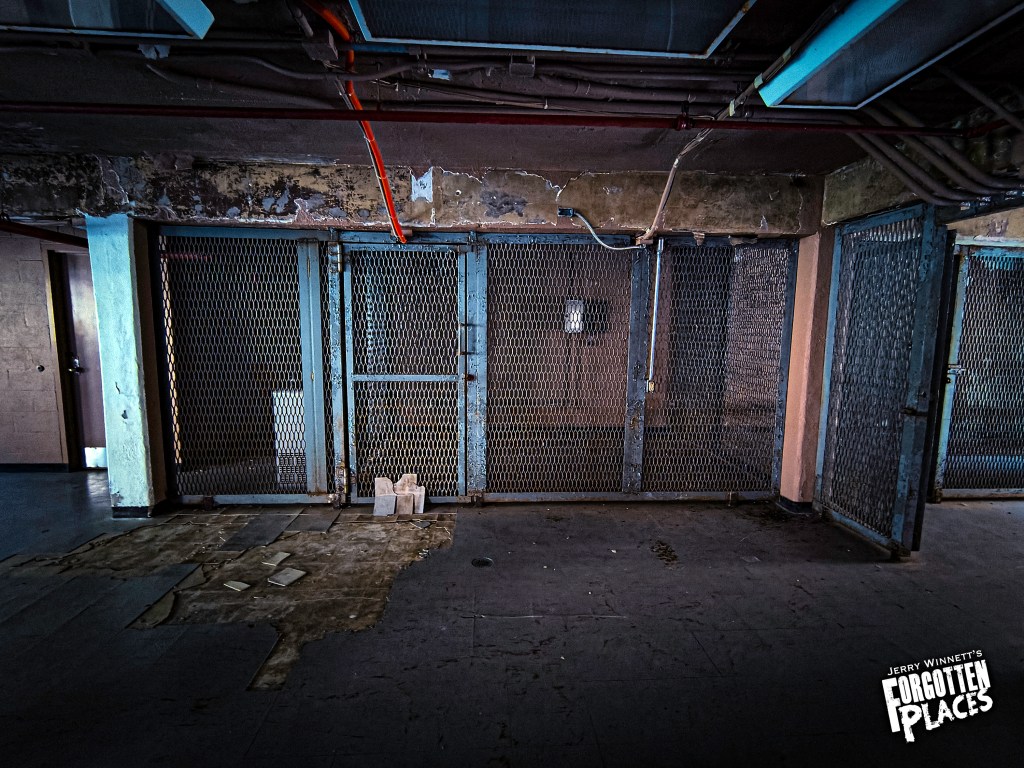
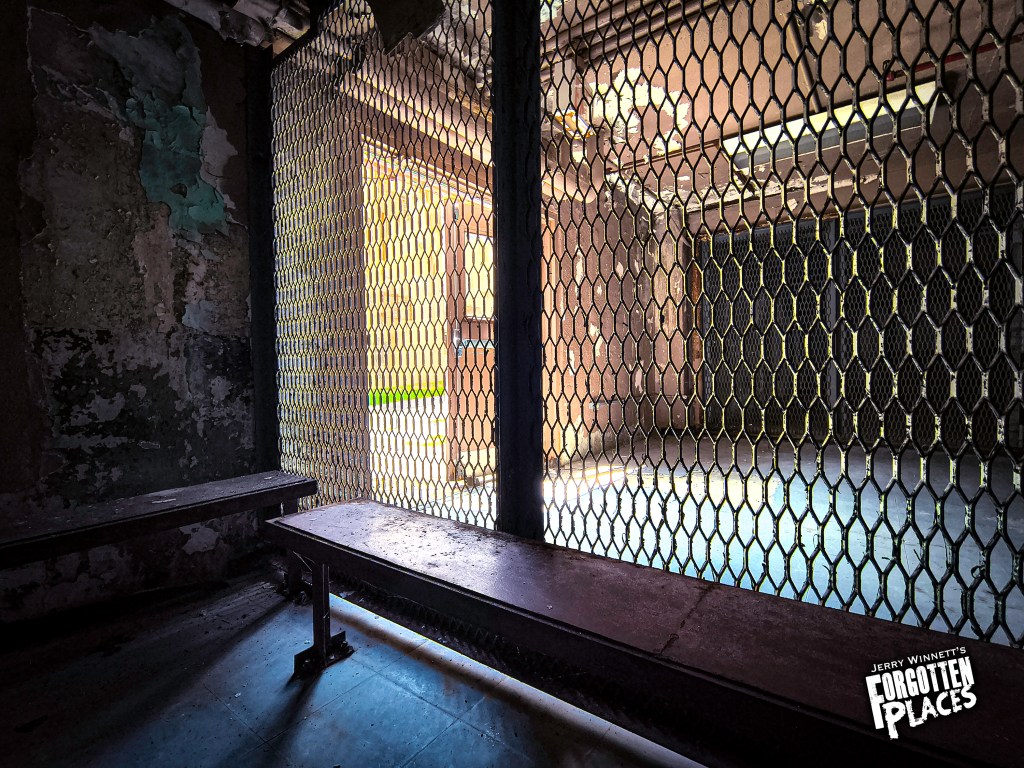
When I was finally able to break from whatever strange spell of D-Block’s Secret Garden, I wandered back into the main hall of the prison. Here I found what looked to be intake cells. Perhaps this area was used for the intake of new inmates? Or for controlling how many inmates were could access to the prison yards at a time? I’m not sure. As I said earlier, I was there to take photos. I wasn’t able to listen to the tour’s instructions while shooting.
Eventually I had my fill of Brushy Mountain’s brooding presence, and I made my way back to the prison entrance. I walked out feeling a little drained, almost depressed. Still, I was able to do what none of Brushy’s inmates were able to do. I walked out of my own free will, no parole board, no pardon, no sentence ending. The day was bright, and sunny, the temperature was rising and I was leaving.
I hope you enjoyed my trip through Brushy Mountain. If you’d like more information on the Brushy Mountain Prison’s history look it up online, or better yet, go to your local library. If you’d like to go on the tours click the link: https://tourbrushy.com
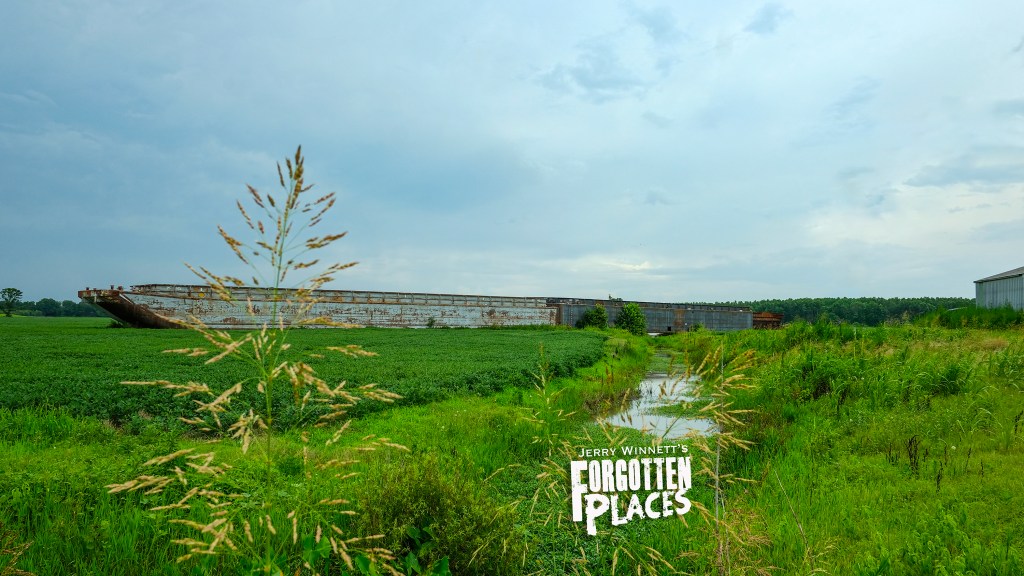
July 6th was a Sunday that saw me and my buddy Jay Farrell cruising the back roads of Southern Illinois. We were on Miller City road going around a bend and considering going back to the crossroads to take a different road. We’d just voiced this when we came to an abrupt stop. To our right was a farmer’s field and smack dab in the middle of that field was a river barge! No, I’m serious, a barge was sitting in a field completely landlocked.
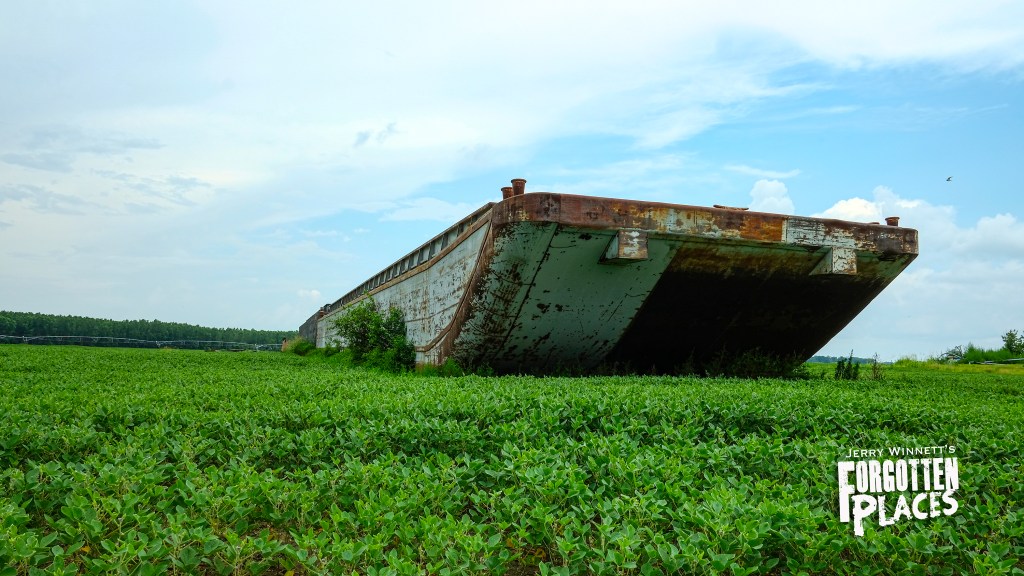
We hoped out of Marvin, Jay’s Kia Soul and after a bit of deliberation decided to approach the barge. Down the side of a ditch, across a muddy water channel, and up a gently sloping rise found us standing 50 yards or so from the rusting hulk. Splitting up Jay and I began exploring as much as we could. Later on we would learn that the barge we’d photographed was one of three barges that had landed up in that field after a flood had opened up a levy. Look at the size of the barge and think about there being two others at one point. Could we have gone closer? Maybe, but we were in some farmer’s crop and nether Jay or myself were keen on tromping on the crop anymore than we had. I hope you like the photos. Leave a comment or two.
280 Tons without cargo. Let that sink in. The fact that two other barges were here originally is stunning. I have to wonder if the barge was full of water making this a huge swimming pool, or was it empty? If you like my blog and want to see more of my work, look around, enjoy. Oh, and look for my book Forgotten Tennessee on Amazon.com!
…Places where time behaves strangely: Locations where time doesn’t follow a linear progression, creating a sense of disjointedness and detachment from conventional reality”. -Stephen King
Trip one.
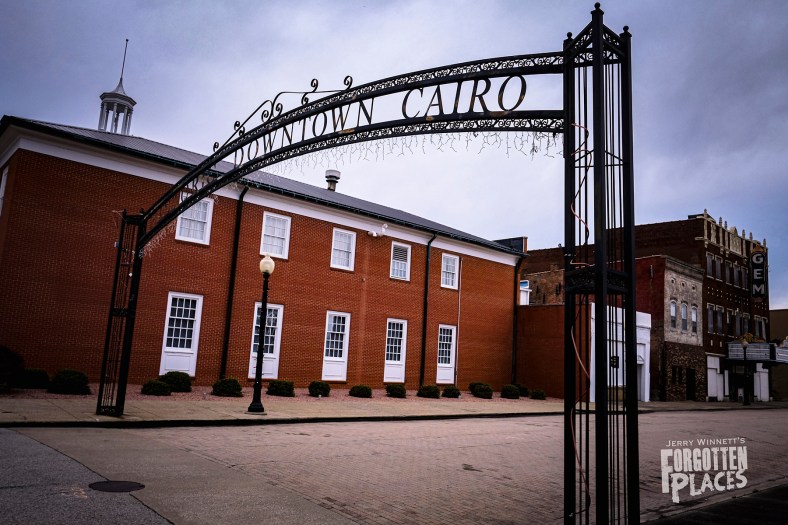
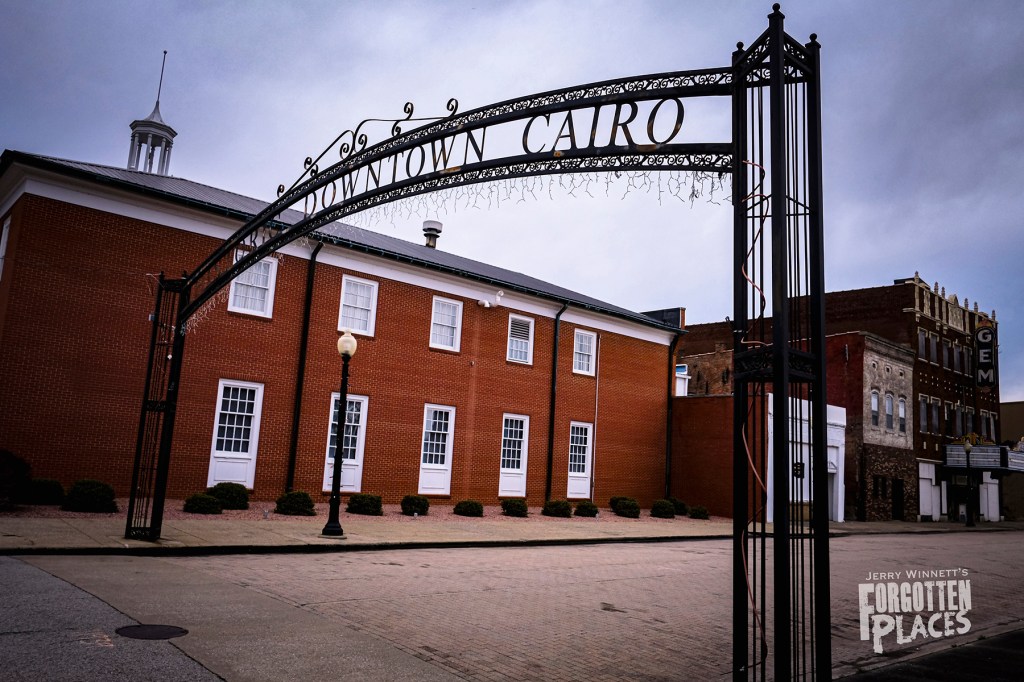
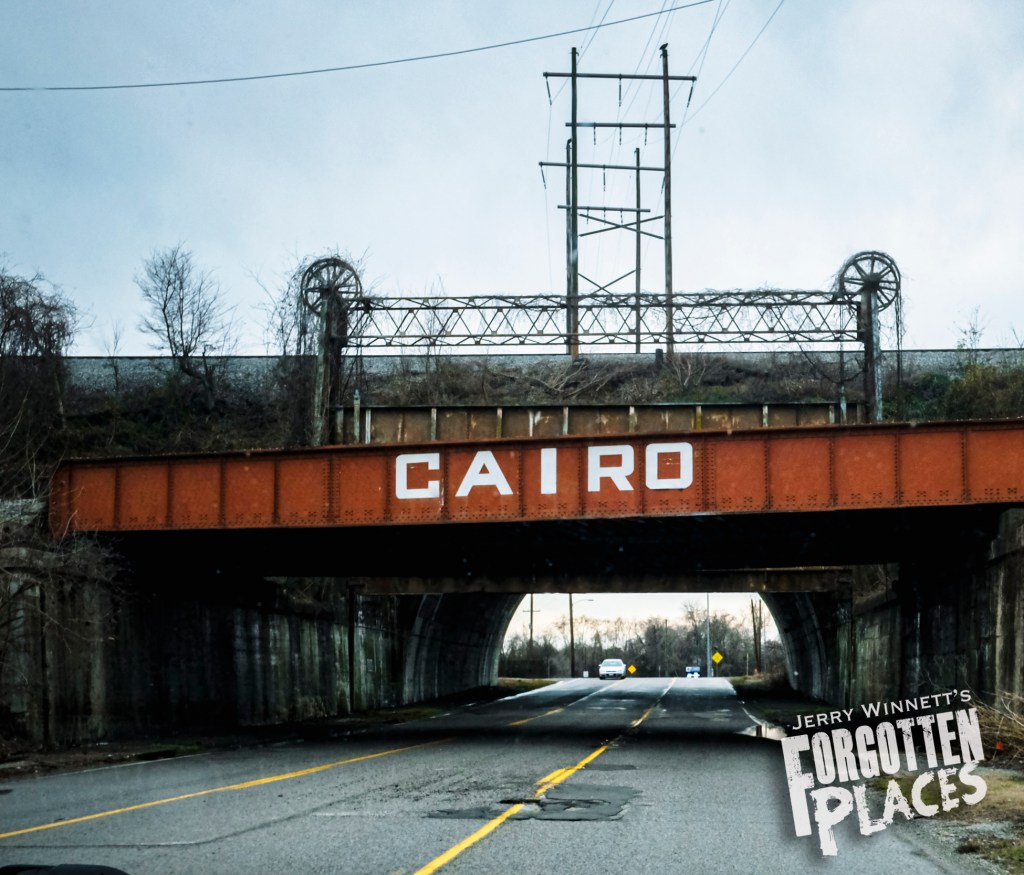
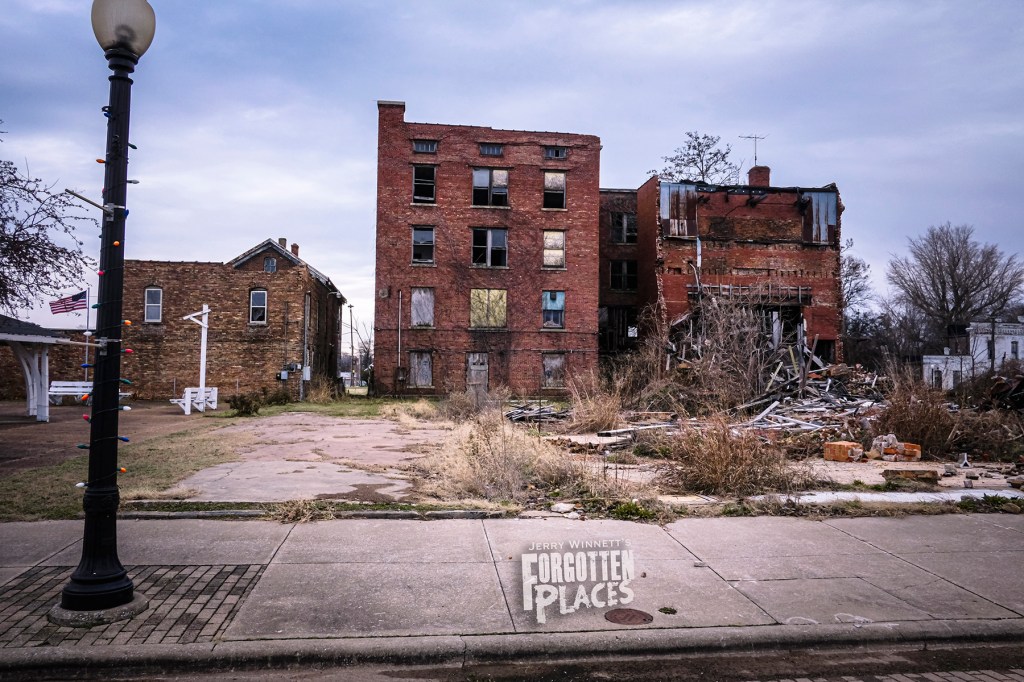
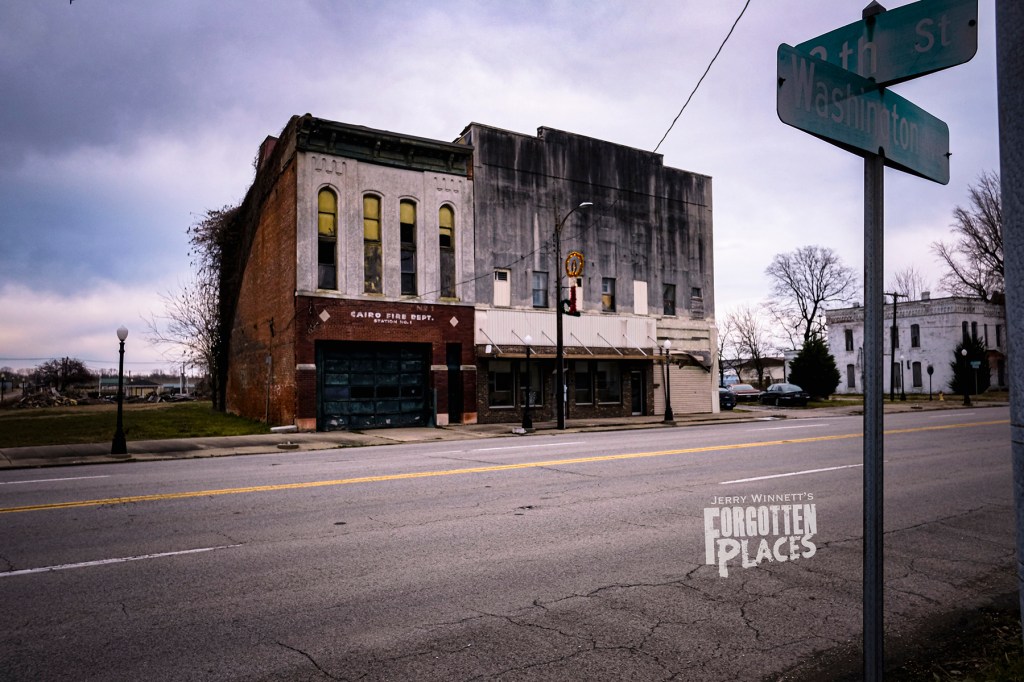
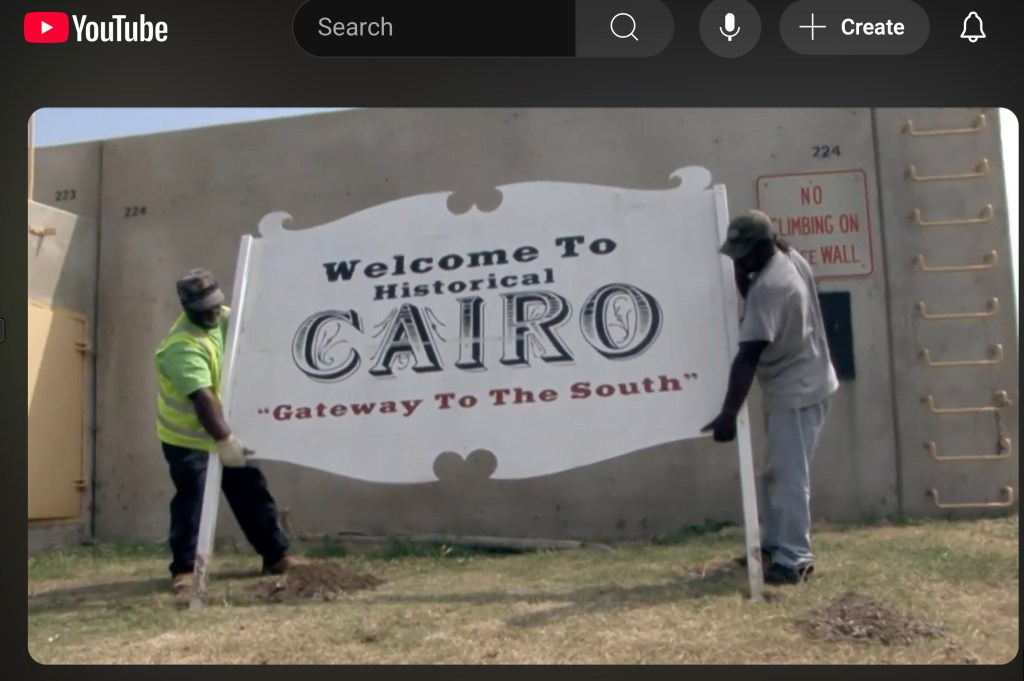
I’d never heard of Cairo, pronounced Kay-ro, until I came across a YouTube video. Being a photographer and explorer of all things abandoned my curiosity was sparked. I contacted Jay Farrell, my fellow explorer, photographer to set up a road trip to Cairo. Our first trip to explore Cairo was in the tail end of December 2024. The sky was a mix of sunshine and occasional cloud coverage with just enough rainfall left on the ground to add a moody vibe to the day. We crossed the Ohio and then into the town itself. Desolation. That was the first word to come to mind as we entered Cairo. Building after building was run down, damaged, burned, collapsing and many others were already in piles. There were plenty of empty lots that had the faded outlines of buildings that were no more. We passed through Cairo, and were left with a feeling of wonder. We were in what had once been a thriving town and was now a honey pot for those who explore abandoned places.
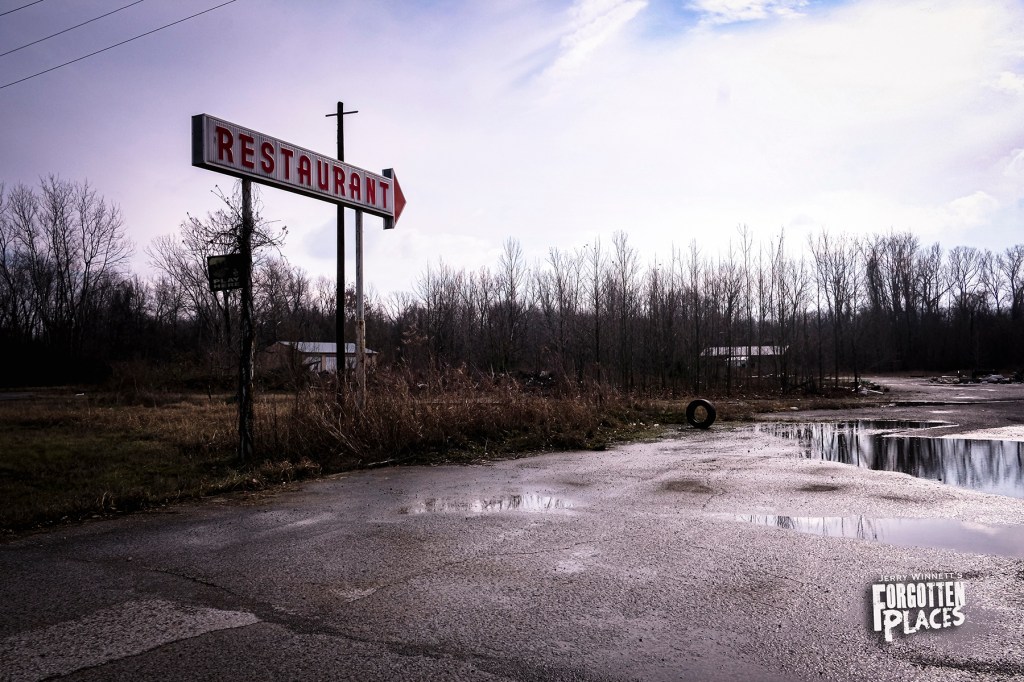
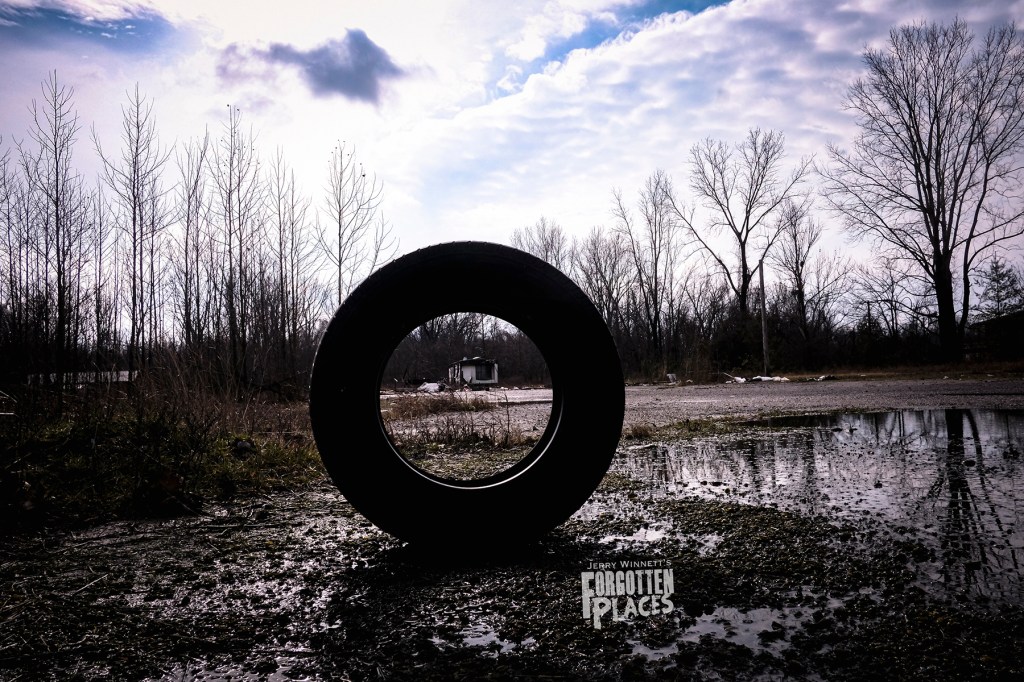
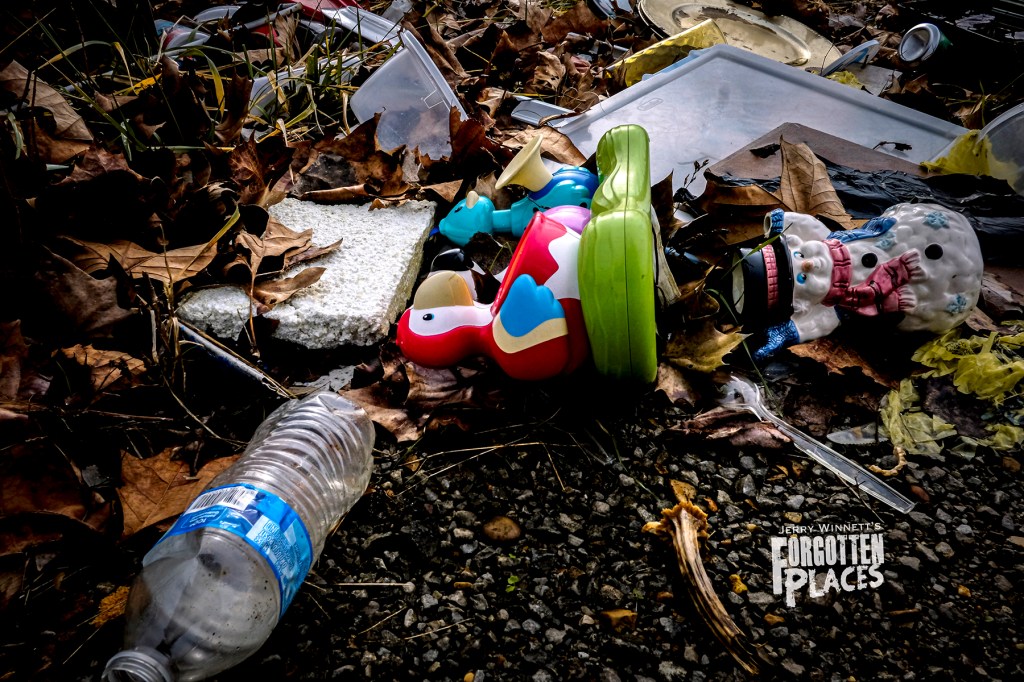
“There’s no gas stations in Cairo. Best get that and anything else you may need before going back”. This was the word of warning we received at a Dollar General located not far from Cairo. From what we’d already seen, Jay and I could believe it. Across from the Dollar General was a vacant lot filled with debris. Broken toys, trash, tires, and a run down trailer sat upon the lot and in my opinion was a fitting starting point.
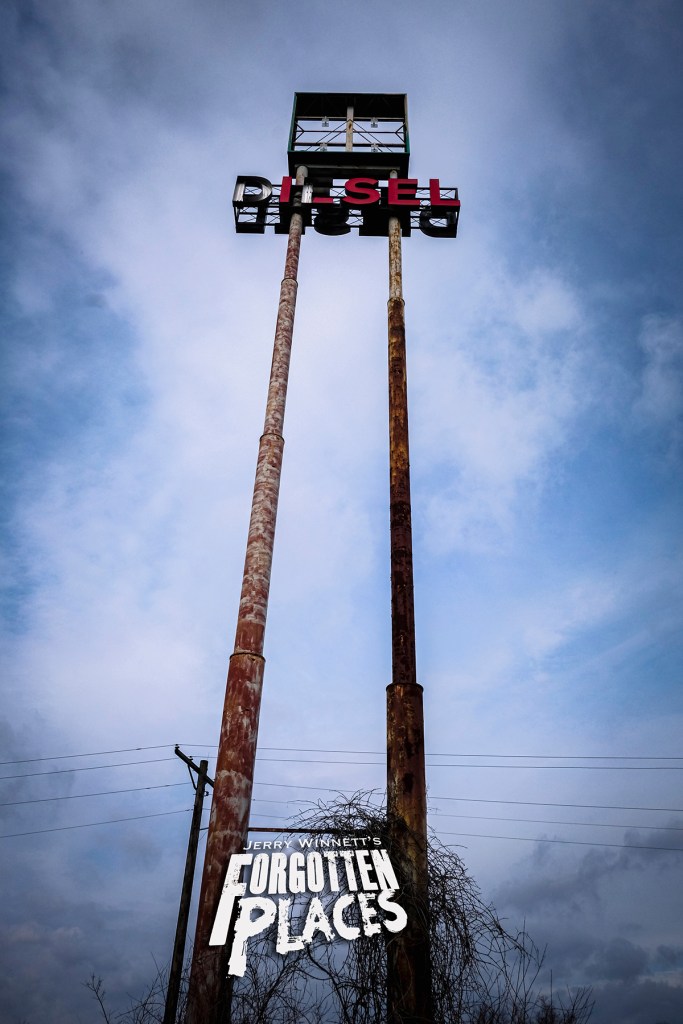
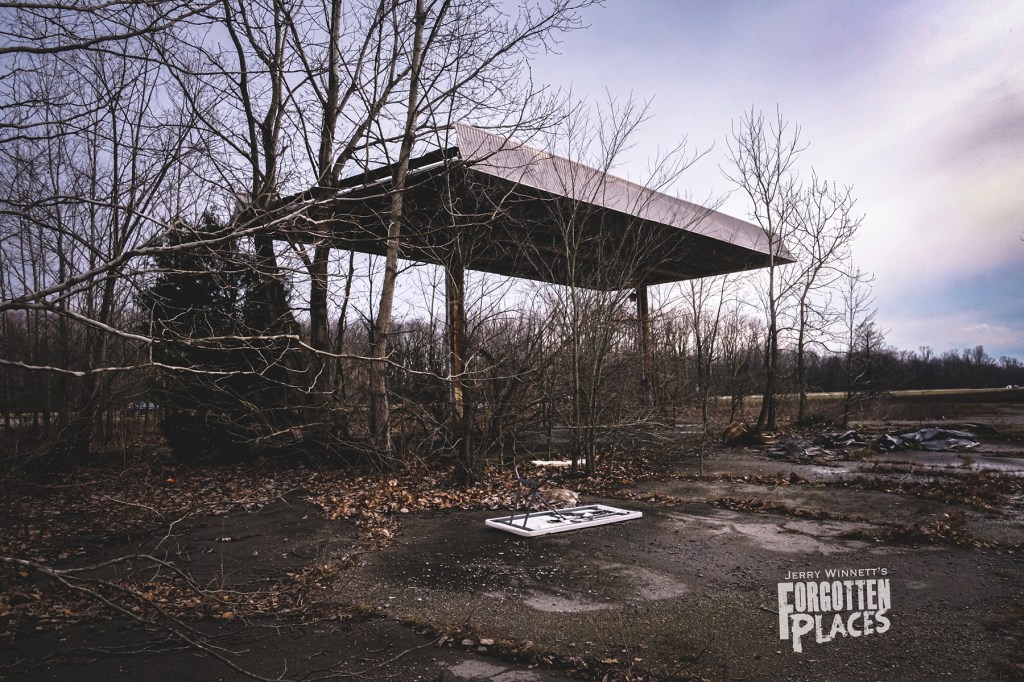
A little further on down the road we stopped at another empty lot, and while we wanted to check out a boarded up building near what had to have once been a gas station at one point, but neither of us had dressed in high waders. The lots where we stood were water logged and overgrown. While it wasn’t exactly cold, it was chilly. The thought of losing a shoe to the swampy ground just wasn’t at all appealing.
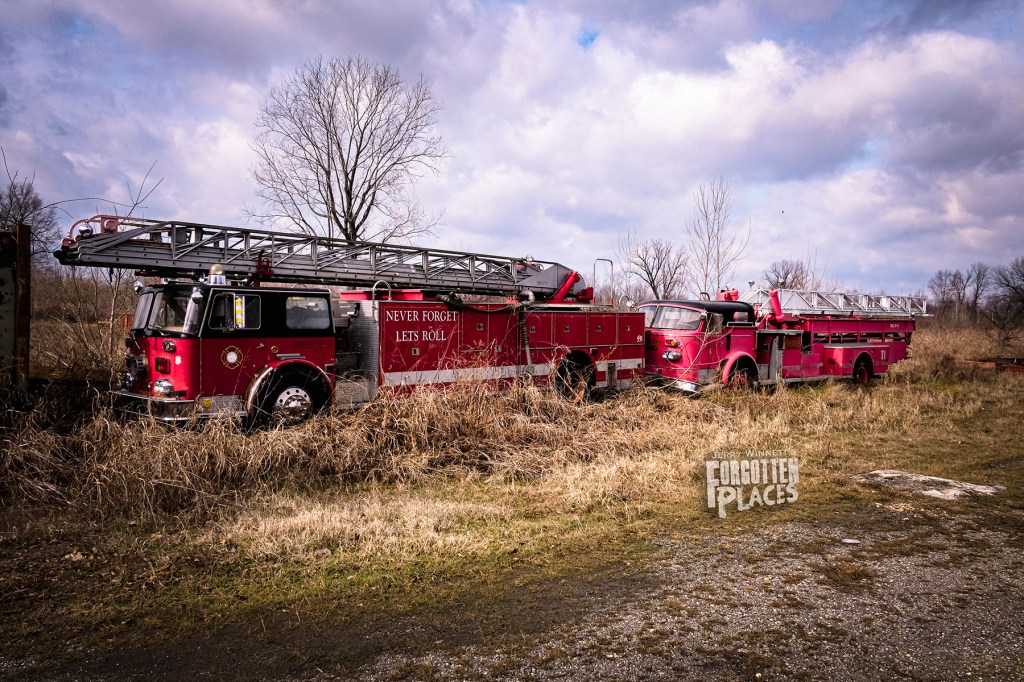
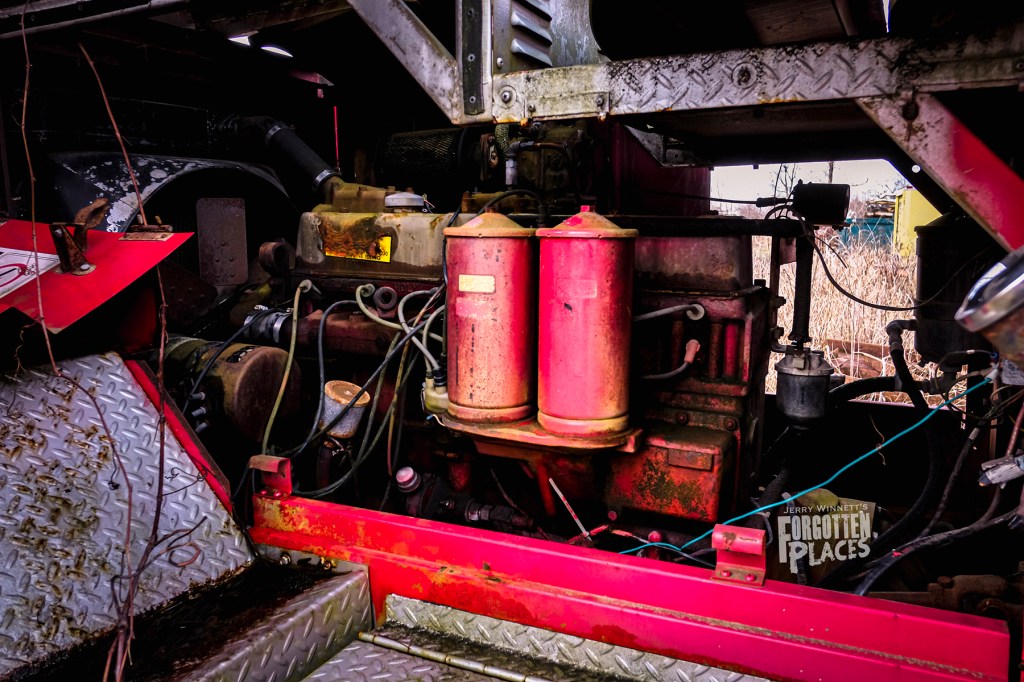
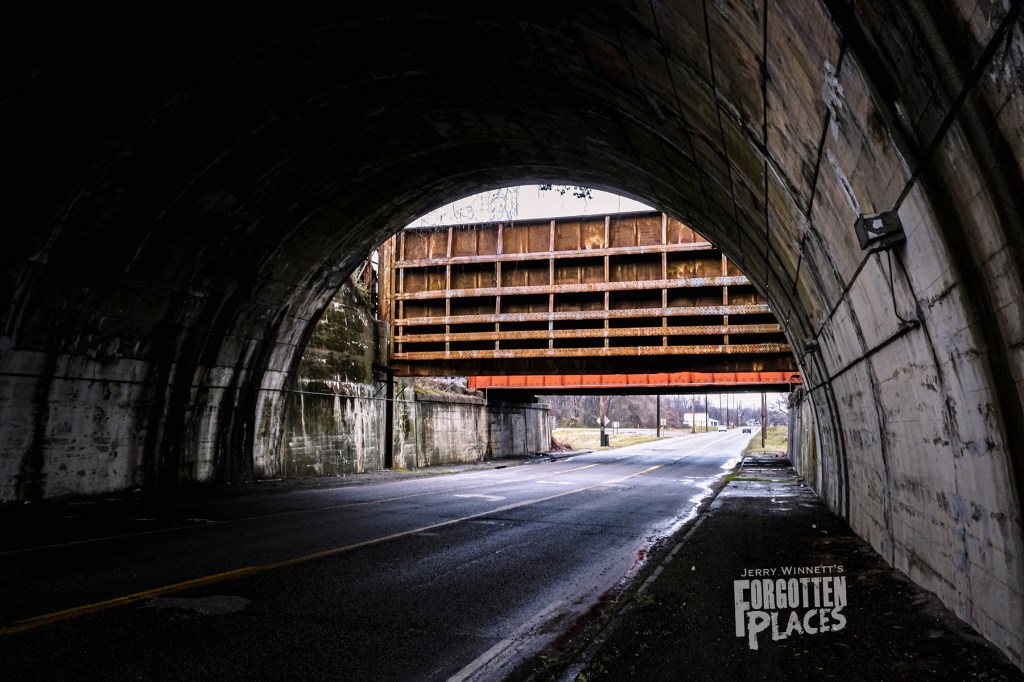
Have you ever been on a roadtrip looking for abandoned places? You drive slowly when you’re on the hunt. Here we were surrounded by the abandoned and we were still driving slowly. You’ll never get the true feel of exploring by driving fast. To one side of the main highway we spied a secondary road and took it where we came across two antique firetrucks, an empty motel. and more.
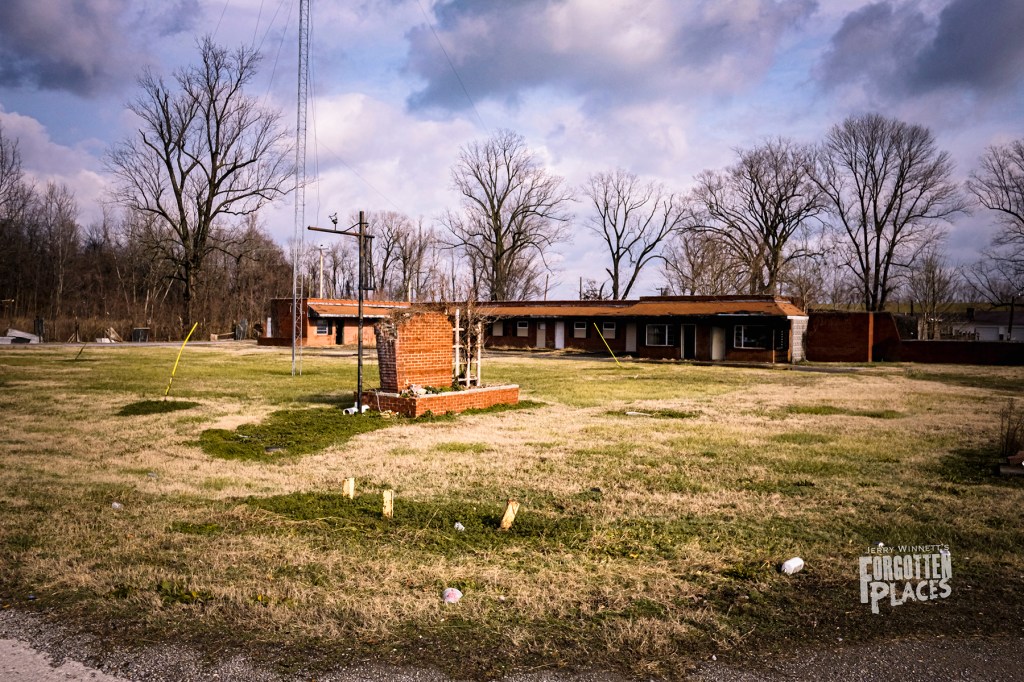
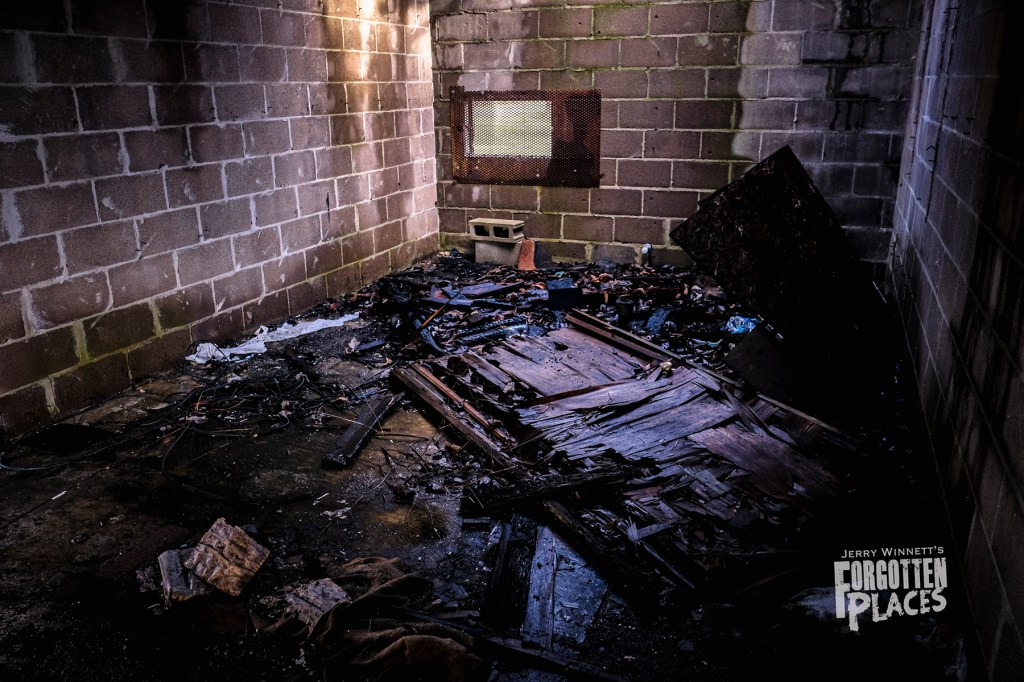
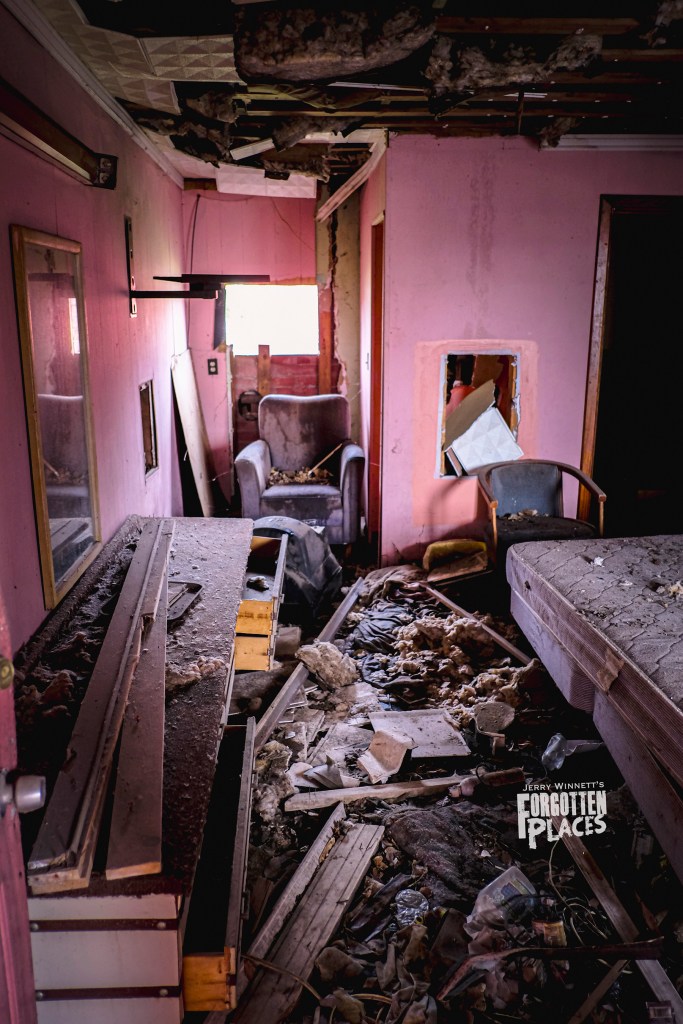
I imagine at one point this might have been a charming motel. A now filled in pool sat to one side, while the roof had collapsed. Impromptu skylights gave the remaining rooms a gloomy cast.
Yes, the office door was wide open but carry a clerk was to be found.
Wait, the motel had a few remaining guests. I don’t think they bothered with calling for room service.
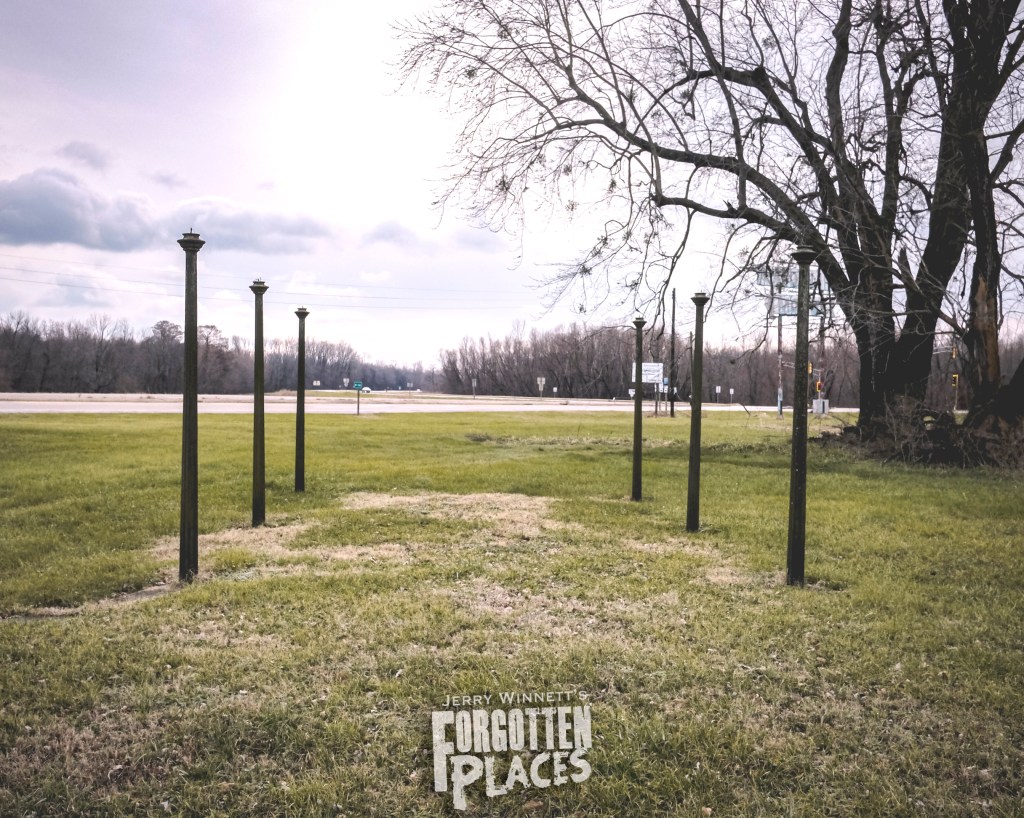
A stone’s throw from the motel sat what appeared to be a still functioning auto repair shop, and a curious looking collection of lights posts.
“We’re on the road to nowhere” – The Talking Heads. Yes, that song popped into my head while standing in front of this strange passage.
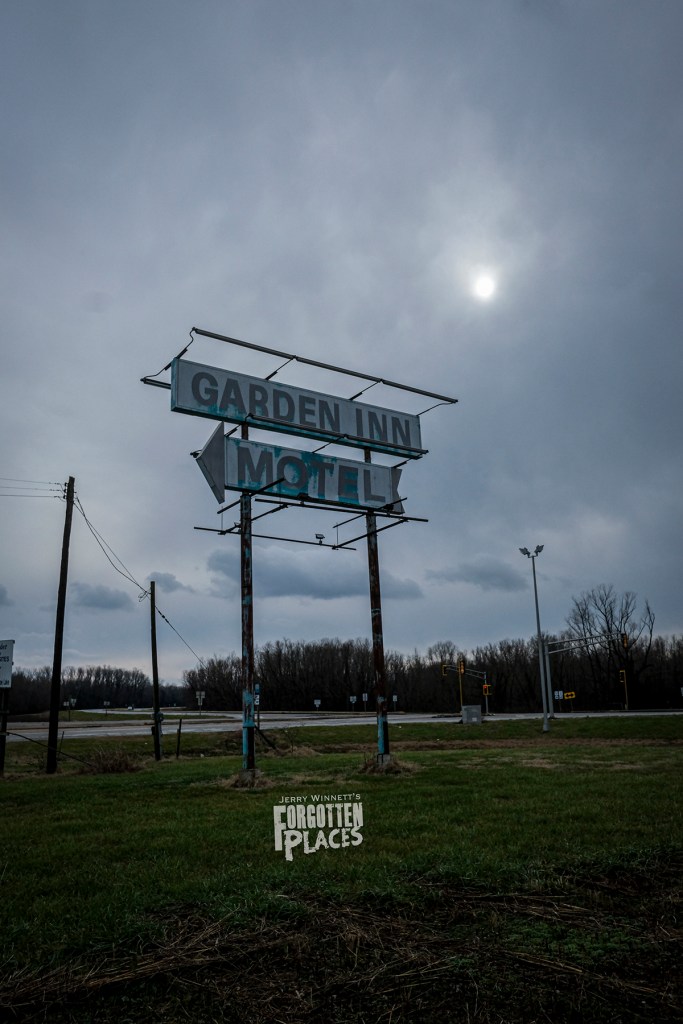
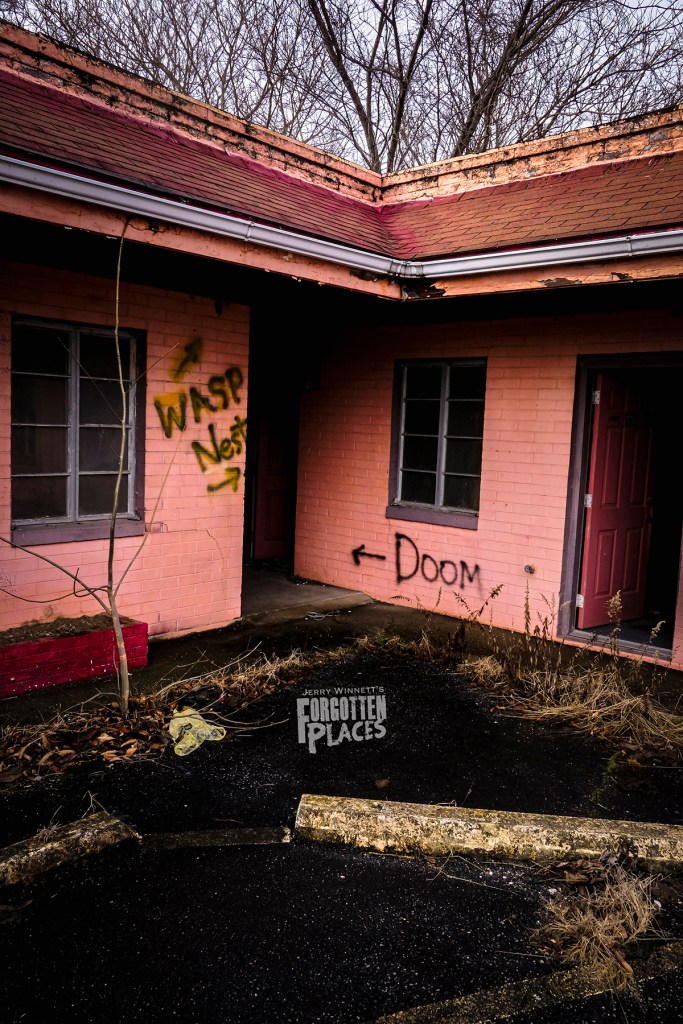
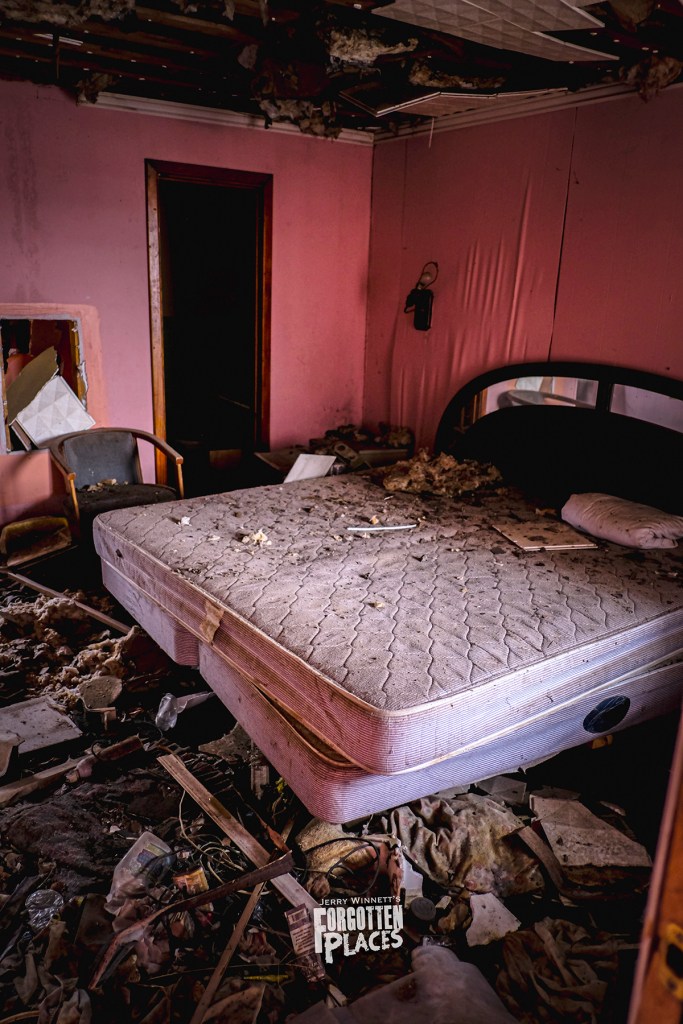
Once we’d reentered Cairo we immediately drove by another empty motel. It had fared no better than the Garden Inn.
I doubt the last occupant left a good YELP review.
Parking. That was an issue but not for the same reasons that might be in more populated cities. In Nashville the biggest problem with parking is the lack of places to park, and the outrageous prices that accompany for profit parking lots. No, here is Cairo there was plenty of places to park, too many places, really. What were the odds that our vehicle would not be vandalized and or stolen? How far could we wander off from the car? Turns out, this was not worth worrying about. We spent hours in Cairo, walking around and not once were we or our vehicle accosted by anyone. Once we felt secure as far as leaving the car alone we were better able to get lost in photographing and exploring Cairo.
These gilded streets were paved in pyrite
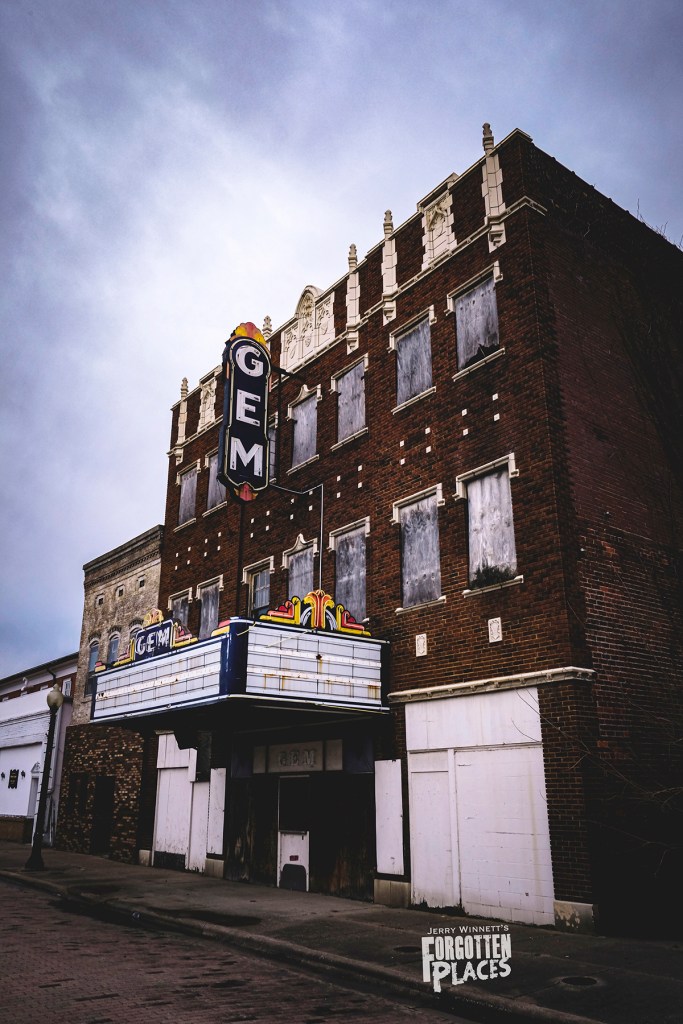
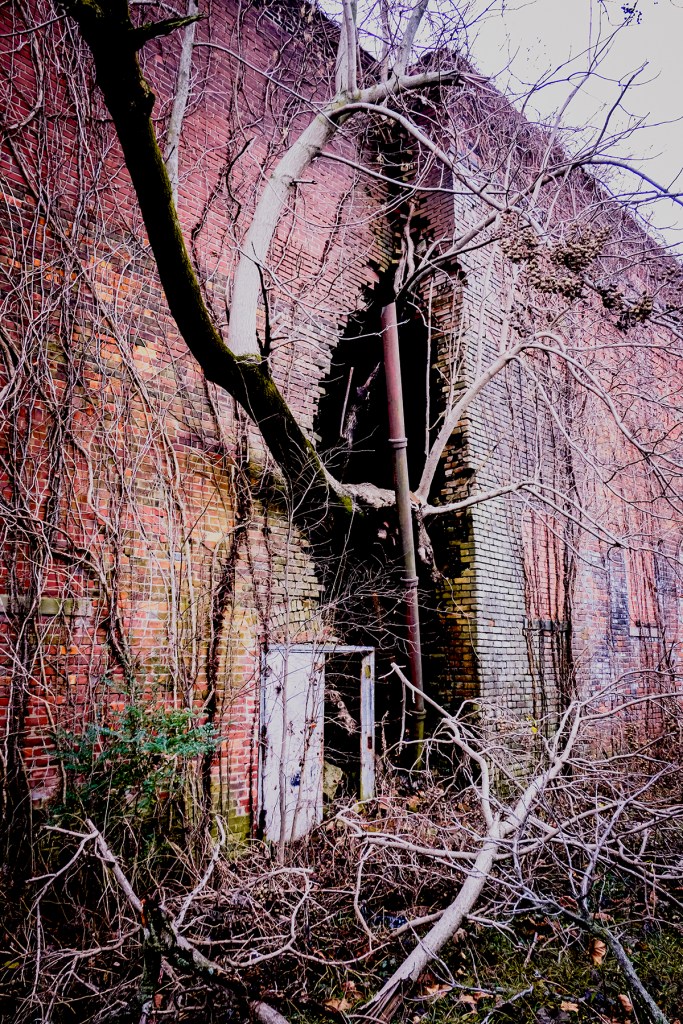
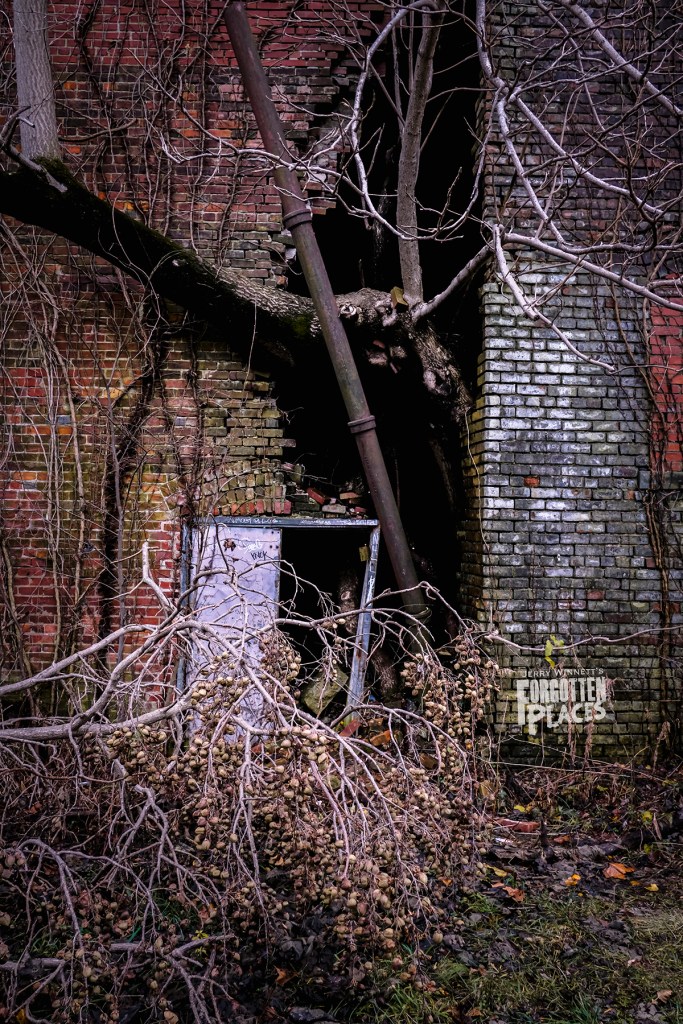
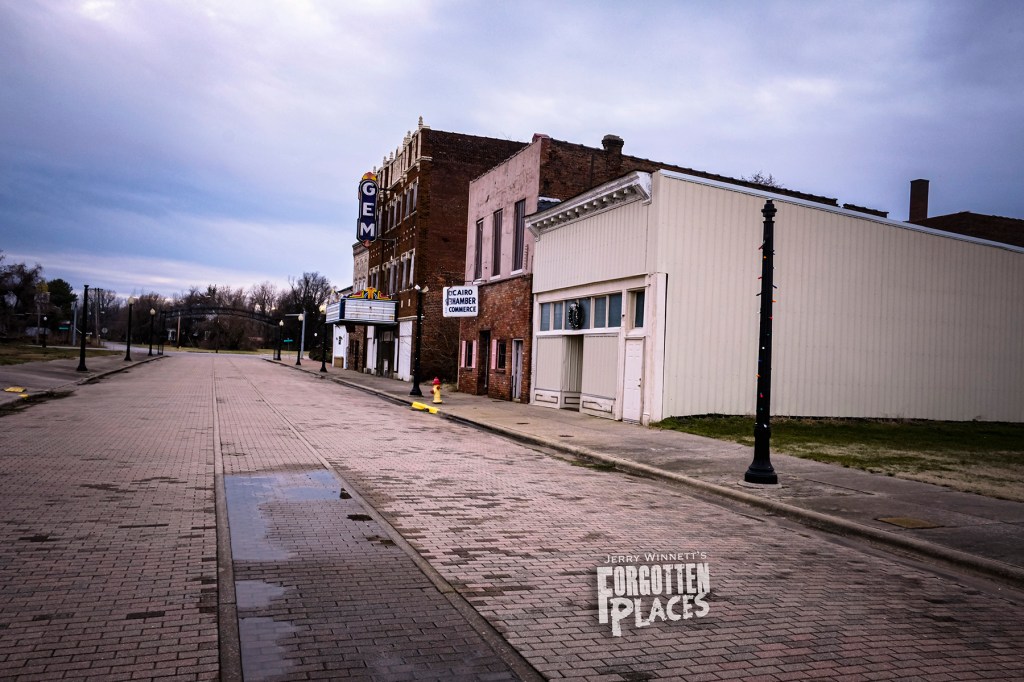
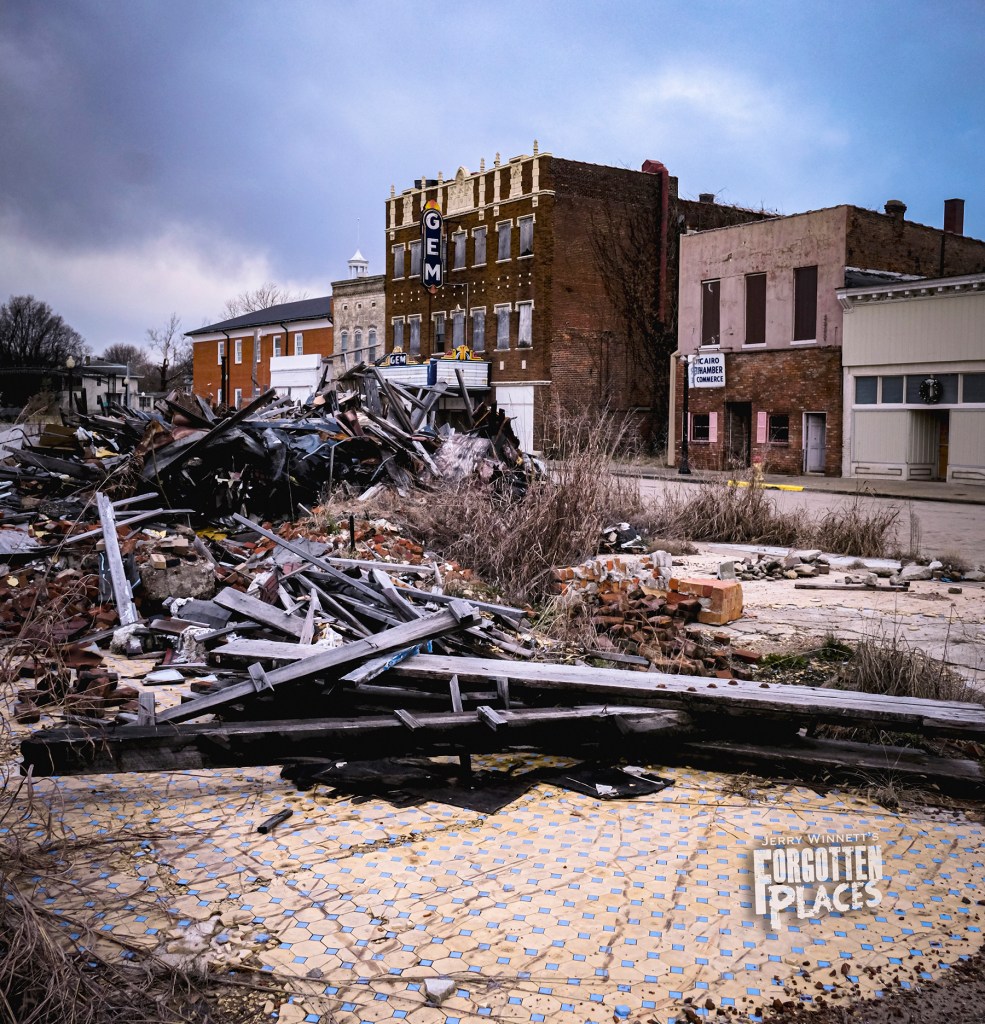
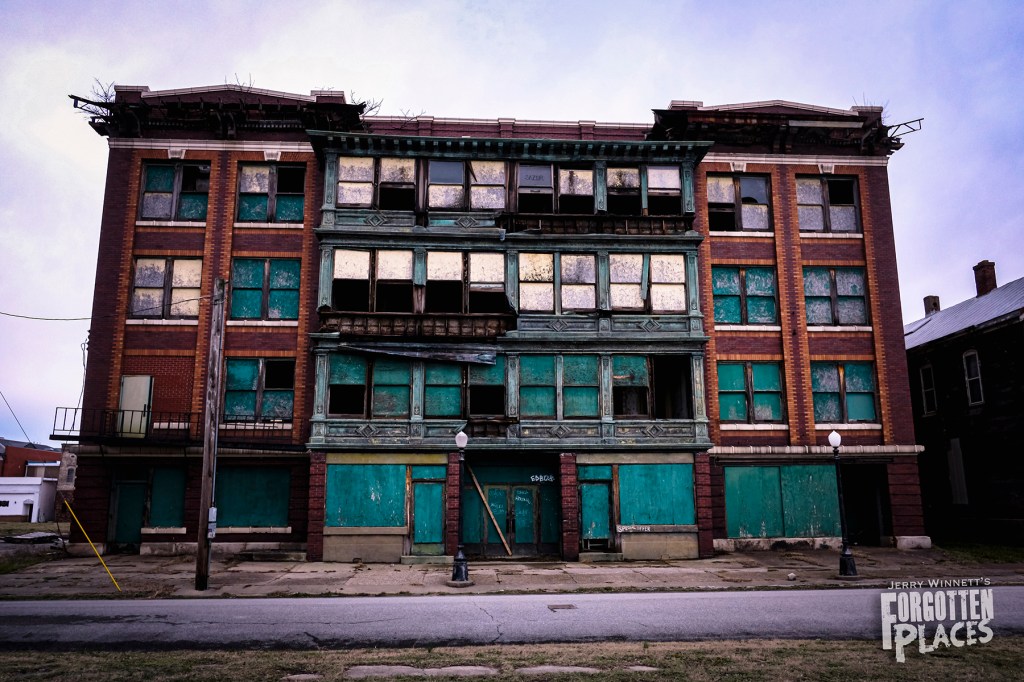
Cairo is a shame. At one point the town was prosperous, and beautiful. And there have been attempts to bring life back into Cairo. There are boulevards where hand laid bricks replaced asphalt. Businesses whose entrances are decorated with Art Deco tiles. Iron light posts are plentiful, and many still work. But the businesses are vacant, or demolished, and the light posts illuminate empty roads, sidewalks and lots. The emptiness of Cairo, the lack of people, or purpose is palpable. Walking the streets of Cairo makes one feel like they’ve stepped into some type of ghost world, and if one is not careful, you may become another ghost in a dead town full of them. Take the Gem theatre for instance. Its beautiful marque looks fresh enough that you’d not be surprised to see it light up! To watch the bulbs shine and pulsate rhythmically. But the boarded up doors say otherwise. The gigantic fissure that bisects the Gem’s wall proclaim the theatre’s death, hell, an enormous tree is growing out of that fissure.
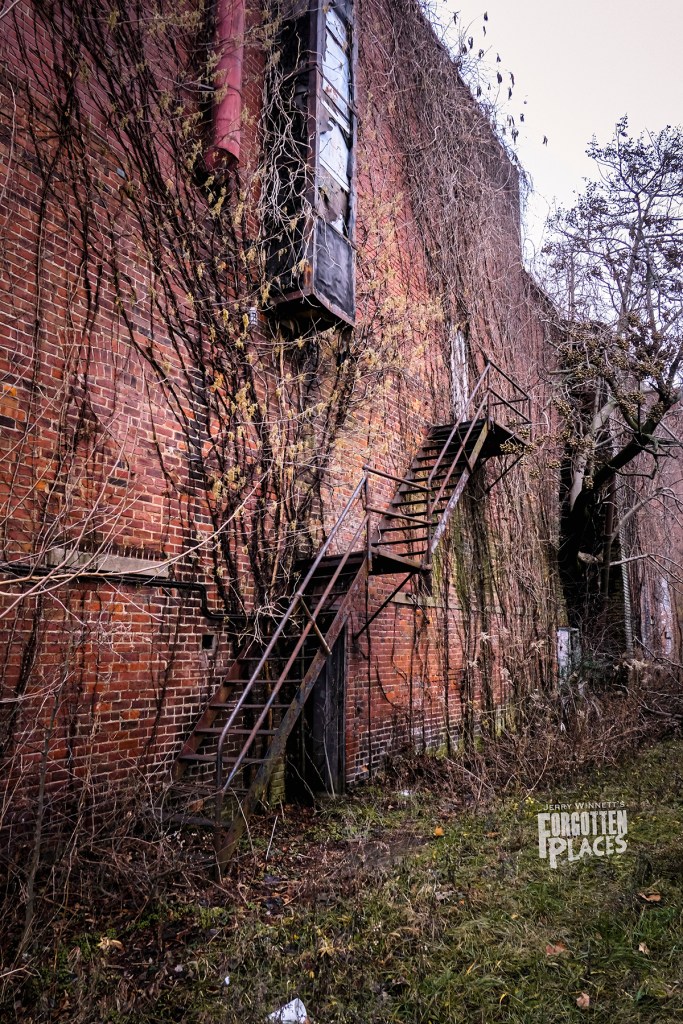
The alley running next to the Gem Theatre.
The fissure is hard to miss.
Yes, a person can and many have walked right into the breached wall. Nature is relentless
Next door is the defunct Chamber of Commerce. The door to the Chamber of Commerce sits wide open, debris can be easily be seen from the sidewalk. And across the street? Across the street are the remains of some of the buildings I had mentioned, the ones with Art Deco tile decor laid into their entrances.
What caused the death of Cairo, Illinois? There were a few factors, but the biggest of them was its inherent racism. Don’t worry, I’m not about to start banging on about racism. This isn’t that kind of a blog. No, my blog is a POV of my experience in Cairo. However, Between Two Rivers is an excellent and detailed explanation on how racism destroyed Cairo, you can click on the link to watch it, which I strongly suggest you do. https://youtu.be/Ita42KgBY-8?si=HNURA1eWnzo-dJzp if you have the stomach for it. If anything Cairo and the its documentary could be seen as a cautionary tale for the US itself.
I hope that if you’ve read this far that you have enjoyed the trip so far. I’ll be following this up with images from the Cairo waterfront, as well as images from some of the houses and more. In the meantime I’d also like to bring attention to my book, Forgotten Tennessee. It’s available in bookstores, and of course amazon. Click on the link to order. https://a.co/d/5z9S5aq




















You must be logged in to post a comment.